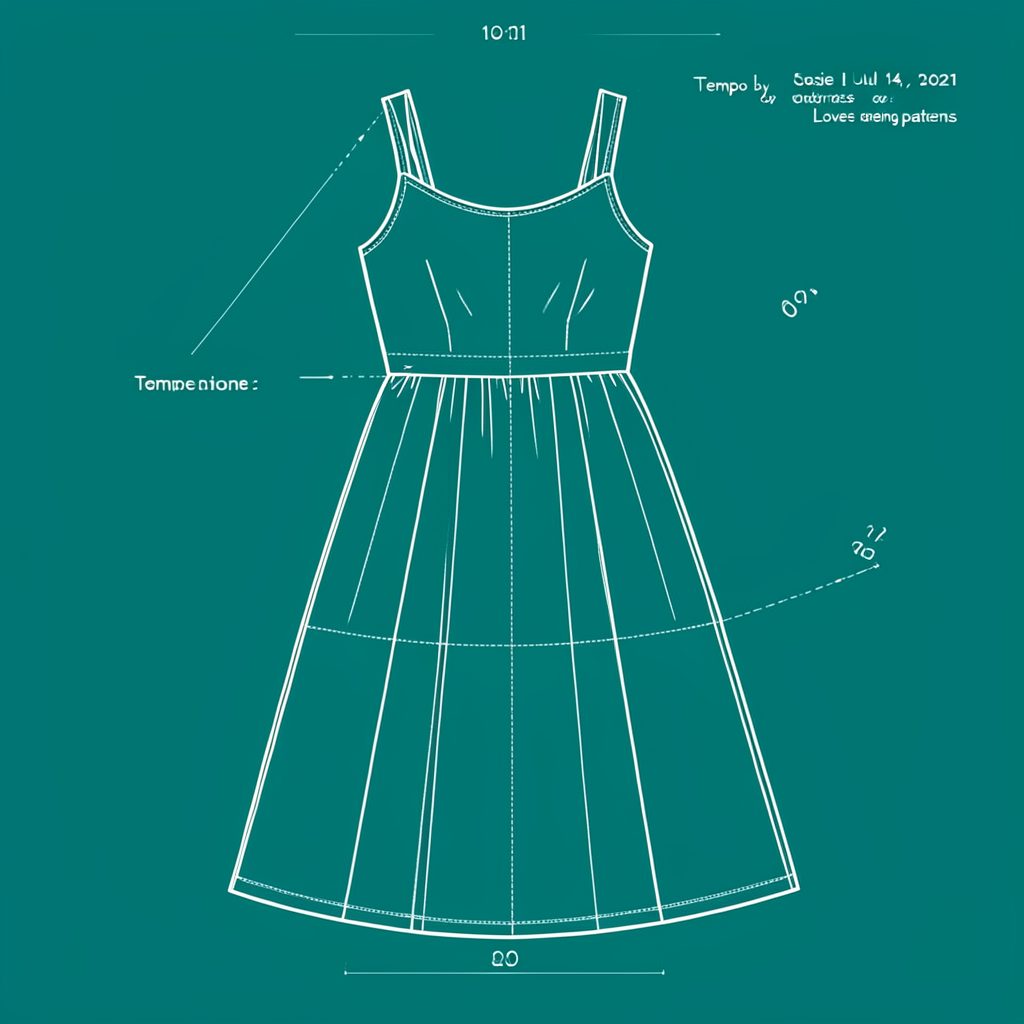
Choose an indie sewing pattern that suits your shape
Choosing an indie sewing pattern can feel wonderfully creative, but the line drawing is only the beginning. A garment that looks effortless on a model may need a different size, length, or adjustment to sit comfortably on your own body. The best choice comes from understanding how the pattern is drafted and how its design lines will work with your proportions.
Body shape is useful as a starting point, rather than a set of strict rules. You may have a fuller bust, a defined waist, broader shoulders, narrower hips, or a combination that does not fit neatly into one category. Measurements, finished garment dimensions, fabric behaviour, and intended ease will always tell you more than a label such as pear, apple, rectangle, or hourglass.
The sewing projects shared on this blog show how much difference fabric choice, fit adjustments, and careful construction can make. With a little preparation, an indie pattern can become a flexible block for your wardrobe instead of a one-off project that stays in the cupboard.
Read the pattern before the line drawing
A stylish illustration can draw you towards a pattern, but the technical information helps you decide whether it will suit your shape. Look for the size range, cup options, finished garment measurements, height assumptions, and adjustment guidance. These details reveal how much support the designer has built into the drafting process.
Pay attention to the garment’s main silhouette. A close-fitting knit top behaves very differently from a relaxed woven blouse. A shaped princess seam may provide more opportunities for fitting than a simple dartless front, while a dropped shoulder can soften the appearance of broad shoulders but may add extra volume around the upper body.
Photographs of several testers can also be valuable. Check whether the garment is shown on different heights and body types, then focus on where seams, waistlines, hems, and openings sit. Tester images cannot predict exactly how the pattern will fit you, but they can highlight the intended proportions.
Start with measurements, not size labels
Indie designers use their own size charts, so a size number has no universal meaning. Measure your bust, waist, and hips against the chart for every new pattern. For dresses, jumpsuits, and fitted tops, take particular care with the high bust and full bust measurements if those are provided.
A high-bust measurement can help identify whether you need a full bust adjustment. If your full bust is substantially larger than the designer’s draft for your high-bust size, choosing the smaller upper-body size and adding room through a full bust adjustment may give you a better fit through the shoulders and neckline. This is often more successful than sizing up everywhere.
For trousers and skirts, compare waist and hip measurements separately. A pear-shaped figure may need a smaller waist size blended to a larger hip size, while someone with a straighter shape may need to preserve a consistent size and alter the waistband. Blending sizes between lines is a normal part of using a multi-sized PDF or paper pattern.
Remember to measure your vertical proportions as well. Height, torso length, rise, and sleeve length can influence whether the waist lands in the right place. A pattern drafted for a taller body may need shortening even when the circumference measurements are correct.
Use design lines to balance proportions
Design details can change how a garment appears on the body. Vertical seams, long open necklines, and uninterrupted front panels often create a lengthening effect. Horizontal colour blocking, wide waistbands, and large pockets draw attention across the body. These are styling choices rather than rules, and the right option is the one that makes you feel comfortable wearing it.
If you carry more fullness around the middle, a gently skimming shape may feel easier to wear than a sharply fitted waist. That does not mean avoiding waist definition altogether. A raised waist seam, shaped side seams, or a tie placed at a comfortable point can create structure without digging in.
For a fuller bust, look for patterns with darts, princess seams, gathers, or cup-size options. These features provide space where it is needed while keeping the shoulder and neckline proportions under control. A high neckline with little shaping may require more alteration than a wrap style or a V-neck with a bust dart.
If your shoulders are broader than your hips, consider where sleeve volume and neckline width are placed. A softly gathered sleeve may be attractive, but adding volume at the shoulder can alter the balance of the whole garment. You might prefer a sleeve that gathers at the cuff, or choose a simple sleeve and bring interest to the lower half with a fuller skirt or wider-leg trouser.
Compare ease, fabric, and finished measurements
Ease is the difference between your body measurement and the garment’s finished measurement. It controls whether a garment skims, fits closely, or hangs loosely. Two patterns in the same size can feel entirely different if one includes two centimetres of ease and the other includes twelve.
| Garment style | Useful fit information | Body-shape considerations |
|---|---|---|
| Fitted knit top | Stretch percentage, recovery, bust and waist ease | Check bust room, neckline stability, and whether the hem rides up |
| Woven blouse | Finished bust measurement, dart placement, sleeve width | Look for bust shaping and enough room across the upper back |
| A-line dress | Waist and hip measurements, skirt flare | Helpful when waist and hip sizes differ |
| Trousers | Finished hip, rise, thigh, and leg measurements | Compare rise length and plan for waist-to-hip blending |
| Oversized jacket | Shoulder width, bicep measurement, sleeve ease | Check that volume does not overwhelm your frame or restrict movement |
Fabric can make a pattern appear larger or smaller than expected. A fluid viscose will fall differently from crisp cotton poplin, while a stable ponte will behave differently from lightweight jersey. When assessing a pattern, match the recommended fabric to your intended garment and consider whether its drape, stretch, and weight support the silhouette.
If you are uncertain, make a toile or a quick test garment in similar fabric. You do not always need to sew the entire item. A bodice, waistband, or trouser leg can reveal whether the main fitting problems are at the bust, waist, hip, crotch, or shoulder.
Make fitting part of the plan
A good pattern choice includes the adjustments you are willing to make. Small changes such as lengthening a sleeve, raising a hem, or blending between sizes are usually straightforward. More involved alterations, including a full bust adjustment, swayback adjustment, broad back adjustment, or trouser seat adjustment, are manageable when the pattern offers clear lines to work with.
Choose one variable at a time when fitting. Start with the upper body or the area that affects the rest of the garment, then reassess before changing the waist or hem. For example, a blouse that appears too short at the front may need a bust adjustment rather than extra length added at the hem.
Pay attention to wrinkles, but do not treat every crease as a fault. Some folds come from movement, posture, or the fabric itself. A garment should allow you to sit, reach, and breathe. A perfectly smooth photograph is less useful than a comfortable garment that works during an ordinary day.
Pattern reviews can help you anticipate these decisions. Josephine’s background and approach offer useful context for choosing projects with practical construction details and realistic fitting expectations. Reviews are especially helpful when they mention whether the instructions explain adjustments clearly and whether the finished garment matches the designer’s photographs.
Build a pattern wardrobe that works for you
Once you understand your preferred shapes and adjustments, choosing becomes much quicker. Keep notes about the designers you trust, the sizes that fit your shoulders and hips, and the alterations you repeat. A simple fitting record can save time when you return to another pattern from the same company.
Love Notions and other independent designers often provide several views in one pattern, giving you opportunities to test a familiar fit in different styles. A well-fitting T-shirt block can become a dependable starting point for dresses, tunics, or layered tops. Likewise, a trouser pattern with a comfortable rise can be refined across multiple fabrics and leg shapes.
Use these checks before buying or printing a pattern:
- Compare your current body measurements with the designer’s chart, including high bust, full bust, waist, and hip.
- Check finished garment measurements and calculate the intended ease at key points.
- Study the fabric requirements for stretch, drape, weight, and recovery.
- Identify the likely adjustments before cutting, then make a toile when the fit is close or complex.
- Choose design details that make you feel balanced and comfortable rather than following rigid body-shape rules.
Sew with confidence and curiosity
The right indie pattern is one that supports your measurements, your preferred ease, your fabric collection, and the way you want to move through the day. Body shape guides your investigation, but it does not limit your style. A dramatic sleeve, fitted waist, relaxed trouser, or bold neckline can all work when the underlying proportions are considered.
Start with a pattern that offers useful information and instructions you can follow, then treat the first version as a learning garment. Record what you changed, save the adjusted pieces, and use the experience to make the next project more personal. For information about how this site handles your details while you explore its resources, see the privacy policy.
Choose one pattern with a clear size chart and an achievable adjustment, gather a suitable test fabric, and give yourself time to assess the fit before finishing every seam. Each project will make your understanding of indie sewing patterns sharper, helping you create clothes that fit your body and earn a regular place in your wardrobe.
Popular Pattern Reviews
| Pattern | Designer | Type | Highlight |
|---|---|---|---|
| Compose Robe (Kids) | Love Notions | Robe / Loungewear | Sizes 2T–16, cosy & practical |
| Tempo Sundress | Love Notions | Sundress | No closures, shirred back panel |
| Arlington Sweater | Love Notions | Sweater | Cold-weather staple |
| Sybil Illusion Skirt | Love Notions | Skirt (knit) | 7 variations, optional pockets |
| Camden Pinafore | Nina Lee Patterns | Pinafore dress | Year-round layering piece |
| Ogden Cami (dress hack) | True Bias | Cami / Dress | Versatile wardrobe builder |
| Burda 6829 | Burda | Dress | Multi-sized, special-occasion |
Stay in Touch
Subscribe to the newsletter for sewing inspiration, pattern tips, and project ideas delivered straight to your inbox.