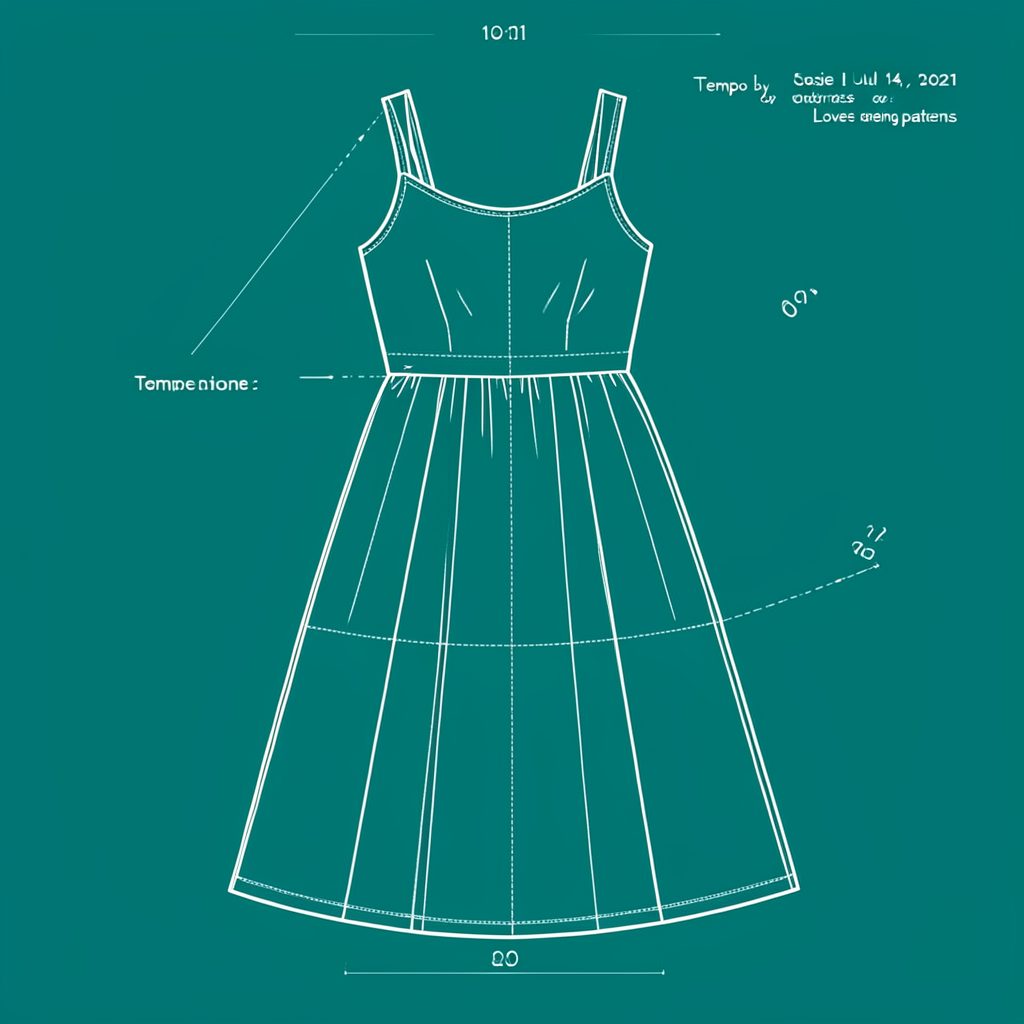
Love Notions Harmony Top For A Versatile Handmade Wardrobe
A good wardrobe builder earns its place by working hard between seasons. It needs enough personality to feel satisfying to sew, enough comfort for ordinary days, and enough styling flexibility to move from jeans and trainers to smarter trousers or a skirt. The Love Notions Harmony Top has that useful balance, making it an appealing project for both a first independent pattern and an experienced sewist looking for a reliable repeat sew.
The design is especially promising when you want a top that can change mood through fabric, colour, and small finishing choices. A crisp cotton can give it a polished daytime feel, while a drapier fabric creates a softer silhouette. That adaptability means one pattern can support several different wardrobes rather than producing a single, highly specific garment.
As with any sewing project, the finished result depends on more than the line drawing on the pattern envelope. Fabric weight, body measurements, ease, neckline preferences, and construction order all influence whether your Harmony feels like a firm favourite. A little planning before cutting will make the sewing more enjoyable and the final top more wearable.
Why It Earns Wardrobe Space
The Harmony Top works well as a foundational garment because it can sit comfortably beneath jackets, cardigans, and lightweight overshirts. It also has enough presence to be worn on its own. That makes it useful for work-from-home days, casual outings, holidays, and those changeable Yorkshire days when layering is essential.
Its versatility comes from the relationship between the pattern shape and your fabric choice. A stable fabric can emphasise clean lines and create a more structured look. A fluid fabric gives movement and a relaxed drape. Rather than treating the pattern as a fixed style, think of it as a framework that can be adjusted to suit your existing clothes.
A practical wardrobe builder should also be easy to repeat. Once you understand the construction and have checked the fit, a second version can be made with much less hesitation. The next one might be a dependable neutral, a colourful print, or a carefully chosen remnant that turns an everyday top into something distinctive.
Check The Fit Before Cutting
Begin with the finished garment measurements rather than selecting a size from the body measurement chart alone. Finished measurements show how much ease the designer has included and help you compare the pattern with a top you already enjoy wearing. Measure that garment across the bust, waist, and hem, then consider whether you want the same amount of room in your new version.
Pay attention to the shoulder and upper chest area. A neckline can feel comfortable while the garment still pull across the back or sit too far towards the shoulder edge. If you are between sizes, tracing the relevant lines and blending gradually between them is often more useful than choosing one size throughout.
Making a quick toile is sensible when your fabric is expensive or your preferred fit is very specific. An inexpensive cotton or similar practice fabric can reveal whether the bust, shoulder, and overall length suit you. It is much easier to alter a test garment than to rescue a cut piece of treasured cloth.
Length is another worthwhile consideration. A shorter version may work beautifully with high-waisted skirts and trousers, while extra length can provide better coverage with leggings or lower-rise jeans. Mark your preferred finished length on the paper pattern before cutting, rather than making the decision halfway through construction.
Choose Fabric With The Finished Shape In Mind
Fabric selection has a strong effect on the character of this indie sewing pattern. Lightweight woven cottons are approachable for beginners because they are stable, easy to press, and available in an enormous range of colours and prints. Lawn, voile, rayon, linen blends, and lightweight chambray can each create a different result, provided their weight and drape suit the pattern instructions.
Before committing, wash and dry your fabric in the way you intend to care for the finished top. This reduces the risk of unexpected shrinkage and gives you a more accurate idea of its texture. Pay attention to the grain, print direction, and whether the fabric is likely to fray during handling.
| Fabric choice | Likely effect | Helpful consideration |
|---|---|---|
| Cotton lawn | Light, crisp, and easy to handle | Ideal for a neat everyday top |
| Linen blend | Textured with gentle structure | Pre-wash carefully and expect some creasing |
| Rayon or viscose | Soft, fluid, and drapey | Use extra care when cutting and stay-stitching |
| Lightweight chambray | Casual with a little body | Great for layering and everyday wear |
| Double gauze | Soft and relaxed | Check that seams and details remain supported |
If you are new to slippery fabrics, make your first Harmony in a stable woven. Later, you can experiment with a more fluid option once you know how the pattern behaves. A fabric sample sewn with the intended stitch length and seam finish will help you assess opacity, fraying, and drape before cutting the complete garment.
Make Construction Feel Manageable
Read through the instructions before turning on the sewing machine. Look for steps that benefit from preparation, such as stay-stitching a neckline, applying interfacing, or finishing seams before they become difficult to reach. Laying out the pattern pieces and labelling them can prevent the familiar frustration of picking up a left piece when you need a right one.
Pressing is one of the simplest ways to make homemade clothes look polished. Press seams as you go, using a pressing cloth when the fabric is delicate or prone to shine. A sleeve board, tailor’s ham, or even a neatly rolled towel can help you press curved areas without flattening the shape.
Choose the needle and thread for the fabric rather than using the same combination for every project. The guide to choosing sewing needles is useful when you are unsure whether your cloth needs a universal, sharp, or finer needle. Test the stitch on a scrap, check the tension, and change the needle if it snags or leaves visible holes.
Seam finishing deserves attention too. A zigzag stitch, overlocker, pinking shears, or a clean enclosed finish can all work, depending on the fabric and the inside appearance you want. Neat internal seams make a garment more pleasant to wear and more likely to survive regular washing.
Use Styling To Build More Outfits
For a casual outfit, pair the Harmony with straight-leg jeans and simple shoes. A tucked or partially tucked hem can define the waist, while leaving it loose creates a more relaxed line. Add a cardigan or denim jacket when the temperature changes, and let the neckline provide a small point of interest beneath the layer.
A plain version in navy, cream, olive, charcoal, or a warm neutral can become a dependable base for patterned skirts and statement accessories. Conversely, a floral, geometric, or small-scale check can bring energy to a wardrobe built around plain trousers. Consider your existing clothes before buying fabric; the most successful print is usually one that has several possible companions.
For a slightly smarter interpretation, choose a fabric with a smooth surface and pair the top with tailored trousers or a midi skirt. Jewellery, a belt, and a structured bag can shift the impression without changing the garment itself. This is where a versatile sewing pattern earns its keep: the sewing remains the same, but the styling gives it several distinct roles.
Seasonal layering extends its use further. Wear it beneath a wool cardigan in autumn, add a blazer for a cooler office, or choose a lightweight fabric for spring and summer. If you make more than one, vary the colour and fabric character so each version fills a different gap rather than repeating the same outfit.
Make Your Next Version Even Better
Once the first top is complete, record what you learned. Note the size, any grading or length changes, the fabric used, and whether the neckline or armholes need refinement. A few lines in a sewing notebook can save considerable time when you return to the pattern months later.
Use the second version to make one deliberate change. You might alter the length, try a different print scale, use a contrast fabric for a detail, or refine the seam finishes. Keeping the rest of the process familiar makes it easier to assess the effect of that single change.
- Compare the finished measurements with a favourite ready-to-wear top before choosing a size.
- Make a toile if you are uncertain about the shoulder, bust, or overall length.
- Choose a stable woven for the first version and save fluid fabrics for later experiments.
- Press every seam as you sew and test the needle, thread, and stitch on scraps.
- Photograph the finished garment with a few outfits to track how often you wear it.
The Harmony Top is the kind of project that can grow with your sewing skills. Your first version may teach you about fit and construction, while later versions can explore colour, drape, and personal style. It offers a practical route into thoughtful handmade dressing without demanding that every garment feel like a major occasion project.
Choose a fabric from your stash or local shop, set aside time to make a small fitting sample, and give the pattern a place in your sewing queue. When your version is finished, share the fabric choice and sewing experience through the contact page so it can become part of the friendly conversation around independent patterns and handmade wardrobes.
Popular Pattern Reviews
| Pattern | Designer | Type | Highlight |
|---|---|---|---|
| Compose Robe (Kids) | Love Notions | Robe / Loungewear | Sizes 2T–16, cosy & practical |
| Tempo Sundress | Love Notions | Sundress | No closures, shirred back panel |
| Arlington Sweater | Love Notions | Sweater | Cold-weather staple |
| Sybil Illusion Skirt | Love Notions | Skirt (knit) | 7 variations, optional pockets |
| Camden Pinafore | Nina Lee Patterns | Pinafore dress | Year-round layering piece |
| Ogden Cami (dress hack) | True Bias | Cami / Dress | Versatile wardrobe builder |
| Burda 6829 | Burda | Dress | Multi-sized, special-occasion |
Stay in Touch
Subscribe to the newsletter for sewing inspiration, pattern tips, and project ideas delivered straight to your inbox.