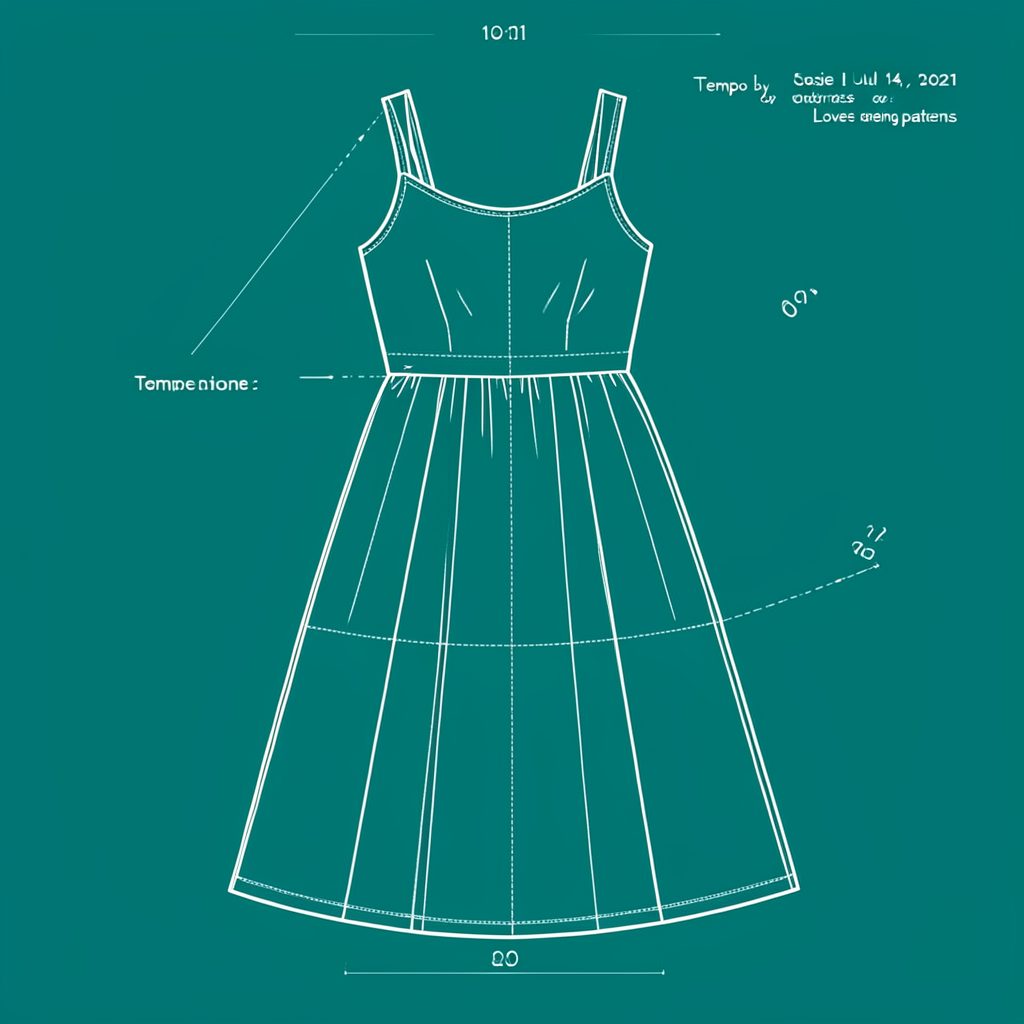
Love Notions Rebecca Wrap Dress Fitting For A Busty Figure
A wrap dress can be wonderfully adaptable, but the crossover front also makes fit especially visible. On a fuller bust, a small mismatch can lead to neckline gaping, a waist tie that sits too high, or a skirt that pulls across the hips because the bodice has not been given enough room.
The Love Notions Rebecca Wrap Dress is a useful style to approach methodically. Its wrap construction offers some flexibility, while the waist seam, crossover neckline, and tie placement give clear reference points for checking the fit. A careful toile can save considerable time before cutting into a favourite print.
The best adjustment will depend on your full bust, high bust, torso length, and preferred amount of coverage. The aim is not simply to choose a larger size. It is to preserve the shoulder and upper chest fit while adding room where your body needs it.
Read The Pattern Before Cutting
Begin by taking your high-bust and full-bust measurements, along with your waist and hip measurements. The high bust measurement is taken around the chest above the fullest part of the bust, usually underneath the arms. It gives a better indication of the upper-bodice size than the full bust measurement alone.
Compare those measurements with the finished garment chart rather than relying on your usual shop size. Check the finished waist and hip dimensions as well, particularly if you plan to wear the dress with a close-fitting tie. A wrap style may appear forgiving, but excess fabric at the side seam can still create drag lines and an untidy crossover.
Trace the size that matches your upper chest and shoulders, then plan a full bust adjustment if your full bust falls into a larger size bracket. This approach keeps the neckline and armhole proportionate instead of adding width everywhere.
Identify The Bust Adjustment
A full bust adjustment, or FBA, adds length and width over the bust without changing the shoulder or neckline. On a wrap bodice, the adjustment needs to account for the crossover front, so use the pattern’s bust point and seam lines as your guide. Avoid making a simple horizontal enlargement through the entire bodice.
If the pattern has a dart, the extra fullness can usually be converted into that dart or distributed through the existing shaping. If the bodice is dartless, the added volume may be incorporated into the wrap seam, princess-style seam, or another nearby construction line. Preserve the original grainline as closely as possible.
The finished FBA often creates a wedge-shaped extension at the bust line and adds length below the bust point. That additional length matters. Without it, the waist seam can ride upward, pulling the crossover and causing the skirt to sit above your natural waist.
Make the adjustment on both front bodice pieces where necessary. A wrap front is not symmetrical in use, so check how the underlap and overlap behave together rather than fitting just one piece in isolation.
Check The Crossover And Neckline
Neckline gaping is one of the most common problems in a wrap dress. It can happen when the bust pushes the front edge outward, when the neckline is too long, or when the garment lacks enough support at the shoulder and wrap edge. Pin the overlap in place on your toile and assess the neckline while standing naturally.
If the neckline opens away from your chest, try a small gaping adjustment at the edge. This usually involves removing a wedge from the neckline and blending the change toward the bust point or shoulder, depending on the pattern’s shape. Keep the alteration subtle; a large reduction in one area can distort the crossover.
The wrap edge should pass smoothly over the bust rather than forming diagonal drag lines from the side seam. If the edge cuts into the fullest point, more bust width or length is needed. If it stands away from the body, the edge may need stabilising or slightly shortening.
For a useful comparison, think of the adjustment as a series of separate fit decisions:
| Fitting sign | Likely cause | Useful response |
|---|---|---|
| Diagonal lines from bust to side seam | Insufficient bust width | Add a full bust adjustment |
| Waist seam rises at the centre front | Insufficient bodice length | Add length below the bust point |
| Neckline falls open | Excess neckline length or poor support | Remove a neckline wedge and stabilise |
| Wrap edge cuts across the bust | Too little room at the bust | Add width and check crossover depth |
| Side seam swings toward the front | Bust needs more volume | Add width or length through the front |
| Waist tie sits above the natural waist | Short torso area after bust shaping | Lengthen between bust and waist |
Balance The Waist And Skirt
After adding bust room, compare the waist seam with your natural waist. It should sit level around the body, unless you deliberately prefer a raised position. A sloping seam can make the dress look uneven and may cause the wrap ties to pull the front bodice out of place.
A full bust adjustment often adds length to the front bodice, so the side seam may need to be trued. Walk the altered front seam against the back bodice and smooth any abrupt steps. If the front waist becomes longer than the back, distribute the difference gradually rather than removing all the added length at the waist edge.
Check the skirt separately. Your hip measurement may require a different size from your bodice, and blending between sizes at the waist and hip is often more accurate than sizing up the entire dress. Try the toile with the intended shoes and undergarments so the hem and waist placement can be judged properly.
If the dress includes gathers or a fuller skirt, make sure the extra fabric is distributed evenly at the waist. A heavier concentration at the front can add visual bulk and may make the crossover feel less secure.
Choose Fabric With Recovery
Fabric choice has a direct effect on how much fitting work the Rebecca dress will need. A stable knit with good recovery can accommodate small changes in body movement, while a loose or very fluid jersey may expose every weakness in the neckline and wrap edge.
Medium-weight jersey, ponte, or another fabric with reliable recovery is generally easier to control for a first version. Test a fabric scrap for stretch, recovery, opacity, and drape before committing. The fabric should stretch comfortably over the bust without becoming transparent or losing its shape.
When working with jersey, take extra care with the shoulder seams and neckline finish. A little stabilising tape or clear elastic can prevent the shoulder from stretching during construction. These jersey neckband tips are also useful when refining a neckline that needs to lie flat without feeling restrictive.
A stable knit can be a good first toile because it shows whether the crossover stays closed during movement. For a woven version, allow for the fabric’s lack of stretch and reassess the ease, especially across the bust and upper arm.
Sew A Toile And Fit In Motion
Use inexpensive fabric with a similar weight and stretch to your final choice. Mark the bust point, waistline, centre front, and crossover edge on the toile. These markings make it easier to spot whether the issue is width, length, or the position of the wrap.
Pin the ties temporarily and move your arms, sit down, bend slightly, and walk around. A bodice that looks fine while standing still may gape when you move. Check whether the underlap remains covered, whether the waist tie stays level, and whether the skirt pulls toward the front.
For a beginner-friendly approach to working with independent patterns, the Marigold beginner project offers a useful reminder: treat the first version as information rather than a final verdict. A toile is part of the sewing process, not evidence that the pattern or your body is difficult.
Photograph the toile from the front, side, and back. Horizontal drag lines, a tilted waist seam, and excess fabric near the armhole are much easier to compare in photographs than while twisting to inspect yourself in a mirror.
Refine The Final Version
Once the toile fits, transfer each change carefully to the paper pattern. Blend new lines smoothly, mark the altered bust point, and label the pieces clearly. Include the size, adjustment amount, and any length added so the pattern remains useful for a later version.
Pay attention to the direction of the crossover and the placement of any ties or belt openings. A fuller bust can change where the wrap edge lands, so make sure the ties still emerge from a comfortable and practical position. If necessary, add a small amount of reinforcement behind the tie area.
Select fabric with the finished silhouette in mind. A bold directional print may need careful cutting across the crossover, while a softer print can disguise small variations in the overlap. For independent sewing projects, these UK fabric shops can help when searching for jersey, ponte, or stable woven fabrics with suitable drape.
Keep these checks beside the sewing machine:
- Match the upper-bust size before adding full-bust volume.
- Add length as well as width when the waist seam rides upward.
- Pin the crossover securely during the fitting stage.
- Check the neckline while standing, sitting, and moving.
- Compare the fabric’s stretch and recovery with the pattern requirements.
A well-fitted wrap dress should feel secure without needing constant adjustment. Take time to refine the bust shaping, stabilise the neckline, and confirm that the waist sits where you want it. Then cut your chosen fabric and sew the Rebecca Wrap Dress with a fitting plan that supports your shape from the first stitch.
Popular Pattern Reviews
| Pattern | Designer | Type | Highlight |
|---|---|---|---|
| Compose Robe (Kids) | Love Notions | Robe / Loungewear | Sizes 2T–16, cosy & practical |
| Tempo Sundress | Love Notions | Sundress | No closures, shirred back panel |
| Arlington Sweater | Love Notions | Sweater | Cold-weather staple |
| Sybil Illusion Skirt | Love Notions | Skirt (knit) | 7 variations, optional pockets |
| Camden Pinafore | Nina Lee Patterns | Pinafore dress | Year-round layering piece |
| Ogden Cami (dress hack) | True Bias | Cami / Dress | Versatile wardrobe builder |
| Burda 6829 | Burda | Dress | Multi-sized, special-occasion |
Stay in Touch
Subscribe to the newsletter for sewing inspiration, pattern tips, and project ideas delivered straight to your inbox.