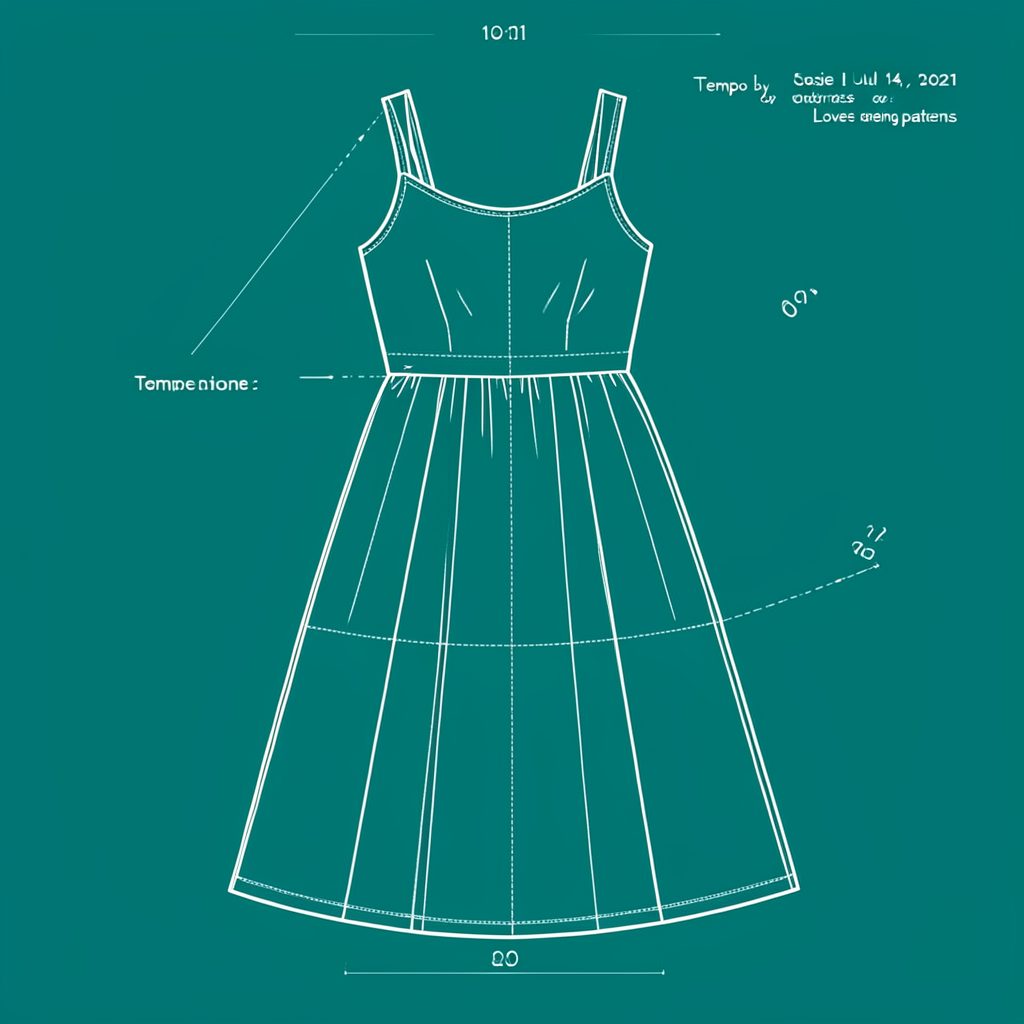
Patterns for Pirates Peg Legs: A Practical Pattern Review
Patterns for Pirates Peg Legs is the sort of pattern that earns a regular place in a handmade wardrobe. It is designed for close-fitting knit trousers and leggings, with enough style and waistband options to make one PDF useful for everyday basics, exercise wear, layering pieces, and cosy lounge clothing.
My interest in this pattern comes from its practicality. A well-fitting pair of leggings can be deceptively difficult to achieve: the fabric must recover properly, the rise needs to sit comfortably, and the waistband must stay in place without digging in. Peg Legs brings those decisions together in a fairly approachable package.
It is also a useful pattern for building confidence with stretch fabric. The construction is relatively quick, but the finished garment still teaches valuable skills, including working with negative ease, stabilising waistbands, matching seams, and choosing stitches that can withstand movement.
The style options
Peg Legs is much more versatile than a basic ankle-length legging pattern. Depending on the version and options included in the file, sewists can generally choose between different rises, waistband treatments, leg lengths, and finishes. The result can be a simple full-length pair, cropped leggings, shorts, or a more casual knit trouser.
The waistband is an especially useful feature. A yoga-style waistband gives a smooth, comfortable finish and is forgiving for beginners, while a shaped or contoured waistband can provide a more structured fit. The choice changes the character of the garment considerably, so it is worth sewing a preferred version before cutting into a favourite fabric.
The close fit makes the pattern suitable for layering under dresses and tunics, but it can also stand alone when made from opaque athletic knit. Colour blocking, mesh panels, printed jersey, and contrasting waistbands offer plenty of scope for personalisation without altering the underlying shape.
Choosing fabric and sizing
A four-way stretch knit with good recovery is the safest starting point. Polyester-spandex athletic fabric, nylon lycra, stretch jersey, and stable cotton lycra can all work, provided the fabric meets the pattern’s stretch requirements. Recovery matters as much as stretch: a fabric that stretches generously but stays bagged at the knees may produce disappointing results.
For a first pair, I would avoid very thin or slippery fabric. A medium-weight knit is easier to cut accurately, handle under the presser foot, and assess during fitting. Dark colours can also make it harder to spot twisting or uneven seams, so a stable mid-weight fabric in a clear colour or print is often a sensible choice.
Use the finished garment measurements alongside the body measurements rather than selecting a size by habit. Leggings are intended to fit with negative ease, which means the garment measurements will be smaller than the body. If measurements fall across different sizes, check the hip, waist, and calf areas separately and blend the lines gradually.
Construction and fitting notes
The pattern is straightforward, but accurate cutting makes a noticeable difference. Mark the front and back pieces clearly, especially when using fabric with a subtle directional print. A twin needle, narrow zigzag, lightning stitch, or stretch overlock can provide flexible seams; the best choice depends on the machine and the fabric.
The crotch curve and inseam deserve careful attention. A small distortion while sewing can create drag lines, twisting, or discomfort when walking. Basting or using a longer stitch for the first fitting is worthwhile, particularly when trying a new fabric composition or waistband style.
The waistband should be attached evenly rather than stretched randomly around the opening. Quarter-marking both the waistband and the garment helps distribute the tension. If the waistband rolls or feels too loose, the issue may be the fabric’s recovery, the waistband length, or the amount of negative ease rather than the sewing technique alone.
For knit seam techniques beyond this project, these seam finishing ideas are still useful background reading. The fabrics differ, but the wider principle remains relevant: a finish should suit the material, the stress placed on the seam, and the equipment available.
How the versions compare
The following overview shows how the main choices affect the finished garment. Always check the specific instructions supplied with your copy, since pattern updates can change included options.
| Option | Best suited to | Main effect |
|---|---|---|
| Ankle length | Everyday wear and layering | Creates a classic full-length legging |
| Capri or cropped length | Warmer weather and exercise | Uses less fabric and feels lighter |
| Shorts length | Training, sleepwear, or under dresses | Makes the pattern useful beyond leggings |
| Yoga waistband | Comfort and beginner-friendly sewing | Gives a smooth, soft finish |
| Contoured waistband | A closer, more shaped fit | Looks more polished and can reduce gaping |
| Colour blocking | Scraps and statement makes | Adds visual interest without changing fit |
| Athletic knit | Running, yoga, and active use | Offers stretch, recovery, and durability |
| Cotton lycra | Casual everyday wear | Feels soft and is often easier to handle |
Wearing and repeating the make
The strongest point of Peg Legs is its repeat value. Once the fit is established, the pattern can become a reliable base for several wardrobes. A plain black pair may work under tunics and dresses, while a brighter print can function as a deliberate part of an activewear outfit.
It is also an economical pattern for using smaller fabric pieces. Colour-blocked side panels or contrasting waistbands can make good use of remnants that are too narrow for a complete pair. Coordinating scraps do not need to match perfectly; keeping the fabric weight and stretch similar is usually more important.
The same practical mindset applies to other small sewing projects. When leftover fabric is too limited for clothing, it can still become something useful, such as this fabric Easter basket. Thinking in terms of fabric weight, stability, and purpose helps avoid wasting attractive remnants.
What I would change for the next pair
A first pair is best treated as a fitting sample, even when the finished garment is wearable. Note where the fabric pulls, whether the waistband shifts during sitting, and if the hem rides up after movement. These observations are more valuable than simply deciding that the pattern is or is not a good fit.
For athletic leggings, test the garment through squats, walking, and sitting before committing to a larger cut. Check for transparency in bright light and inspect the crotch and seat while moving. A fabric that looks excellent on the cutting table may behave very differently once stretched over the body.
The pattern’s simplicity also makes it a good base for controlled adjustments. A taller waistband, a slightly shorter leg, a gusset, or a pocket can be added once the basic fit is understood. Make one change at a time so it is clear which adjustment improved the result.
Practical recommendations
- Choose a fabric with reliable four-way stretch and strong recovery for the first pair.
- Measure the waist, hip, and leg areas carefully, then compare those figures with the pattern’s finished measurements.
- Sew a test version before using expensive athletic fabric, bold print, or limited-edition material.
- Use clips or plenty of pins at the crotch and waistband to prevent knit layers shifting.
- Record the successful size, fabric stretch, waistband choice, and alterations for future pairs.
Patterns for Pirates Peg Legs succeeds because it balances speed with useful fitting opportunities. It is simple enough for a confident beginner to attempt, yet flexible enough for experienced sewists to customise through fabric, colour blocking, waistband design, and length changes. The best results come from respecting the stretch requirements and treating the first make as a learning version.
If you sew a pair, share the fabric choice, waistband style, and any fitting adjustments so other makers can see how the pattern performs across different bodies and knits. A well-documented pair of Peg Legs can become more than one successful project: it can be the starting point for a dependable collection of handmade basics.
Popular Pattern Reviews
| Pattern | Designer | Type | Highlight |
|---|---|---|---|
| Compose Robe (Kids) | Love Notions | Robe / Loungewear | Sizes 2T–16, cosy & practical |
| Tempo Sundress | Love Notions | Sundress | No closures, shirred back panel |
| Arlington Sweater | Love Notions | Sweater | Cold-weather staple |
| Sybil Illusion Skirt | Love Notions | Skirt (knit) | 7 variations, optional pockets |
| Camden Pinafore | Nina Lee Patterns | Pinafore dress | Year-round layering piece |
| Ogden Cami (dress hack) | True Bias | Cami / Dress | Versatile wardrobe builder |
| Burda 6829 | Burda | Dress | Multi-sized, special-occasion |
Stay in Touch
Subscribe to the newsletter for sewing inspiration, pattern tips, and project ideas delivered straight to your inbox.