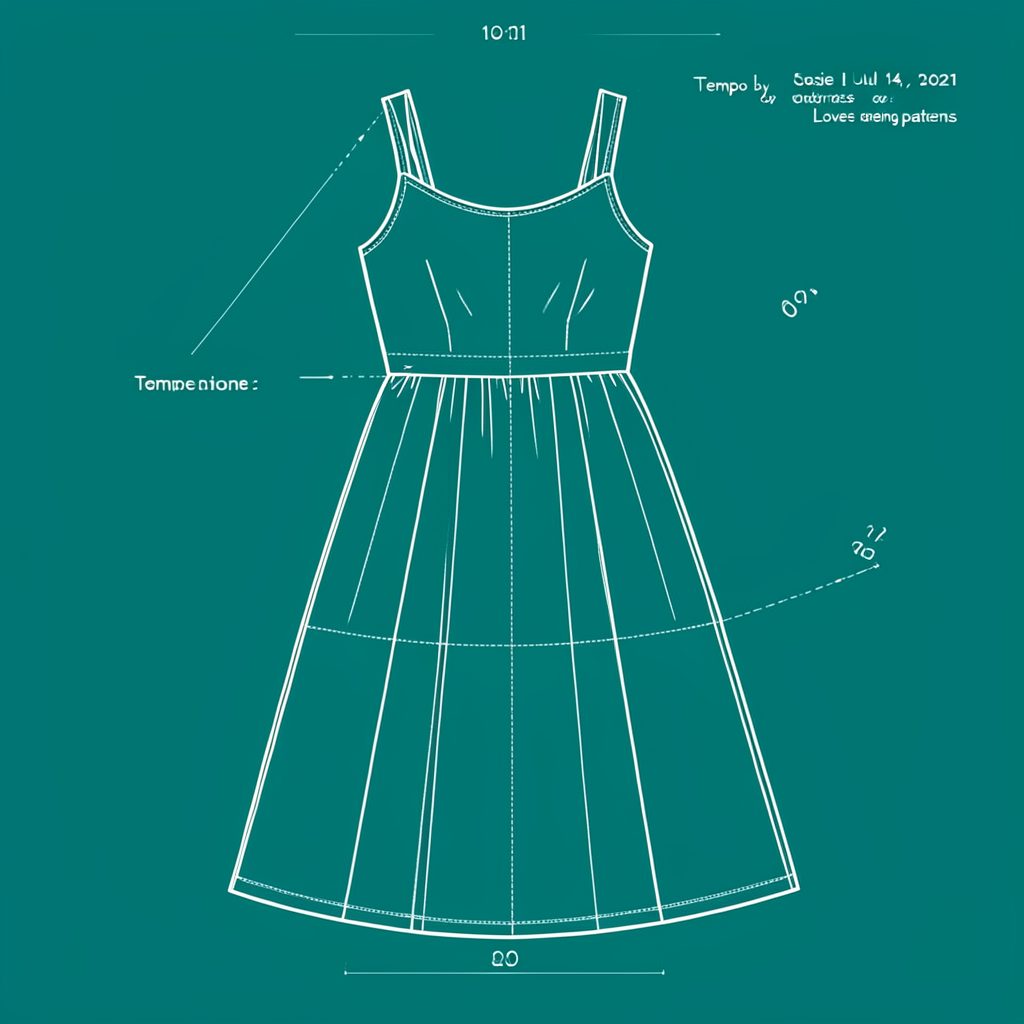
Love Notions Veronika Midi Dress Pattern Review
The Love Notions Veronika Midi Dress is the kind of pattern that sits between an everyday wardrobe staple and a dressmaking project with plenty of personality. Its longer skirt, shaped bodice and adaptable styling make it useful for more than one season, while the Love Notions format aims to keep construction manageable for home sewists.
A midi dress can look complicated on the hanger, particularly when it includes a fitted upper section and a generously proportioned skirt. In practice, the success of this design depends on choosing the right fabric, taking accurate measurements and treating the bodice fitting as the priority. Once those decisions are made, the sewing becomes much more approachable.
This review looks at the pattern’s style, construction, fabric choices and likely fit, with practical notes for anyone considering adding it to their PDF pattern collection. It should suit sewists who want a feminine handmade dress without committing to an especially formal or couture-style project.
Style And First Impressions
The Veronika has a distinctly romantic shape, with a defined waist and a midi-length skirt that gives the finished garment movement. It can be dressed up with a fluid fabric and smart shoes, or made more relaxed with a comfortable print and casual layers. That versatility is one of its strongest features.
The length also gives the pattern a useful grown-up feel. It offers more coverage than a short summer dress but remains easy to wear with boots, sandals or trainers. Depending on the chosen fabric and sleeve option, the same pattern could work for warm-weather outings, autumn layering or a special occasion.
As with many dress patterns, the line drawing and sample photographs deserve close attention before choosing a size. Look for how the bodice sits at the bust and waist, how much ease is included through the skirt, and whether the neckline and sleeve proportions match your preferred style.
Fit And Sizing Considerations
The bodice is the area that needs the most careful preparation. A well-fitting waistline makes the whole dress look intentional, whereas a bodice that is too loose or too tight can affect the position of the skirt and create drag lines. Measure the high bust, full bust, waist and hips rather than selecting a size from ready-to-wear habits.
A full-bust adjustment may be worth considering if your bust and upper-bust measurements fall into different pattern sizes. Conversely, a small-bust adjustment can help prevent excess fabric across the front. It is much easier to make these changes on a paper or tissue test version than after the main fabric has been cut.
Check the finished garment measurements as well as the body chart. The skirt generally needs wearing ease for walking and sitting, but the amount of ease that feels comfortable is personal. If you prefer a closer fit, a toile will show whether the waist and hip area need refinement before you begin the final dress.
Fabric Choices And Drape
Fabric selection will strongly influence the character of the Veronika. A woven fabric with gentle drape can create a graceful, fluid skirt, while a crisper cotton or linen blend will give the gathers or fullness more definition. Viscose, rayon challis, lightweight crepe and soft cotton lawn are possible directions, provided the fabric meets the pattern’s requirements.
Very stiff cloth may make the skirt feel bulky, especially where several layers or gathers meet at the waist. Extremely slippery fabric can be beautiful but frustrating during cutting and seaming. For a first version, a stable woven with enough drape to move comfortably is likely to offer the best balance between appearance and control.
Print scale is another useful consideration. A small floral or scattered geometric print can disguise minor fitting adjustments and make the dress feel informal. Stripes and large motifs need more planning, particularly around the bodice seams and waistline, so pattern matching should be considered before purchasing fabric.
Construction Experience
Love Notions patterns are generally valued for clear digital instructions and a practical approach to garment sewing. The Veronika is not a beginner’s first-ever project in the same way as a simple elastic-waist skirt, but it is a reasonable next step for someone who has sewn basic seams, inserted sleeves and followed a multi-piece pattern.
The most important construction stages are likely to be preparing the bodice, transferring markings accurately and attaching the skirt evenly around the waist. Stay-stitching curved edges, pressing as you go and using a clear seam allowance will make a noticeable difference. If the fabric frays, finish the raw edges before the garment is assembled.
A narrow hem or carefully pressed turned hem can preserve the midi length and keep the skirt moving nicely. Make sure the dress is tried on with the shoes you expect to wear, because even a small change in hem height can alter the proportions. A hanging period before hemming is particularly helpful with fluid fabrics, which can drop unevenly.
What Works Best For Different Sewists
The pattern’s greatest strength is its adaptability. A confident beginner can use it to practise fitting a bodice and handling a fuller skirt, while a more experienced sewist can treat it as a dependable base for fabric experiments and personal adjustments. It also has enough visual impact to feel rewarding without requiring elaborate embellishment.
The Veronika is a good choice if you enjoy dresses with a defined waist and a feminine silhouette. It may be less appealing if your wardrobe is built around loose, boxy shapes or if you prefer minimal fabric volume. The midi length is attractive, but it also means the finished garment uses more fabric than a short dress or simple top.
For more inspiration from independent pattern designers and practical garment-making projects, browse the wider sewing projects collection. Comparing different silhouettes before buying can help clarify whether this pattern fills a genuine gap in your wardrobe.
| Feature | What To Expect | Helpful Advice |
|---|---|---|
| Silhouette | Defined waist with a flowing midi skirt | Prioritise bodice measurements and make a toile if unsure |
| Fabric | Woven cloth with comfortable drape | Test the fabric’s weight, opacity and recovery before cutting |
| Skill level | Confident beginner to intermediate | Take time with markings, gathering and pressing |
| Wardrobe use | Dressy, everyday and seasonal styling | Change the fabric and accessories to alter the mood |
| Main fitting focus | Bust, waist and overall length | Compare body and finished measurements carefully |
Strengths And Possible Drawbacks
The strongest feature is the balance between a recognisable statement shape and wearable practicality. It is more interesting than a basic shift dress, yet it does not depend on complicated tailoring techniques. The midi skirt creates movement, and the style can be softened or sharpened through fabric choice.
The pattern may require more preparation than a loose pull-on garment. Fitting the bodice, handling a larger cut of fabric and keeping the waist seam even all take patience. Sewists who dislike gathering, longer hems or making muslins may find the project slower than expected.
Another consideration is fabric quantity. A fuller skirt can quickly increase the yardage requirement, so check the sizing and fabric-width information before ordering. Buying extra fabric for pattern matching, shrinkage or a directional print is sensible, especially when working with a costly viscose or linen.
Practical Recommendations Before Cutting
- Measure yourself in the undergarments you expect to wear with the finished dress.
- Check the PDF’s size chart, finished measurements and fabric requirements before printing.
- Make a bodice toile, particularly when the bust or shoulder fit is often difficult to match.
- Choose a stable, washable woven fabric for the first version rather than an especially slippery cloth.
- Leave the hem until the dress has been worn briefly and checked with your usual footwear.
The Love Notions Veronika Midi Dress is a strong option for sewists wanting a versatile, feminine garment with enough detail to feel special. Its success depends less on advanced techniques than on thoughtful preparation: accurate measuring, suitable fabric and careful attention to the bodice. With those foundations in place, the pattern has plenty of potential as a repeat sew.
It is easy to imagine making one version for everyday wear and another in a richer fabric for celebrations. If you decide to sew it, document your fabric choice, fitting adjustments and finished length so the next version becomes even more straightforward. For pattern questions, project conversations or other sewing-related enquiries, you can get in touch.
Popular Pattern Reviews
| Pattern | Designer | Type | Highlight |
|---|---|---|---|
| Compose Robe (Kids) | Love Notions | Robe / Loungewear | Sizes 2T–16, cosy & practical |
| Tempo Sundress | Love Notions | Sundress | No closures, shirred back panel |
| Arlington Sweater | Love Notions | Sweater | Cold-weather staple |
| Sybil Illusion Skirt | Love Notions | Skirt (knit) | 7 variations, optional pockets |
| Camden Pinafore | Nina Lee Patterns | Pinafore dress | Year-round layering piece |
| Ogden Cami (dress hack) | True Bias | Cami / Dress | Versatile wardrobe builder |
| Burda 6829 | Burda | Dress | Multi-sized, special-occasion |
Stay in Touch
Subscribe to the newsletter for sewing inspiration, pattern tips, and project ideas delivered straight to your inbox.