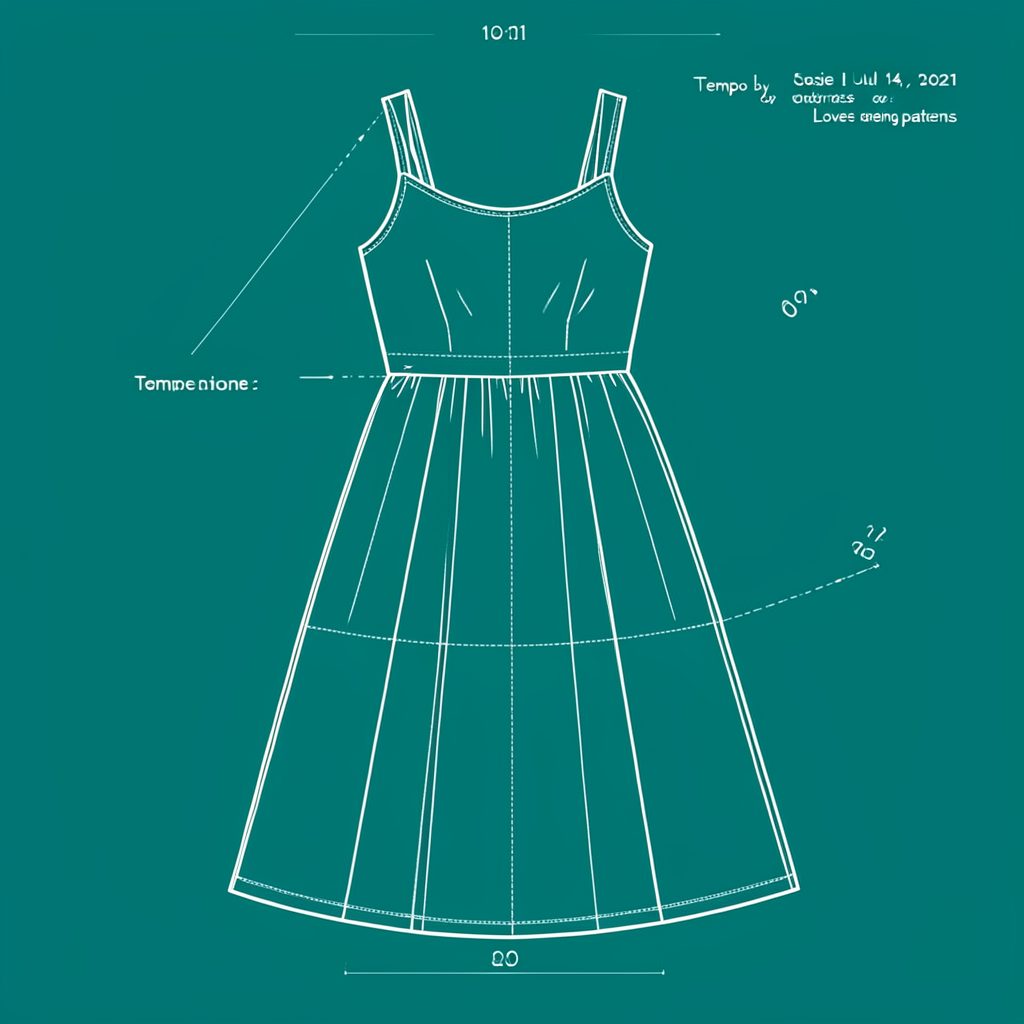
Lengthening the Love Notions Moxie Wrap Skirt
The Love Notions Moxie Wrap is a versatile pattern for a softly fitted wrap dress with plenty of scope for personal adjustments. One of the most useful changes is adding length to the skirt, especially if you prefer a midi hem, want extra coverage, or simply find that the drafted length sits higher than expected.
A longer skirt can change the balance of the whole garment. The wrap overlap, waist ties and hem sweep all need to remain comfortable, so this is more than adding a strip of fabric at the bottom. With a few careful measurements and a test version, the adjustment is quite manageable.
The alteration is particularly useful for Australian wardrobes. A midi-length Moxie can work with sandals in Brisbane, trainers for an everyday Melbourne outfit, or a light cardigan during cooler evenings in Adelaide or Sydney. A longer skirt also gives useful sun coverage without making the dress feel formal.
Your fabric choice will influence the finished result as much as the extra centimetres. Lightweight jersey creates an easy, draped silhouette, while a heavier knit may pull at the waist ties or make the wrap front sit differently. Always consider the fabric’s stretch, recovery and weight before cutting.
Decide on the finished length
Start by measuring a garment whose length you already enjoy. Lay it flat and measure from the shoulder or waist reference point to the hem, depending on where the Moxie skirt joins the bodice. It is helpful to wear the bra and shoes you are likely to use with the finished dress, as footwear can alter how the hem looks.
Measure your body from the same reference point to the desired finished hem. The difference between the two measurements is the amount to add. If you are between sizes or have a fuller hip, check the skirt’s width at several points before deciding on a length. A longer skirt needs enough ease to walk comfortably and manage stairs.
Remember that fabric may relax after washing, particularly a soft rayon or bamboo jersey. Prewash and dry it in the same way you plan to launder the finished dress. For many Australian sewists, that means allowing for a regular cold wash and clothesline drying rather than assuming the fabric will remain exactly as it was straight off the bolt.
Find the best adjustment point
Use the pattern’s printed lengthen-or-shorten line if one is provided. Cut along the line, spread the pieces by the amount required, and place paper underneath to fill the gap. Keep the grainline straight and redraw the side seams so they form smooth, continuous lines.
If there is no marked adjustment line, choose a fairly straight section of the skirt rather than adding the entire extension at the hem. Dividing the extra length between two areas can preserve the original shape more accurately. For example, an additional 10 cm can be split into two 5 cm extensions, provided the pattern pieces remain easy to align.
Do not lengthen the bodice or waistband accidentally. The skirt alteration should begin below the waist seam or join, leaving the wrap construction unchanged. Mark the new seam and hem clearly on both front and back pieces before cutting fabric, especially when working with a dark knit where pencil marks can be difficult to see.
Preserve the wrap overlap
The front skirt pieces need to retain their original relationship after lengthening. If you extend one front piece but not the other, the wrap may finish unevenly or reveal more of the leg than intended. Apply the same vertical adjustment to matching front pieces unless the pattern instructions specifically require a different treatment.
Check the overlap on the paper pattern before cutting. Place the front pieces together at the waist and trace the wrap edge down towards the hem. The outer edges should create a graceful line without a sudden angle where the added section begins.
A longer wrap skirt can also feel heavier when walking. A generous overlap is reassuring, particularly on windy days near the coast or when commuting on public transport in Sydney. If the original overlap is minimal, consider adding a discreet press-stud or a small internal tie, while keeping the external wrap lines clean.
Check the hem sweep and grain
Lengthening a skirt changes the visual proportion, but it should not distort the grainline. The grainline arrow must remain parallel to the selvedge when the piece is placed on the fabric. A slight tilt can cause the hem to twist, which is especially noticeable on a longer skirt.
After adding paper, redraw the hem with a gentle, even curve. Avoid simply extending the side seams and connecting them with a ruler-straight line. The hem should flow naturally from the side seam and remain wide enough for walking.
Before sewing, hang the cut pieces or the partly completed dress for several hours. Stretch fabrics can drop unevenly, with rayon blends often changing more than stable cotton jersey. Trim the hem only after the garment has relaxed. This small pause can prevent an uneven midi hem later.
Choose fabric for a longer silhouette
A longer Moxie skirt benefits from fabric that drapes without becoming clingy. Rayon jersey, modal blends and lighter cotton knits can create fluid movement, while a firm ponte may give a more structured result. Test a folded length of fabric against your body to see whether it hangs smoothly or catches around the knees.
Check stretch in both directions and compare it with the pattern requirements. A fabric with poor recovery may grow during wear, making the skirt longer at the end of the day. This is worth considering in warm, humid places such as Darwin or Cairns, where lightweight clothing is often worn for long periods.
Needle choice matters when sewing stretch fabric. Before starting the garment, review these stretch lace needle tips for guidance that also applies to fine jersey and other elastic textiles. A fresh ballpoint or stretch needle, suitable thread and a test seam can prevent skipped stitches.
Sew and fit a wearable test
A shortened test version is not always useful for checking a lengthened skirt, because the extra fabric affects movement and weight. If possible, make a full-length toile from inexpensive knit fabric or use remnants joined together below the waist. It does not need to be beautiful; it needs to show how the wrap behaves when you sit, walk and turn.
Baste the main seams first and leave the hem unfinished during fitting. Check that the waist sits level, the ties are long enough to knot comfortably, and the wrap remains secure while taking a full stride. Try sitting on a chair and climbing a step, since a skirt that looks fine standing still may feel restrictive in motion.
If the waist pulls forward, the issue may be fit rather than length. A larger skirt circumference, adjusted side seam or different fabric may solve the problem more effectively than removing centimetres from the hem. Keep notes on the finished measurements so future Love Notions projects are easier to adjust.
Finish the hem for everyday wear
Knit hems usually work well with a twin needle, coverstitch or narrow zigzag, depending on your machine and fabric. Stabilise the hem lightly if it stretches while sewing, but avoid making it rigid. A strip of clear elastic in the seam allowance can help control a troublesome edge without changing the appearance from the outside.
For a woven fabric version, use a narrow double-fold hem or another finish suited to the fabric weight. The longer the skirt, the more visible the hem becomes, so take time to press it evenly before stitching. If the side seams are bulky, grading and pressing them in opposite directions can help the hem lie flat.
A clean inside finish is worthwhile on a wrap dress because the garment moves as you walk. If your construction includes a seam that benefits from extra durability, this flat-felled seam guide explains the method clearly, although you may choose a lighter finish for a drapey knit.
When the alteration is complete, wash the dress once more before judging the final length. Australian fabric shops and online retailers can vary in how they describe fibre content, so keep the fabric label and care information with your pattern notes. If you sell a garment, check the designer’s licensing terms and remember that Australian copyright law protects the pattern itself; personal sewing and commercial use are not automatically the same thing.
Popular Pattern Reviews
| Pattern | Designer | Type | Highlight |
|---|---|---|---|
| Compose Robe (Kids) | Love Notions | Robe / Loungewear | Sizes 2T–16, cosy & practical |
| Tempo Sundress | Love Notions | Sundress | No closures, shirred back panel |
| Arlington Sweater | Love Notions | Sweater | Cold-weather staple |
| Sybil Illusion Skirt | Love Notions | Skirt (knit) | 7 variations, optional pockets |
| Camden Pinafore | Nina Lee Patterns | Pinafore dress | Year-round layering piece |
| Ogden Cami (dress hack) | True Bias | Cami / Dress | Versatile wardrobe builder |
| Burda 6829 | Burda | Dress | Multi-sized, special-occasion |
Stay in Touch
Subscribe to the newsletter for sewing inspiration, pattern tips, and project ideas delivered straight to your inbox.