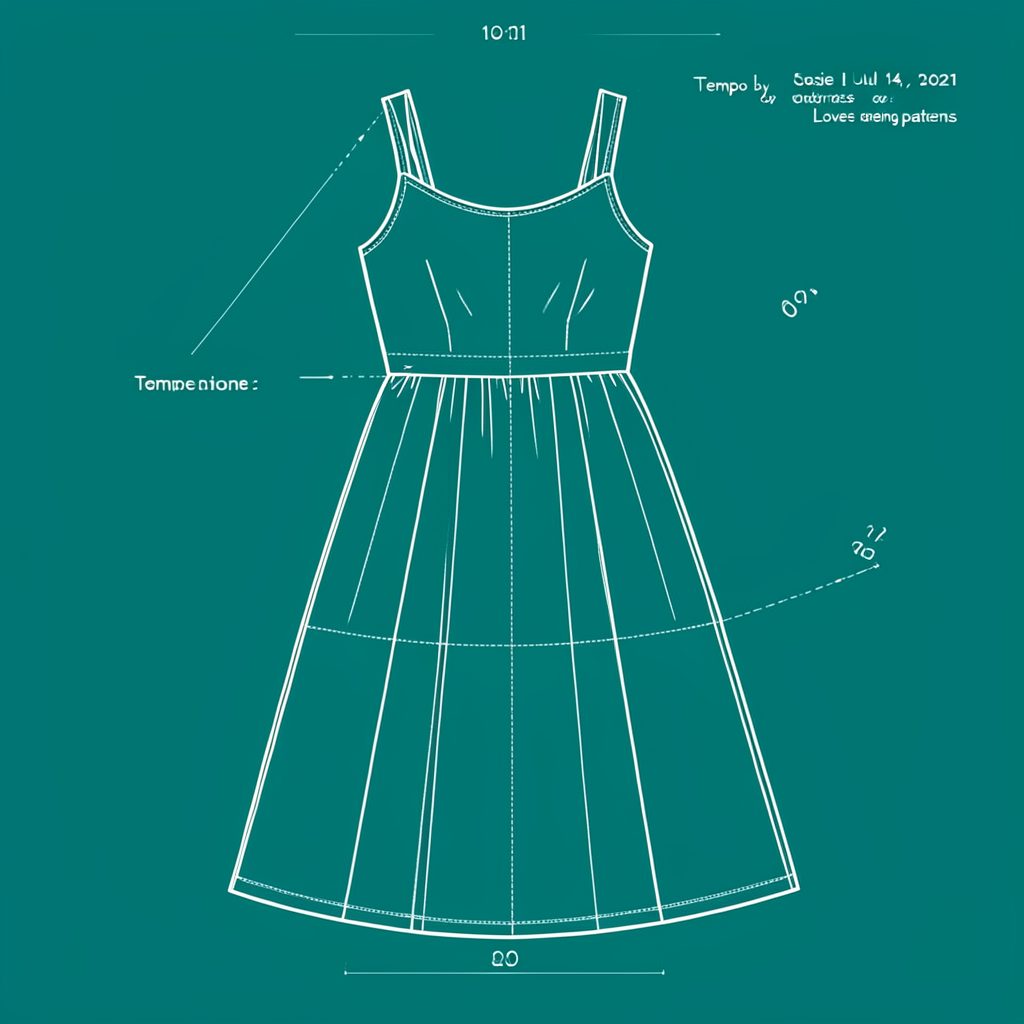
Love Notions Sahara Dress: Adding A Full Circle Skirt
A full circle skirt brings movement, volume and a definite sense of occasion to the Love Notions Sahara Dress. It can turn a familiar fitted bodice into a swishy summer dress, while still keeping the pattern’s original neckline, shaping and construction methods.
The change is quite manageable, but it is more involved than simply widening the existing skirt pieces. A circle skirt is drafted from the waist measurement, so the finished result depends on an accurate waistline, suitable fabric and enough room for the hem to hang evenly before it is finished.
This kind of project suits Australian wardrobes particularly well. A lightweight cotton or rayon version can work for warm days in Brisbane or Sydney, while a linen blend may feel more comfortable through a dry Adelaide summer. For cooler Melbourne weather, the dress can be paired with a cardigan or worn over a fitted tee.
Before downloading or altering any pattern, check the designer’s terms and the information provided with the file. My own site policies and commercial relationships are explained in this disclosure information, which is worth reviewing whenever a project involves affiliate links, gifted supplies or sponsored content.
| Skirt choice | Fabric use | Movement | Sewing considerations |
|---|---|---|---|
| Original skirt | Lower | Gentle | Fastest construction |
| Half-circle skirt | Moderate | Soft flare | Uses less fabric |
| Three-quarter circle | Generous | Noticeable swing | Good everyday balance |
| Full circle skirt | Highest | Dramatic and fluid | Needs careful waist drafting and hem preparation |
Choosing the right base
Start with the Sahara bodice size that matches your high bust, full bust and waist measurements according to the pattern instructions. Do not choose a larger bodice simply because you want a fuller skirt. The skirt can be changed independently, but the waist seam must remain the same length as the lower edge of the bodice.
Print and assemble the original pattern before making alterations, even if you plan to replace the skirt. The original pieces show the intended seam allowance, waistline and grain direction. Mark the finished waist measurement on the bodice rather than relying only on the printed size line.
A full circle skirt is most successful when the bodice is stable and comfortably fitted. If the bodice is made from knit fabric, consider whether the skirt should also be knit. Mixing a stretchy top with a heavy woven skirt can pull at the waist seam, while a light woven skirt joined to a stable knit may need a firm waistband or clear elastic for support.
Measuring and planning the skirt
Measure the finished waistline, not just your body. If the Sahara bodice includes seam allowance at the waist, subtract or add it correctly so that the skirt’s seam line matches the bodice’s seam line. For a full circle skirt, divide the finished waist measurement by 6.28 to calculate the radius from the centre point to the waist edge.
For example, a 76 cm finished waist gives a radius of approximately 12.1 cm. Add the desired skirt length to that number, then add the hem allowance. A skirt measuring 70 cm from waist seam to finished hem would need a quarter-circle radius of about 82.1 cm from the centre point.
Width of fabric is often the limiting factor. A long full circle may require two or four panels rather than one folded piece. In Australia, this matters when shopping at Spotlight, Lincraft or independent fabric shops, because locally available fabric widths can vary from around 110 cm to 150 cm. Check the cut plan before buying yardage or metreage.
Drafting the new shape
Fold a large sheet of paper in half and mark the fold as the centre line. From the top corner, measure the waist radius at several points and join those marks into a smooth curve. From the same corner, measure the skirt length plus hem allowance and draw the lower curve.
If the whole skirt will be cut on the fold, the paper represents one quarter of the finished circle. For a skirt made from separate panels, draft a narrower section and add seam allowances to both side edges. A panelled version is often easier to fit into Australian fabric widths and creates useful seam lines for pockets.
Transfer the grainline clearly. The centre-front and centre-back areas have different relationships with the fabric grain depending on the cutting method, and a circle skirt contains sections that behave like bias. Stay-stitch the waist edge soon after cutting, especially when working with rayon, viscose or lightweight linen.
Before cutting the final fabric, make a quick toile from an inexpensive sheet or old doona cover. It will reveal whether the skirt length is practical, whether the waist meets the bodice cleanly and whether the fabric volume feels comfortable for walking, sitting and climbing public transport stairs.
Joining the skirt to the bodice
Sew the skirt side seams or panel seams first, then press them according to the fabric. Match the skirt quarter points to the bodice centre front, centre back and side seams. If the skirt waist is slightly longer than the bodice, distribute the excess carefully rather than creating large gathers.
A full circle skirt normally joins best with a smooth waist seam. If the waist edges do not match, check the radius calculation, seam allowances and whether stretching occurred during cutting. Do not force the pieces together, as this can distort the bodice and make the finished dress uncomfortable.
Use the construction order recommended for the Sahara version you are making. A zip, button opening or knit neckline may require a different sequence. Press the seam upwards or downwards as appropriate, and reinforce it with clear elastic or lightweight interfacing when the fabric needs additional stability.
For a softer casual dress, a narrow overlocked seam can be enough. For a more polished garment, finish the seam with bias binding, a clean serged edge or a line of understitching where the construction allows it. These details are especially useful when the dress is worn frequently through hot Australian summers.
Managing hem behaviour
The hem of a circle skirt includes areas cut close to the bias, so it will often drop after hanging. Leave the dress on a hanger for at least 24 hours before levelling the hem. Rayon, viscose and silk blends can change dramatically during this stage, while cotton lawn and quilting cotton are usually more predictable.
Ask someone to mark the hem while you stand naturally, or use a skirt marker if you have one. Wear the shoes you expect to use with the dress. A hem that looks even on a sewing table may appear uneven once the garment is worn, particularly on a fuller skirt.
A narrow double-fold hem, bias-bound edge or rolled hem suits lightweight fabric. Medium-weight linen and cotton can handle a wider double-fold finish. Avoid a heavy hem facing unless the fabric has enough body, as extra weight can pull the skirt down and alter its drape.
For a practical reference on adapting independent patterns and assessing construction choices, this pattern review offers useful ideas that can also be applied to the Sahara project.
Making the dress wearable
The extra fabric in a full circle skirt needs consideration beyond appearance. Test the finished width around your legs before attaching it to the bodice. You should be able to sit comfortably without the skirt riding sharply upwards, and the hem should not catch on chair legs or bicycle baskets.
Pockets can be added to a panel seam if the skirt is drafted in sections. Side-seam pockets are also possible, though their position must be checked against the bodice and waistline. A pocket holding a phone or keys can pull a lightweight circle skirt out of shape, so reinforce the opening and keep the pocket bag modest.
When selecting fabric, consider care as well as colour. Australian summer garments may need frequent washing, and a fabric that requires dry-cleaning can become inconvenient. Pre-wash fabric using the method you expect to use later, especially if the finished dress will be exposed to strong sun, salt air around Perth or humid conditions in Darwin.
The following checks keep the alteration straightforward:
- Match the finished skirt waist to the bodice seam line
- Confirm the fabric width before finalising the cutting layout
- Make a toile if the bodice or waistline has already been altered
- Stay-stitch bias-prone edges immediately after cutting
- Hang the dress before levelling and finishing the hem
- Test sitting, walking and pocket use before declaring the dress finished
Australian makers should also remember that GST may apply to some overseas digital pattern purchases, depending on the seller and the transaction. Australian Consumer Law generally does not require a refund for a simple change of mind, although consumer guarantees can apply if a product is faulty or does not match its description. Keeping the receipt, download details and pattern version is sensible if there is a problem.
Adding a full circle skirt gives the Sahara a very different personality without discarding the bodice that made the pattern appealing. With careful radius calculations, a suitable fabric and a patient approach to the hem, the result can be light, comfortable and dramatic enough for celebrations while still earning a place in an everyday Australian wardrobe.
Popular Pattern Reviews
| Pattern | Designer | Type | Highlight |
|---|---|---|---|
| Compose Robe (Kids) | Love Notions | Robe / Loungewear | Sizes 2T–16, cosy & practical |
| Tempo Sundress | Love Notions | Sundress | No closures, shirred back panel |
| Arlington Sweater | Love Notions | Sweater | Cold-weather staple |
| Sybil Illusion Skirt | Love Notions | Skirt (knit) | 7 variations, optional pockets |
| Camden Pinafore | Nina Lee Patterns | Pinafore dress | Year-round layering piece |
| Ogden Cami (dress hack) | True Bias | Cami / Dress | Versatile wardrobe builder |
| Burda 6829 | Burda | Dress | Multi-sized, special-occasion |
Stay in Touch
Subscribe to the newsletter for sewing inspiration, pattern tips, and project ideas delivered straight to your inbox.