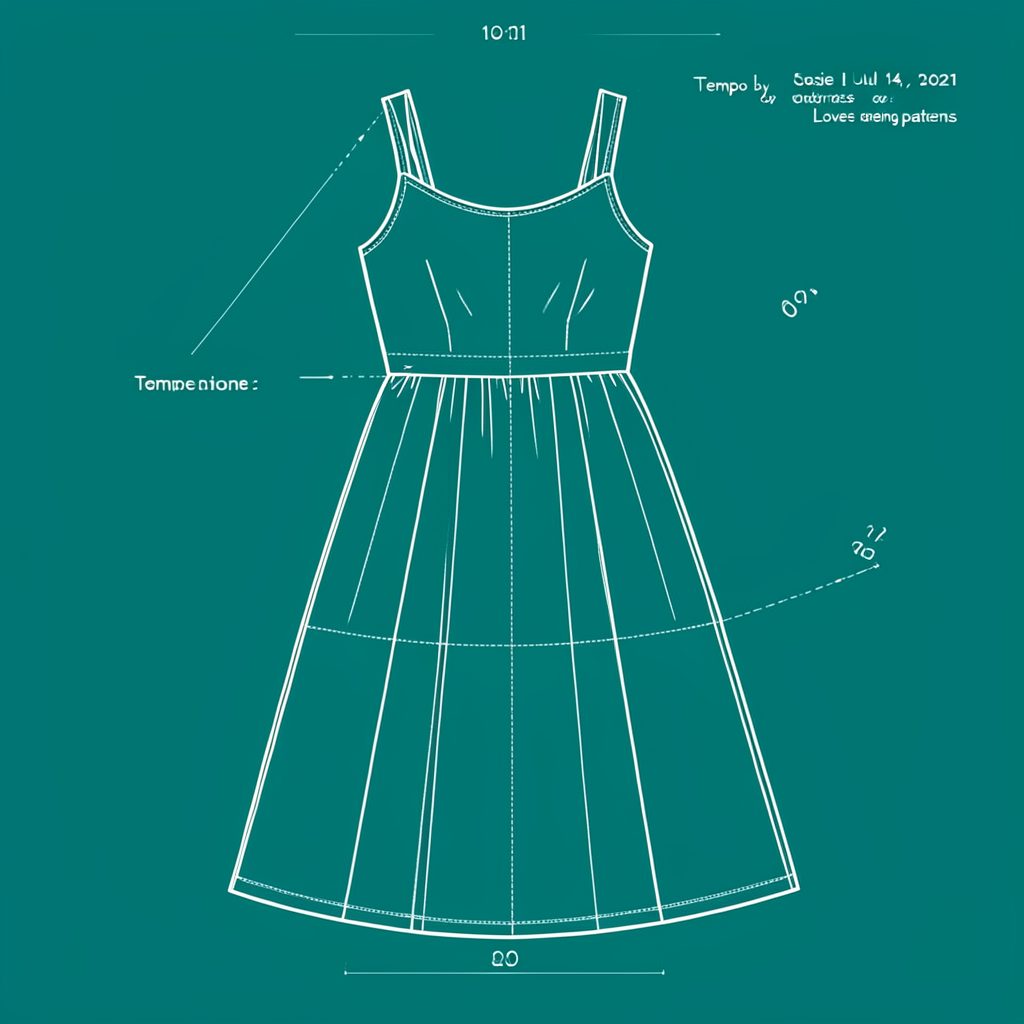
Sewing a dartless fit with confidence
A dartless bodice can look wonderfully easy: fewer marked lines, faster cutting, and a clean uninterrupted front. Yet removing a dart does not remove the need for shaping. Bust fullness still has to go somewhere, whether it is accommodated through added ease, a yoke, gathers, pleats, curved seams, or the natural volume of a relaxed garment.
The right approach depends on the style you want and the fabric you have chosen. A loose linen top can absorb extra room gracefully, while a close-fitting woven blouse needs a more deliberate adjustment. Understanding that difference makes dart-free sewing much less mysterious.
For beginners, this is also a useful way to learn how a pattern controls fit. Instead of following a single set of instructions, you can assess where the garment needs space, which seams can provide it, and how much structure the fabric will support.
What a dartless bodice really means
A dart is a wedge of fabric removed from a pattern to create three-dimensional shape over the bust. A dartless design does not have that visible wedge, but the garment still needs enough width and length to pass over the bust without pulling. The shaping has simply been distributed elsewhere.
Some dartless patterns are intentionally relaxed, with generous wearing ease through the chest and waist. Others use a straight side seam, a box pleat, gathers beneath a yoke, or a curved panel seam. Knit patterns may rely on stretch, while woven designs often need more careful blending between bust, waist, and hip measurements.
This is why a dartless fit is not automatically oversized. A polished shirt can have a smooth, simple front and still fit well, provided the pattern includes enough room for the body. Look at the finished garment measurements and the intended ease before choosing a size.
Choosing the right kind of ease
Wearing ease is the extra room added so you can move, breathe, and layer comfortably. In a dartless garment, it often provides much of the bust accommodation. The amount required varies with the fabric, silhouette, and design. A fluid viscose may skim the body with moderate ease, whereas crisp cotton may need additional room to avoid strain.
Start by comparing your body measurements with the pattern’s finished measurements at the full bust, waist, and hip. Do not judge the fit by bust measurement alone. If the garment narrows sharply below the bust, a full-bust adjustment may still be needed even when the style appears relaxed.
Pay attention to the location of the ease. Extra width at the side seams creates a different shape from added fullness at the centre front. A gathered neckline gives a soft, romantic effect, while a straight oversized block produces a more modern, architectural silhouette.
Where the shaping can go
Pattern designers use several techniques to replace a traditional bust dart. A yoke seam can carry fullness into gathers or pleats, and a princess-style seam can curve over the bust while keeping the front visually clean. A centre-front seam, wrap construction, or shaped side panel can perform a similar job.
Shoulder gathers and neckline pleats are particularly useful for a blouse with a relaxed upper body. They provide room where it is needed, although they can add visual volume around the chest. A dropped shoulder or a wide sleeve may also make movement easier, but it does not automatically solve a tight bust area in the front bodice.
For a practical example of how a seam can become a design feature, this yoked seam tutorial is useful when considering shirts and tops with upper-body panels. The seam can be both decorative and functional when it controls fullness carefully.
| Dartless approach | Best suited to | Fit effect | Points to watch |
|---|---|---|---|
| Added wearing ease | Relaxed tops and tunics | Soft, loose silhouette | Can look boxy in firm fabric |
| Yoke with gathers | Shirts and blouses | Fullness concentrated below seam | Check that gathers do not add unwanted bulk |
| Pleats or tucks | Structured woven garments | Controlled, directional volume | Press accurately and match placement |
| Curved panel seam | More shaped bodices | Smoother contour over the bust | Seam accuracy affects the final fit |
| Stretch fabric | T-shirts and casual tops | Flexibility with fewer shaping details | Recovery and stretch percentage matter |
| Gathers at neckline | Feminine or relaxed styles | Extra room through upper chest | May alter neckline balance |
Checking the toile before cutting fabric
A toile is especially valuable when converting from a darted block or sewing a woven pattern without obvious shaping. Use inexpensive fabric with a similar weight to the final cloth. A very light cotton toile will not reveal the same problems as a medium-weight linen or brushed fabric.
Put the toile on with the type of undergarments you expect to wear. Look for drag lines radiating from the bust, horizontal strain across the chest, a front hem that rises, or side seams that swing towards the front. These signs usually indicate that the garment needs more bust room or more length over the bust.
Excess fabric can also be a fit issue. If the neckline gapes, the shoulder falls too far out, or the armhole exposes too much, simply taking in the side seam may not be the best fix. Mark the problem on the toile, then transfer the change to the paper pattern while preserving the original grainline and seam relationships.
Adjusting a dartless pattern
A full-bust adjustment can be made to many dartless patterns, but the method differs from adjusting a standard darted bodice. You may need to add width and length through the bust while keeping the side seam, neckline, and hem balanced. The new fullness can be left as ease, converted into gathers, or absorbed into a seam or pleat.
When the pattern has a yoke, separate the yoke from the lower bodice before making changes if possible. Add the required room to the lower section, then true the joining edges so they remain the same length. If gathers are part of the design, distribute the added width evenly rather than placing it all at one point.
For a knit garment, check the fabric’s stretch and recovery first. A pattern drafted for two-way stretch may sit very differently in a stable jersey. Reducing negative ease can improve comfort, while increasing the size may prevent the side seams from twisting towards the front.
Fabric, pressing, and construction choices
Fabric can make a dartless design look either intentional or unfinished. Drapey cloth softens gathers and disguises small fitting variations, while stable woven fabric shows every imbalance. Linen, cotton lawn, rayon, and lightweight chambray can all work well, but each creates a different level of structure.
Stay-stitch curved or bias edges as soon as they are exposed, especially around necklines and yokes. Interface a yoke or button band when the pattern requires support, but avoid adding stiffness to an area that is meant to fall softly. Accurate pressing helps the garment settle into its intended shape, particularly around pleats and gathered seams.
If you enjoy exploring adaptable garment ideas, Josie’s DIY sewing projects offer a useful source of inspiration for applying these principles beyond one pattern. A dartless design is often a good starting point for modest alterations because the style lines are simple and easy to reinterpret.
A reliable fitting routine
Before sewing the final garment, compare the paper pattern with a well-fitting top. Check shoulder width, bust level, armhole depth, and finished length. This quick comparison can reveal a mismatch before fabric is cut, especially if your measurements fall into different size brackets.
During construction, baste major seams and try the garment on at several stages. Check the shoulder and side seams before finishing the neckline, then reassess after sleeves are attached. Sleeves can change the balance of the whole bodice, and a tight upper arm may make the chest appear tighter than it really is.
Keep notes about the adjustment you make, including the finished garment measurement, fabric type, and any changes to length or width. These records are valuable when sewing another version from the same designer. For approachable pattern reviews and practical sewing observations, you can also learn more about Josie’s sewing background.
Practical habits for a smoother fit
- Measure the pattern’s finished bust, waist, and hip dimensions before choosing a size.
- Make a toile in a fabric with a similar weight and drape to the final material.
- Check for drag lines and a raised front hem rather than relying only on how the garment feels.
- Preserve grainlines, seam lengths, and neckline balance when adding bust room.
- Record successful adjustments so future versions need less trial and error.
A dartless garment should feel deliberate rather than shapeless. When ease, seam placement, fabric behaviour, and body measurements work together, the result can be comfortable, flattering, and beautifully simple.
Choose a relaxed woven top or knit pattern for your next project, make a quick toile, and test where the fabric naturally wants to move. With a few careful observations and thoughtful adjustments, dart-free sewing can become one of the most flexible techniques in your handmade wardrobe.
Popular Pattern Reviews
| Pattern | Designer | Type | Highlight |
|---|---|---|---|
| Compose Robe (Kids) | Love Notions | Robe / Loungewear | Sizes 2T–16, cosy & practical |
| Tempo Sundress | Love Notions | Sundress | No closures, shirred back panel |
| Arlington Sweater | Love Notions | Sweater | Cold-weather staple |
| Sybil Illusion Skirt | Love Notions | Skirt (knit) | 7 variations, optional pockets |
| Camden Pinafore | Nina Lee Patterns | Pinafore dress | Year-round layering piece |
| Ogden Cami (dress hack) | True Bias | Cami / Dress | Versatile wardrobe builder |
| Burda 6829 | Burda | Dress | Multi-sized, special-occasion |
Stay in Touch
Subscribe to the newsletter for sewing inspiration, pattern tips, and project ideas delivered straight to your inbox.