DIY drawstring backpack from upcycled denim
A DIY drawstring backpack from upcycled denim gives discarded jeans a useful second life while producing a bag that feels tougher than most shop-bought alternatives. Curved back pockets, contrast topstitching and faded waistbands become visual details instead of waste. The project suits a confident beginner who has sewn a straight seam, while the simple gathered shape still allows room for a lined interior, reinforced straps and a handmade closure.
This version works as a medium day bag, with a wide mouth, two shoulder straps and an internal pocket sized for a phone, keys and a small notebook. The first construction should establish the body and straps, with decorative extras added after the bag passes a load test. That order matters in Australia, where summer heat and strong sunlight can quickly weaken a narrow strap or fade an unprotected denim panel.
Choose supplies and check the pattern
Start with the finished dimensions rather than a garment size. A medium backpack is often around 28–32 cm wide, 32–36 cm high and 10–12 cm deep, although the depth depends on whether the bag will hold books, a laptop or lighter everyday essentials. Australian sewists work comfortably with metric measurements, but imported indie patterns may use inches, so compare the finished measurements rather than relying on the size printed on the pattern. Sewists who enjoy the clear construction details of Love Notations patterns can apply that same precision to a small accessory. For a ready-made alternative, compare the shapes in the independent pattern shop before drafting from scratch.
Denim is easiest to find through Australian op shops, charity shops and weekend flea markets. Melbourne, Sydney, Brisbane and many regional towns have strong second-hand networks where old jeans are sold by the pair or by weight. Choose jeans with sound seams and plenty of flat fabric, while faded panels and repaired knees can become deliberate feature panels. Check whether a pair is mostly cotton, whether it contains elastane and whether the colour will coordinate with your chosen lining or thread.
Core supplies
- Two pairs of jeans or an equivalent pile of denim offcuts
- Cotton-wrapped drawcord, plus denim strips for the shoulder straps
- Strong sewing thread, a 90/14 needle and optional ballpoint needles
- Scraps for lining, pocket details, reinforcement and hardware
Before cutting
- Wash and dry every pair so shrinkage cannot distort the panels.
- Compare the pattern measurements with the usable width of the jeans.
- Decide where the original pockets, waistbands and faded areas will appear.
Cut and assemble the bag body
Open the jeans along the side seams and press them flat before marking the pattern pieces. Arrange the main panels so familiar curves add interest to the front, then use narrower sections for the gusset and straps. Label every piece before cutting, including mirrored sections, because recycled denim rarely provides several large rectangles in the same shade.
Sew the front, back and gusset with right sides facing. Ease the upper edge evenly as you join the gusset, then check the depth from every angle before topstitching. Reinforce the joins with a second seam line and trim away bulky seam allowances. A clean back pocket can be incorporated into one panel as an exterior pocket, provided the original stitching remains secure.
A lightweight lining gives the bag a smoother interior and conceals the gathered seam allowances. Cut it slightly smaller than the denim body, leaving the top edge open, and add a separate pocket for small belongings. If you trim an inner pocket with vintage stretch lace, check the needles for stretch lace guidance first, since a universal needle can split delicate elastic fibres or leave holes in fine knit fabric.
Shape the drawstring channel and carry straps
Make the drawstring channel after the bag body is complete, so its width can be judged against the finished opening. Fold the upper edge to the inside, stitch it twice and turn the casing right side out. Thread the cord through with a safety pin or cord tube, then secure each end with a small knot or cord end. Leave short tails rather than creating a long loop that could catch during a busy train or school run.
Construct the shoulder straps from long denim strips or sturdy waistband sections. Fold each strip lengthwise, press it flat and stitch both edges, reinforcing the points where the strap meets the bag with several rows of topstitching or bar tacks. Adjustable sliders are useful, but they should connect to reinforced tabs rather than thin decorative loops.
Test the finished bag with a realistic load before adding ornament. Carry it around the house, through a shop and across uneven ground, checking that the base does not sag and the strap seams remain comfortable under weight. Denim may soften slightly with use, so the hardware and reinforcement need to carry more load than the fabric alone.
Add useful recycled details
Small accessories can make an upcycled bag distinctly personal without weakening its structure. A fabric-covered button adds a neat focal point to a patch pocket, a key tab or the centre of a gathered front panel. This fabric-covered button tutorial shows how matching scraps can produce a firm, attractive closure while keeping another piece of denim in circulation.
A pocket opening can be finished with folded bias binding, narrow bias strips made from a rescued shirt or a simple topstitched edge. Reuse a clean jeans label inside the bag, or make a new one from lightweight cotton. Contrasting thread can highlight the construction rather than hiding it, especially around the gusset and straps. Keep trims washable and avoid placing loose decorations where they might snag on a pram, bicycle or crowded public transport.
Selling finished bags at an Australian craft market or through a small online maker shop involves more than setting a price. The Australian Consumer Law applies alongside relevant state and territory fair-trading laws. Textile labelling requirements are classification-specific: clothing and some household textiles have prescribed fibre-content and care-label rules, while the treatment of a finished backpack may differ. Sellers should check current federal guidance and their local requirements before attaching any label or making claims about durability.
Compare practical construction choices
The most useful comparison is between the amount of denim required, the strength of the finished bag and the time needed for construction. The traditional two-pair version is balanced and reliable, while smaller or more experimental versions can use fewer jeans or turn several colours into a patchwork feature.
| Construction route | Denim requirement | Strength | Best suited to | Added effort |
|---|---|---|---|---|
| Single-pair version | One pair and small offcuts | Good for lighter loads | A compact colour-blocked pouch | Low |
| Classic two-pair build | Two pairs of jeans | Strong and evenly balanced | An everyday work or school bag | Medium |
| Patchwork body | Assorted denim panels | Strong when seams are reinforced | A bold mixed-wash finish | Medium to high |
| Fully lined and structured | Denim, lining and batting | Excellent shape retention | Frequently carried gear and electronics | High |
For regular Australian errands, the classic two-pair route offers a practical balance of capacity, strength and fabric availability. Its gathered top expands when needed, the recycled pockets provide character and the reinforced straps handle daily use. A carefully finished bag like this turns individual jeans into a useful companion with a visibly personal history.
Popular Pattern Reviews
| Pattern | Designer | Type | Highlight |
|---|---|---|---|
| Compose Robe (Kids) | Love Notions | Robe / Loungewear | Sizes 2T–16, cosy & practical |
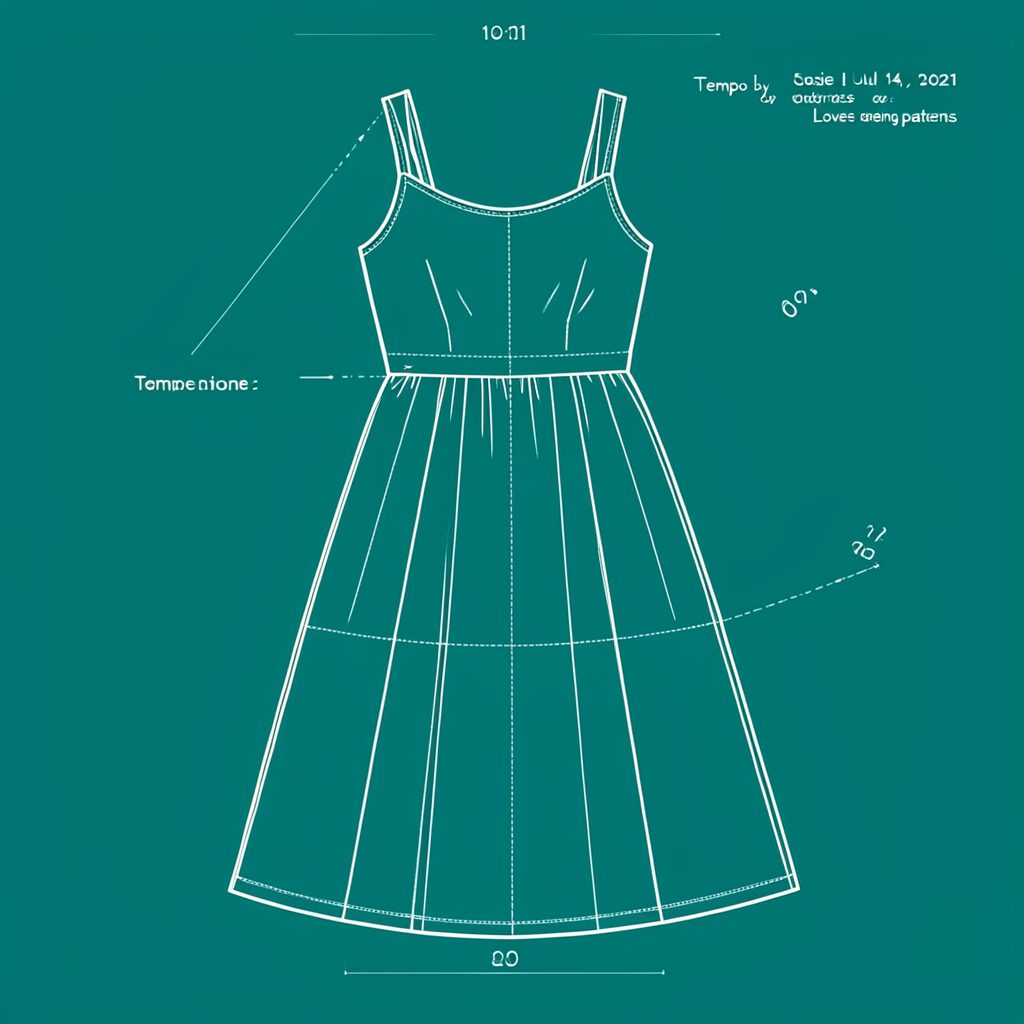
| Tempo Sundress | Love Notions | Sundress | No closures, shirred back panel |
| Arlington Sweater | Love Notions | Sweater | Cold-weather staple |
| Sybil Illusion Skirt | Love Notions | Skirt (knit) | 7 variations, optional pockets |
| Camden Pinafore | Nina Lee Patterns | Pinafore dress | Year-round layering piece |
| Ogden Cami (dress hack) | True Bias | Cami / Dress | Versatile wardrobe builder |
| Burda 6829 | Burda | Dress | Multi-sized, special-occasion |
Stay in Touch
Subscribe to the newsletter for sewing inspiration, pattern tips, and project ideas delivered straight to your inbox.