Choosing polyester crepe for soft, draped necklines
Polyester crepe is a useful fabric when you want a neckline that falls into gentle folds rather than standing away from the body. Its slightly pebbled surface catches the light softly, and the fabric is usually available at a more approachable price than silk or high-quality viscose crepe. For sewing patterns with cowls, gathers, pleats or a relaxed surplice front, it can be a very practical choice.
The name covers several different cloths, though. Some polyester crepes are light and fluid, while others are dense, springy and almost suiting-like. A fabric that looks elegant on a roll may behave quite differently once it is cut on the bias, so checking weight, opacity, stretch and recovery matters more than relying on the word “crepe” alone.
This is the kind of fabric decision I enjoy exploring on Josie's sewing story, where pattern details and everyday wearability are equally important. A beautifully draped neckline still needs to survive movement, laundering and the climate it is worn in.
For Australian sewists, the same blouse can face very different conditions: humid Brisbane summers, dry heat in Adelaide, cool Melbourne mornings or strong air conditioning in Sydney offices. Polyester crepe is often appealing because it resists creasing, but breathability and static deserve careful consideration before buying several metres.
| Fabric | Drape | Breathability | Ease of care | Best use |
|---|---|---|---|---|
| Polyester crepe | Fluid to moderately fluid | Low to moderate | Excellent | Cowls, gathered tops, travel garments |
| Viscose crepe | Soft and fluid | Moderate to good | Moderate | Blouses and dresses for warm weather |
| Silk crepe | Fluid, luxurious | Good | More demanding | Occasionwear and fine draping |
| Crepe satin | Fluid with a shine | Low to moderate | Good | Evening tops and statement necklines |
How the fabric behaves at the neckline
Drape is the main attraction. When a neckline is cut with extra width, polyester crepe tends to collapse into rounded folds instead of forming sharp, bulky pleats. A lightweight quality works well for a cowl neckline, while a medium-weight version can support a gathered neckline without looking flimsy.
The reverse side is usually duller than the face, which can be useful in a folded neckline because the interior does not compete with the visible surface. Check the fabric in motion rather than judging it flat. Hold a corner at shoulder height, let it hang, and gently scrunch it in your hand. It should release into soft folds rather than staying crushed or springing into stiff ridges.
Some polyester crepes contain elastane. This can make a close-fitting bodice more comfortable, but it also changes the neckline’s behaviour. A cowl may stretch lower than intended, and a bias-cut edge can become wavy. Match the fabric’s stretch to the pattern requirements and avoid assuming that every “stretch crepe” has the same recovery.
Choosing weight, opacity and surface
For a draped neckline, lightweight to medium-light fabric is generally the safest starting point. Very thin crepe creates attractive movement, but it may reveal seam allowances, bra straps or the shape of the bust. Medium-weight crepe gives more coverage and can make a simple top feel polished without requiring a full lining.
Hold the bolt up against a bright shop window or place a hand behind a sample. White, cream and pastel shades are particularly likely to need a camisole, lining or facing in a lighter-weight fabric. A self-lined cowl can become unnecessarily heavy, so consider a fine voile, tricot or lightweight lining instead.
Surface texture varies from barely pebbled to distinctly grainy. A strong texture disguises small pressing marks and minor handling, while a smoother crepe shows every crease but may look more luxurious. Avoid fabrics with an overly shiny finish if the garment pattern has many gathers, since highlights can make the neckline appear busier than expected.
Australian fabric shopping also means comparing prices in Australian dollars and checking whether the listed width is 112 cm, 140 cm or 150 cm. A narrow bolt can increase the amount required for a full, draped front. Online listings should state fibre content and measurements clearly; under the Australian Consumer Law, product descriptions must not create a misleading impression about what is being sold.
Sewing and stabilising slippery crepe
Polyester crepe is usually less troublesome than silk, but its slippery surface can still shift under the presser foot. Use a sharp Microtex needle, a fine polyester thread and a slightly shorter stitch length for curved neckline seams. Test on scraps first, especially if the fabric has elastane or a loose weave.
Cutting is easier when the fabric is laid on a large, clean surface with plenty of support. Pattern weights reduce distortion, while fine pins placed within the seam allowance prevent visible holes. If the fabric moves, use more weights rather than stretching it flat. A rotary cutter can produce accurate edges, but traditional shears work well when the cloth is properly supported.
Stay-stitch curved necklines shortly after cutting, particularly if the garment has a bias section. Stay-stitch just inside the seam allowance and keep the line consistent so it will not show after construction. A narrow strip of lightweight fusible interfacing can reinforce a shoulder or neckline seam, but test it carefully because some polyester fabrics develop a permanent shine under heat.
Press from the wrong side with a low to medium temperature and a pressing cloth. Polyester can melt, flatten or become glossy when overheated. Steam may help relax a seam, but do not drag the iron across the surface. For a neckline that needs to retain fluidity, avoid heavy topstitching unless the design specifically calls for it.
Finishing details that preserve the drape
A neckline facing should be light enough to move with the main fabric. A heavy interfaced facing can pull a cowl down, create a ridge around a V-neck or make a soft gathered edge look rigid. Use the smallest practical seam allowance, trim bulky corners and understitch only where it will improve control without restricting movement.
For a clean finish on a lightweight woven crepe, French seams can work on shoulder or side seams, but they may be too bulky around a complicated neckline. A narrow overlocked edge, clean turn-and-stitch finish or bias-bound seam may be more suitable. Always test the chosen finish on a shaped scrap rather than a straight strip.
Hems need equal care. A narrow machine-rolled hem, baby hem or three-thread overlock can keep the lower edge light. Let the garment hang for a day before hemming if the skirt or top includes bias-cut sections. Polyester does not stretch like viscose, but gravity can still reveal uneven lengths after the fabric has settled.
If you enjoy styling garments with small decorative details, visual references can come from unexpected places, including miniature bottle designs. The useful lesson is proportion: a restrained neckline often benefits from one carefully chosen accessory rather than several competing features.
Washing, wearing and storing the finished garment
Pre-wash the fabric in the same way you expect to launder the garment. Many polyester crepes are machine washable on a cool, gentle cycle, but heat from a dryer can set creases, damage elastane or encourage shrinkage in blended cloth. Air-drying on a hanger is usually kinder, followed by light steaming from the reverse side.
Polyester is convenient for travel and commuting because it dries quickly and resists wrinkling. It can feel warm in Queensland humidity, however, and may hold odour more readily than a breathable natural fibre. In Melbourne or Canberra, a polyester crepe blouse layered under a cardigan may be comfortable through much of the year, while a loose cut and short sleeves are more practical for warmer regions.
Static is another common issue, particularly in dry indoor air and air-conditioned offices. A slip, anti-static spray or cotton voile lining can help. Avoid relying on excessive fabric softener, as it may affect the surface finish and reduce the crispness that helps a neckline sit neatly.
Keep the care label and fibre details with your pattern notes, especially if the fabric came from an online Australian retailer. If a listing makes a specific fibre or performance claim, save a screenshot and the order details; clear records are useful if the delivered fabric differs materially from its description. For transparency around product links or recommendations, Josie’s disclosure information explains the relationship behind featured resources.
Polyester crepe earns its place in a sewing wardrobe when its weight is chosen deliberately. A fluid quality can create an elegant neckline with modest construction effort, while careful stabilising, low heat and a lightweight finish preserve the movement that attracted you to the fabric in the first place.
Popular Pattern Reviews
| Pattern | Designer | Type | Highlight |
|---|---|---|---|
| Compose Robe (Kids) | Love Notions | Robe / Loungewear | Sizes 2T–16, cosy & practical |
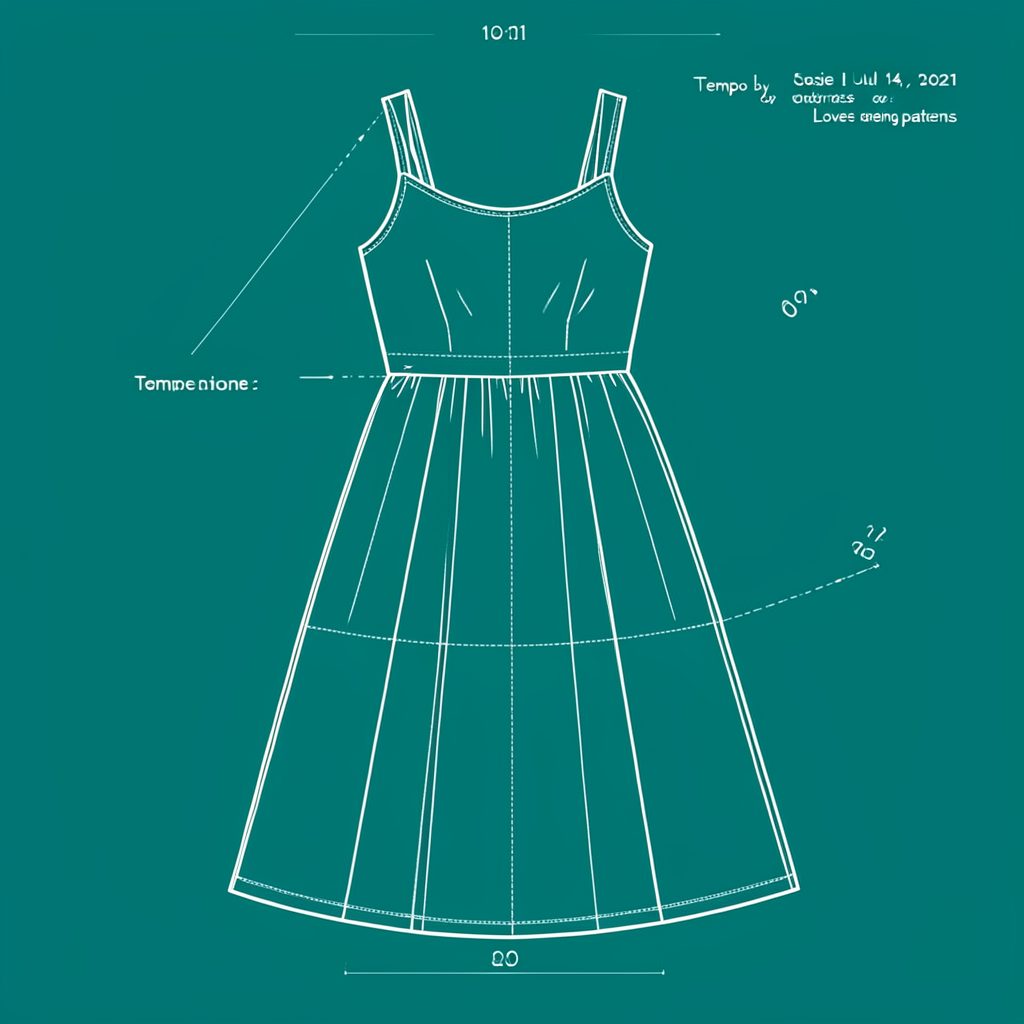
| Tempo Sundress | Love Notions | Sundress | No closures, shirred back panel |
| Arlington Sweater | Love Notions | Sweater | Cold-weather staple |
| Sybil Illusion Skirt | Love Notions | Skirt (knit) | 7 variations, optional pockets |
| Camden Pinafore | Nina Lee Patterns | Pinafore dress | Year-round layering piece |
| Ogden Cami (dress hack) | True Bias | Cami / Dress | Versatile wardrobe builder |
| Burda 6829 | Burda | Dress | Multi-sized, special-occasion |
Stay in Touch
Subscribe to the newsletter for sewing inspiration, pattern tips, and project ideas delivered straight to your inbox.