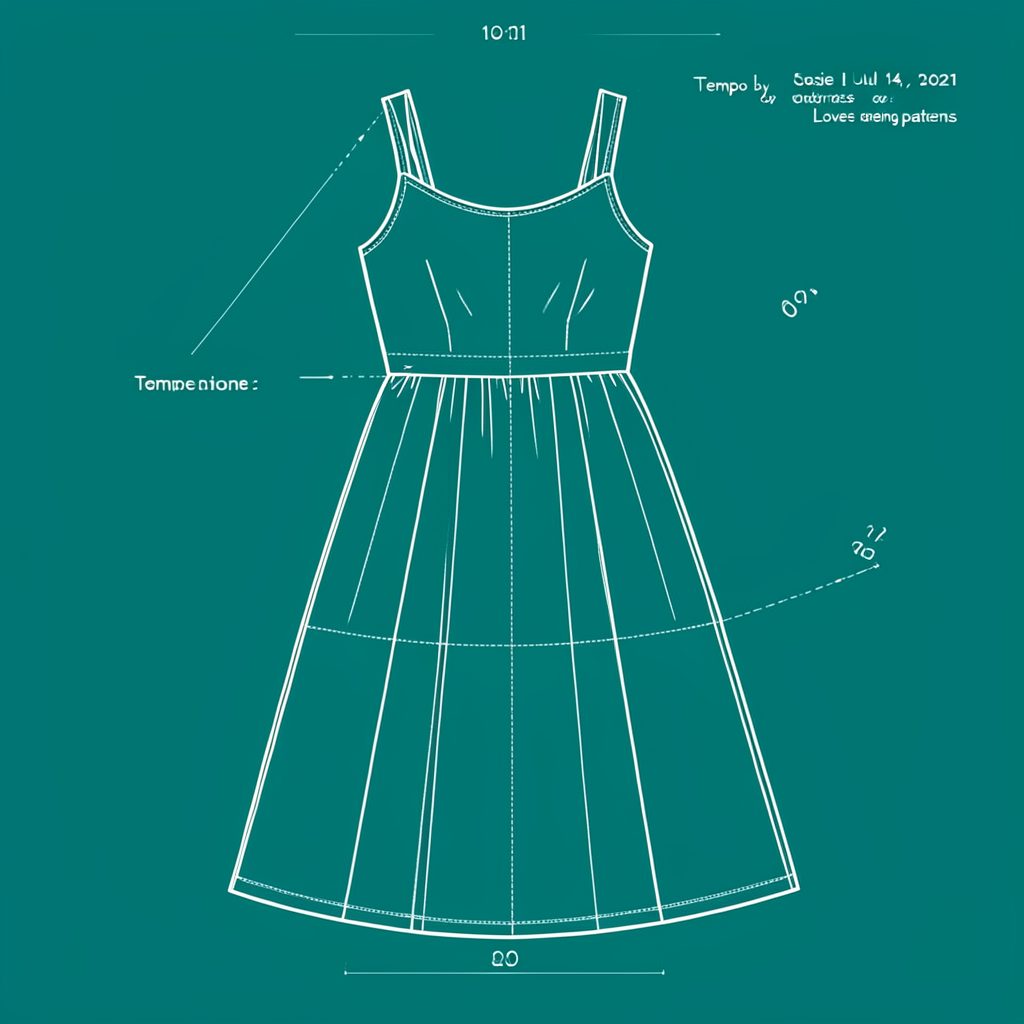
Changing the skirt silhouette of the Love Notions Cantata Dress
The Love Notions Cantata Dress is a useful starting point for sewists who want a polished handmade dress without being locked into one skirt shape. The bodice can stay familiar while the lower half changes dramatically, from a softly gathered skirt to a cleaner A-line or a narrow, modern version.
For Australian sewists, silhouette is closely tied to climate and occasion. A full skirt can feel lovely for a summer garden party in Adelaide, while a straighter shape may be more practical for cycling through Melbourne or wearing under a winter coat in Hobart. The same bodice can therefore become several distinct wardrobe pieces.
Changing the skirt is a satisfying alteration, though it pays to work methodically. The waist seam, finished length, fabric weight and amount of ease all influence the final result. A quick toile in inexpensive cotton will show whether the new proportions suit both the pattern and the person wearing it.
Start with the waist seam and finished measurements
Before redrawing anything, trace the original skirt pieces and mark the seam allowance, centre front, centre back, grainline and waistline. Keep an untouched copy of the pattern so the original version remains available. Measure the bodice waist seam and compare it with the skirt waist edge; these lengths must still match after the alteration.
The finished measurement is just as important as the pattern size. A skirt that looks gently shaped on paper may become quite close-fitting once seam allowances and fabric behaviour are considered. Check the hip area, especially if you are reducing fullness, and compare the hem circumference with how freely you want to walk and sit.
A shirt dress alteration can provide useful general guidance on balancing a bodice and skirt, particularly when changing the lower section. This shirt-dress guide is a helpful reference for thinking about waist seams, button plackets and skirt proportions as related parts of one garment.
Create a gentle A-line shape
An A-line skirt is usually the easiest silhouette to draft because it removes fullness gradually rather than requiring complicated reshaping. Draw a line from the hem to the waist, following the grainline. Cut along this line and close a small amount at the side seam, or add width at the hem while leaving the waist measurement unchanged.
For a modest change, add 5–8 cm to the total hem circumference. A more noticeable A-line may need additional width, but too much can make the side seams swing away from the body. Spread the extra width evenly across the front and back pieces, keeping the centre front and centre back stable.
Australian summer fabrics make this option especially versatile. Cotton lawn, linen, linen-rayon blends and lightweight seersucker can hold an A-line shape without becoming heavy. In humid parts of Queensland or northern New South Wales, a little extra room around the legs can also make a woven dress feel cooler during everyday wear.
Reduce fullness for a straighter skirt
A straighter skirt gives the Cantata a quieter, more contemporary appearance. If the original pattern has gathers or pleats, remove fullness at the waist first rather than simply trimming the hem. Divide the excess evenly between the front and back, then redraw the side seams so they flow smoothly from waist to hem.
Keep enough ease through the hips to sit comfortably. A useful toile test is to pin or baste the side seams, sit on a chair, walk upstairs and take a normal stride. If the fabric pulls horizontally across the hips, restore some width before finalising the pattern.
This shape works well in fabrics with body, such as mid-weight linen, cotton poplin, chambray or a stable viscose twill. Very drapey rayon can still be used, but it may cling at the hips and make small drafting inaccuracies more visible. Pressing the side seams carefully and using a consistent seam allowance will help the streamlined version look intentional.
Add movement with controlled fullness
If you want a fuller skirt without relying on evenly distributed gathers, try converting the lower section into panels. Divide the skirt vertically, then spread each panel from the hem while keeping the waist edges stable. This creates flare that begins lower down and avoids excessive bulk around the stomach.
A soft inverted pleat at the centre front or back can add movement while keeping the side seams relatively slim. Mark the pleat direction clearly on the pattern and calculate the extra fabric needed beneath the fold. Pressing a sample pleat before cutting the final fabric is worthwhile, as linen, cotton and rayon each respond differently.
The design process can be approached like a small piece of visual architecture. Looking at architectural inspiration may seem unrelated to dressmaking, yet strong lines, repeated panels and changes in volume can spark ideas for a skirt that expands from a simple waist into a dramatic hem.
Test the shape before cutting precious fabric
A toile does not need to reproduce every construction detail. Use an inexpensive woven fabric with a similar weight to the final cloth, sew the bodice and skirt together at the waist, and check the balance in a mirror. Photograph the dress from the front, side and back; images often reveal a hem that is uneven or a silhouette that is fuller than expected.
For a shorter Australian wardrobe, consider how the skirt works with sandals, sneakers and flat boots. A midi length may be practical for commuting in Brisbane or Sydney, while a longer hem can suit cooler regional areas. If you are sewing for a winter event, test the dress over the shoes and under the jacket you expect to wear.
Record each alteration on the paper pattern. Note the amount added or removed, the new hem circumference, the skirt length and the fabric used for the toile. Pattern changes are easier to repeat when they are written down rather than left to memory. My DIY sewing projects include the same kind of practical, adaptable approach to making garments and craft items.
Compare the main skirt options
The best silhouette depends on the fabric, the occasion and the amount of movement you want. A fuller shape uses more fabric and may need a deeper hem, while a narrow version can be quicker to sew but requires more attention to hip ease. The table below gives a starting point rather than a fixed rule.
| Skirt silhouette | Pattern adjustment | Suitable fabrics | Overall effect |
|---|---|---|---|
| Softly gathered | Retain or add waist fullness | Lawn, rayon, lightweight linen | Relaxed and feminine |
| A-line | Add width gradually from waist to hem | Poplin, linen blend, chambray | Easy movement and everyday wear |
| Straight | Remove waist fullness while retaining hip ease | Cotton twill, stable rayon, mid-weight linen | Clean and modern |
| Panelled flare | Divide pieces and spread towards the hem | Cotton sateen, linen, viscose | Structured movement |
| Pleated | Build planned folds into the waist | Poplin, wool blend, crisp linen | Defined and tailored |
When altering the Cantata, make one major change at a time. Changing the length, fullness, fabric and neckline in one version makes it difficult to identify what worked. A successful first alteration can then become the basis for a second dress, perhaps in a different Australian-season fabric.
If the pattern or fabric is purchased from a business, keep receipts and check the stated terms. Australian Consumer Law provides protections for goods that are faulty or significantly different from their description, although it does not cover a change of mind after a correctly described digital pattern purchase in every situation. For blog readers, clear disclosure information also helps distinguish personal sewing experience from sponsored or affiliate content.
The finished dress should feel balanced when standing, walking and sitting. Once the waist seam matches, the hem hangs evenly and the fabric supports the intended shape, a simple pattern adjustment can make the Cantata feel entirely individual. Keep the final traced pieces carefully labelled, and the same bodice can support a whole collection of different skirts. For site-related information, the blog’s privacy details explain how personal information is handled.
Popular Pattern Reviews
| Pattern | Designer | Type | Highlight |
|---|---|---|---|
| Compose Robe (Kids) | Love Notions | Robe / Loungewear | Sizes 2T–16, cosy & practical |
| Tempo Sundress | Love Notions | Sundress | No closures, shirred back panel |
| Arlington Sweater | Love Notions | Sweater | Cold-weather staple |
| Sybil Illusion Skirt | Love Notions | Skirt (knit) | 7 variations, optional pockets |
| Camden Pinafore | Nina Lee Patterns | Pinafore dress | Year-round layering piece |
| Ogden Cami (dress hack) | True Bias | Cami / Dress | Versatile wardrobe builder |
| Burda 6829 | Burda | Dress | Multi-sized, special-occasion |
Stay in Touch
Subscribe to the newsletter for sewing inspiration, pattern tips, and project ideas delivered straight to your inbox.