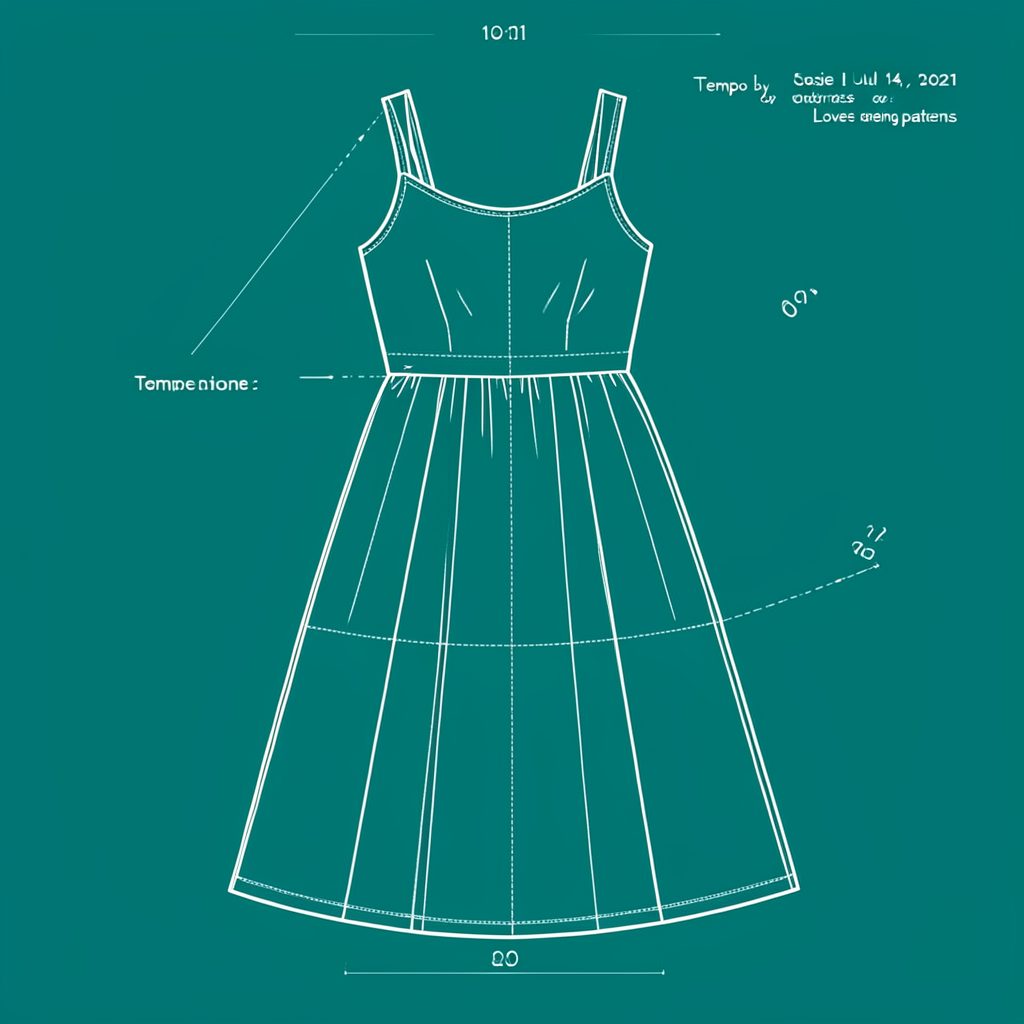
Adding side seam pockets to the Love Notions Fortuna skirt
A skirt can have a beautiful shape, carefully matched fabric and a beautifully finished waistband, yet still feel inconvenient without somewhere to put a phone or keys. Adding side seam pockets to the Love Notions Fortuna skirt is a practical alteration that can make the finished garment much more useful for everyday wear.
The method is approachable for confident beginners, especially if you have already sewn a few seams and understand basic pattern markings. With a little planning around the skirt’s construction, the pocket can be built into the side seam neatly without changing the overall silhouette.
Check the skirt and pocket placement first
Before cutting into your main fabric, examine the Fortuna skirt pattern pieces and identify how the side seams are constructed. Some skirt views have more fullness than others, and any pockets need enough room to open comfortably without pulling the waistline or distorting the hem.
| Pocket option | Best feature | Main consideration |
|---|---|---|
| In-seam pocket | Clean appearance and simple construction | Needs adequate side-seam width |
| Curved patch pocket | Easy to access and decorative | Visible on the outside of the skirt |
| Welt pocket | Tailored finish | Requires careful marking and pressing |
| Hidden side pocket | Useful for lightweight garments | Pocket bag can show through thin fabric |
For an understated result, an in-seam pocket is usually the most suitable choice. You can draft a pocket bag from a favourite skirt or trouser pattern, use a commercial pocket template, or trace around your hand with extra room at the opening. A finished pocket bag around 20–24 cm deep is a useful starting point for an adult skirt, but check this against your own hand and the scale of the garment.
The pocket opening should sit where your hand naturally rests, generally beginning several centimetres below the waist seam. On a high-waisted skirt, placing it too low can make access awkward. On a shorter skirt, keep the lowest point of the pocket well above the hem so the bag cannot peek out while walking or sitting.
Prepare the pattern pieces accurately
Trace the chosen pocket piece onto paper rather than cutting up the original pattern. Mark the stitching line, the pocket opening and the direction of the fabric grain. The pocket opening must meet the skirt side seam at two clearly defined points, so transfer those points to both the front and back skirt pieces.
Cut the side seam at the pocket opening marks, leaving the seam allowance intact elsewhere. If the pattern uses a different seam allowance from your pocket template, adjust the pocket piece before cutting fabric. Matching seam allowances is important because a mismatch can create a step at the pocket opening or leave the bag sitting too high.
For a polished finish, cut two pocket bags from the same fabric or from a compatible lightweight lining. In Australia, breathable cotton voile, cotton lawn or lightweight rayon can be more comfortable than a second layer of heavy linen, particularly during a humid Brisbane summer. A smooth pocket lining also helps the skirt hang neatly.
If you are comparing construction ideas with other independent designers, Josie’s sewing blog includes the kind of practical project-led inspiration that can help you think through fabric, fit and finishing choices before cutting.
Sew the pocket into the side seam
With right sides together, pin one pocket bag to the front skirt at the pocket opening. Match the upper and lower notches precisely, then sew the curved seam using the pattern’s seam allowance. Repeat with the second pocket bag and the back skirt piece.
Press both pocket bags away from the skirt. Understitching close to the seam on the pocket-bag side helps the pocket lining roll towards the inside, keeping it from becoming visible at the opening. This small step is particularly worthwhile with contrasting fabrics or bright prints.
Place the skirt front and back right sides together, aligning the side seams and the pocket bags. Stitch from the waist to the upper pocket notch, backstitching securely. Start again at the lower notch and sew down to the hem. Finally, join the curved pocket edges in one continuous seam.
The junctions above and below the pocket opening receive a lot of strain, so reinforce them with a short line of stitching or a small bar tack. Do not sew across the pocket mouth. Before finishing the side seam, put your hand into the pocket and check that the opening is comfortable and the bag is fully enclosed.
Keep the shape and fit balanced
Side seam pockets add a little weight to the skirt, especially when filled with a phone, sunglasses or a set of keys. If the Fortuna skirt is made from a fluid fabric such as rayon challis, the pocket can pull the side seam down. Stabilising the pocket opening with a narrow strip of fusible interfacing or a length of stay tape can help preserve the shape.
A stay tape strip should sit along the skirt side seam between the pocket notches, rather than across the opening itself. Use a lightweight product suited to the fabric and test it on a scrap first. For linen, cotton and medium-weight woven fabrics, a narrow woven tape is often enough to prevent stretching without making the seam rigid.
Check the pocket before hemming. Hang the skirt for a little while, then try it on with the shoes you expect to wear. This is useful for Australian wardrobes, where a Fortuna skirt may be styled with sandals in Adelaide, sneakers for walking around Melbourne or boots during a cooler Tasmanian winter. The hem should remain level when the pocket is empty and when it holds a few small items.
If the side seam swings towards the front, the pocket bag may be too deep, too heavy or positioned too far forward. A slightly shallower bag or lighter lining can correct the issue. Avoid reducing the opening too much, since a pocket that is difficult to use quickly becomes decorative rather than practical.
Choose fabric and finishes for local wear
The pocket fabric should work with the main garment rather than fight against it. A stable woven skirt can support a pocket bag made from cotton poplin, while a lightweight summer skirt benefits from lawn, voile or lining fabric. If the main fabric is transparent or loosely woven, choose a pocket lining close in colour and consider finishing the exposed seam allowances with an overlocker or a neat zigzag.
Australian fabric availability makes this alteration easy to adapt. Spotlight often carries affordable cottons and lining fabrics for test versions, while independent shops such as The Fabric Store and Tessuti Fabrics can be useful for higher-quality linen, rayon and designer remnants. Check the actual width and weight of the fabric before choosing a pocket pattern, because a narrow remnant may not accommodate a full pocket bag on the grain.
A pocket can also become a quiet design detail. Use a small print inside a plain skirt, match the pocket lining to the waistband facing, or add a contrast fabric left over from another project. If your sewing room contains fabric scraps from seasonal decorations, a sturdy cotton remnant can be put to work; ideas such as this festive pom-pom wreath show how small supplies can find a useful second life.
Finish, test and enjoy the finished skirt
Once the pocket bags are sewn, finish the seams according to the fabric. Overlocking the curved pocket edge can reduce fraying, but a pinked or zigzagged edge may be perfectly adequate for a stable cotton. Press the side seam carefully from the wrong side, using a tailor’s ham or rolled towel to support the curve.
Try the skirt with the items you normally carry. A modern phone may need more depth than an older model, and large sunglasses often need extra width near the top of the pocket. Keep the heaviest objects out of one pocket if possible, since uneven weight can affect the drape and make the waistline feel lopsided.
A final line of topstitching around the pocket opening is optional. It can suit denim, linen or a workwear-inspired Fortuna skirt, while a clean pressed edge is often better for a soft rayon version. Whatever finish you choose, test the pocket several times before trimming seam allowances or completing the waistband.
For project-specific sewing notes, fabric discussions or questions about adapting an independent pattern, you can get in touch. A carefully placed side seam pocket is a small alteration, but it can transform the Fortuna skirt into a garment that works for market trips, office days, travel and relaxed weekends across Australia.
Popular Pattern Reviews
| Pattern | Designer | Type | Highlight |
|---|---|---|---|
| Compose Robe (Kids) | Love Notions | Robe / Loungewear | Sizes 2T–16, cosy & practical |
| Tempo Sundress | Love Notions | Sundress | No closures, shirred back panel |
| Arlington Sweater | Love Notions | Sweater | Cold-weather staple |
| Sybil Illusion Skirt | Love Notions | Skirt (knit) | 7 variations, optional pockets |
| Camden Pinafore | Nina Lee Patterns | Pinafore dress | Year-round layering piece |
| Ogden Cami (dress hack) | True Bias | Cami / Dress | Versatile wardrobe builder |
| Burda 6829 | Burda | Dress | Multi-sized, special-occasion |
Stay in Touch
Subscribe to the newsletter for sewing inspiration, pattern tips, and project ideas delivered straight to your inbox.