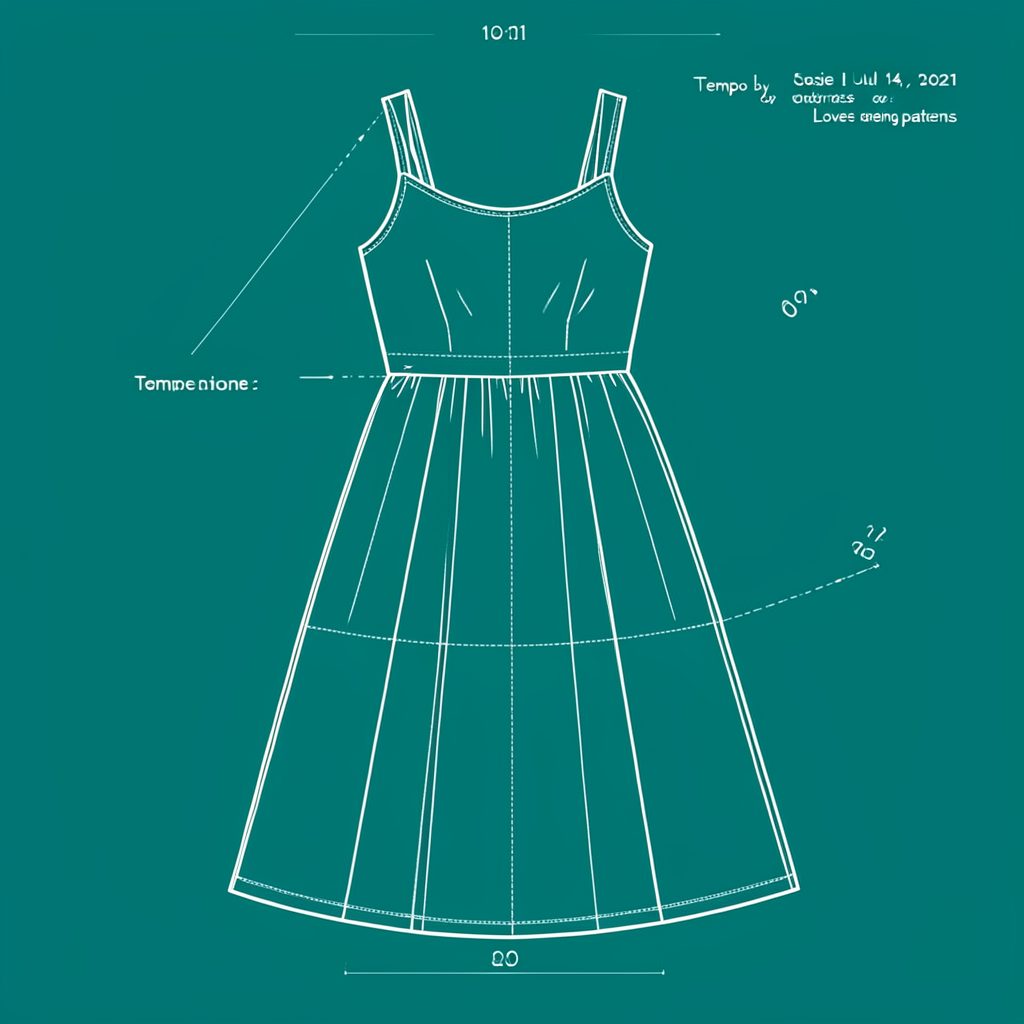
Tilly and the Buttons Indigo dress pattern review
I bought the Indigo dress PDF on a quiet Sunday morning with tea in hand, rain tapping the windows in Hobart. After spotting Australian sewists post their versions online, I committed. I traced the sizes that evening, cut the next afternoon and finished it for a birthday lunch in Fremantle.
Tilly and the Buttons has been a familiar name in home sewing since the release of Love at First Stitch in 2013. Based in Brighton, UK, the patterns are written with beginners in mind while offering enough detail to keep experienced stitchers engaged. Indigo sits within the dress range as a relaxed, button-back style with gathered sleeves that feels gently modern without being fussy.
For Australian sewists, the appeal is partly fabric and partly lifestyle. Our summers in Brisbane or Adelaide can be relentless, and a breezy linen dress that slips on over a swimsuit is a wardrobe workhorse. I wanted a make that would carry me from Perth school runs to casual Friday lunches in Sydney without constant tweaking.
This review covers sizing, fabric choices, construction notes and fit adjustments. I have also compared Indigo to a few other indie patterns I have made recently to help you decide where it sits in your own sewing queue.
Pattern overview and sizing
The Indigo dress comes in sizes 1 through 8, covering a bust range of roughly 81 cm to 122 cm. I usually sit between a size 3 and a size 4 in Tilly patterns, so I traced a size 4 and made a small adjustment at the shoulder after measuring my block against the finished garment chart. The PDF tiles together neatly on A4 paper and the instructions booklet includes the layered printing option so you only print the size you actually need.
The pattern uses UK sizing conventions, and our local high street sizing tends to run slightly smaller. Resist the urge to size down based on the number alone and always go by the finished measurements on the back of the envelope. I added 1 cm of length to the bodice because the waistline sat a touch higher than I wanted in my toile. Under Australian Consumer Law, you are entitled to a refund or replacement if a digital pattern turns out to be faulty or not as described, which is a useful reassurance when buying online.
Choosing fabric for the Australian climate
The pattern recommends lightweight wovens such as cotton lawn, double gauze, viscose or soft linen. With summer temperatures often above thirty-five degrees where I live, I chose a stonewashed linen from a remnant bin at The Fabric Store in Adelaide, though I have also spotted lovely linens at Spotlight and Rathdowne when visiting family in Melbourne. It had a lovely slubby texture and enough drape for the tiers to swing without becoming sheer. For cooler southern winters, brushed cotton or poplin works well, and Tana Lawn softens beautifully with washing.
Avoid heavy quilting cotton, as the tiered skirt relies on movement to look its best. Rayon or viscose challis gives the most swish but can be slippery to cut. For scrap-busting, offcuts from a reversible bucket hat from scrap fabric work well for bias binding the neckline or a small patch pocket. Goods imported under AUD 1000 are generally GST-free, which makes ordering from overseas indie makers fairly straightforward for the occasional splurge.
Cutting, construction and the bodice
Cutting a tiered dress looks more intimidating than it is. I laid my linen flat, smoothed the wrinkles and weighted the corners with pattern weights and clean mugs. The curved tiers create some bias edges, so take care not to stretch them as you cut. I French-seamed the tier joins for a tidy finish, worthwhile with a loose-weave linen. The 1 cm seam allowance makes neat topstitching easier when attaching the tiers.
The bodice comes together with bust darts, shoulder and side seams, then the neckline binding. I made bias binding from the same linen, cutting continuous strips on the bias. Button loops are narrow strips folded and topstitched down. I made mine longer than suggested so I could fasten the dress alone, useful when wrangling small children in peak Sydney traffic. If you are nervous about button placement, pin the loops first, try the dress on, then topstitch.
Fit adjustments and hem
Linen grows with wear and washing, so I cut the tiers slightly shorter than suggested and added length only at the final hem. The skirt has generous ease at the waist, so even after a big lunch you do not feel restricted. I lifted the waist seam by 1.5 cm because I prefer a higher waistline on tiered dresses, which balances the skirt volume. Petite sewists might take length out of the bodice and tiers before cutting.
The final hem was a simple narrow turned hem, hand-stitched with a slip stitch. I find hand-stitching hems on linen meditative and it avoids the slightly stiff look of machine topstitching on a soft fabric. Before you start sewing, read through the entire instruction booklet once, since a few construction steps rely on a particular order. I also interfaced the back bodice pieces where the button loops sit to give them extra strength.
How it wears day to day
Since finishing the dress, I have worn it to a friend's birthday lunch in Fremantle, to the playground in Brisbane on a humid Saturday morning, and layered over a long-sleeved tee during a chilly Adelaide Hills evening. It has washed beautifully and the linen has softened with each cycle, though I hang it straight out of the machine to minimise ironing. The gathered sleeves sit comfortably without digging in, and the roomy skirt means I can sit cross-legged on the floor without any pulling.
Pockets are a welcome addition for stashing a phone and a lipstick, and the back button closure means I do not have to wrestle the dress over my head, which is helpful when my hair is freshly styled. For everyday sewing inspiration, the sewing tips and tutorials team share useful advice that pairs well with indie patterns like this one.
Indigo dress compared with other indie patterns
If you are weighing up Indigo against other recent makes, here is how it sits next to a few patterns I have sewn in the last year. This table compares drafting style, fabric suitability and skill level.
| Pattern | Designer | Style | Best fabric | Skill level |
|---|---|---|---|---|
| Indigo | Tilly and the Buttons | Tiered, button-back | Linen, cotton lawn, viscose | Confident beginner |
| Cocoon | Tilly and the Buttons | Oversized, pull-on | French terry, linen blend | Beginner |
| Linden | Grainline Studio | Sweatshirt | Sweater knits, fleece | Beginner |
| Wilder Gown | Friday Pattern Co. | Flowy, V-neck | Rayon, silk, lightweight linen | Intermediate |
| Estuary Skirt and Top | Love Notions | Mix and match | Cotton, linen, double gauze | Intermediate |
For something quicker and less fitted, the Cocoon is a softer option. If you want a more drapey, evening-leaning dress, the Wilder Gown is worth considering, though it is a bigger project. The Love Notions Estuary is lovely if you like the idea of separates as well as a dress. Further sewing guides and reviews are also worth bookmarking for pattern inspiration.
Where Indigo fits in your sewing queue
Indigo is ideal for anyone who has made a couple of woven tops and wants to branch into dresses without tackling zips or tailoring. It is forgiving in fit, the construction is logical and the finished dress has a lived-in feel that suits Australian lifestyles, from coastal mornings in Byron Bay to brunches in Carlton.
The PDF is reasonably priced, the instructions are clear and the finished dress has become one of the most worn items in my wardrobe this season. If you would like to chat about adjustments, fabric choices or pattern hacks, feel free to reach out through the contact page or drop into the comments on the blog post.
Popular Pattern Reviews
| Pattern | Designer | Type | Highlight |
|---|---|---|---|
| Compose Robe (Kids) | Love Notions | Robe / Loungewear | Sizes 2T–16, cosy & practical |
| Tempo Sundress | Love Notions | Sundress | No closures, shirred back panel |
| Arlington Sweater | Love Notions | Sweater | Cold-weather staple |
| Sybil Illusion Skirt | Love Notions | Skirt (knit) | 7 variations, optional pockets |
| Camden Pinafore | Nina Lee Patterns | Pinafore dress | Year-round layering piece |
| Ogden Cami (dress hack) | True Bias | Cami / Dress | Versatile wardrobe builder |
| Burda 6829 | Burda | Dress | Multi-sized, special-occasion |
Stay in Touch
Subscribe to the newsletter for sewing inspiration, pattern tips, and project ideas delivered straight to your inbox.