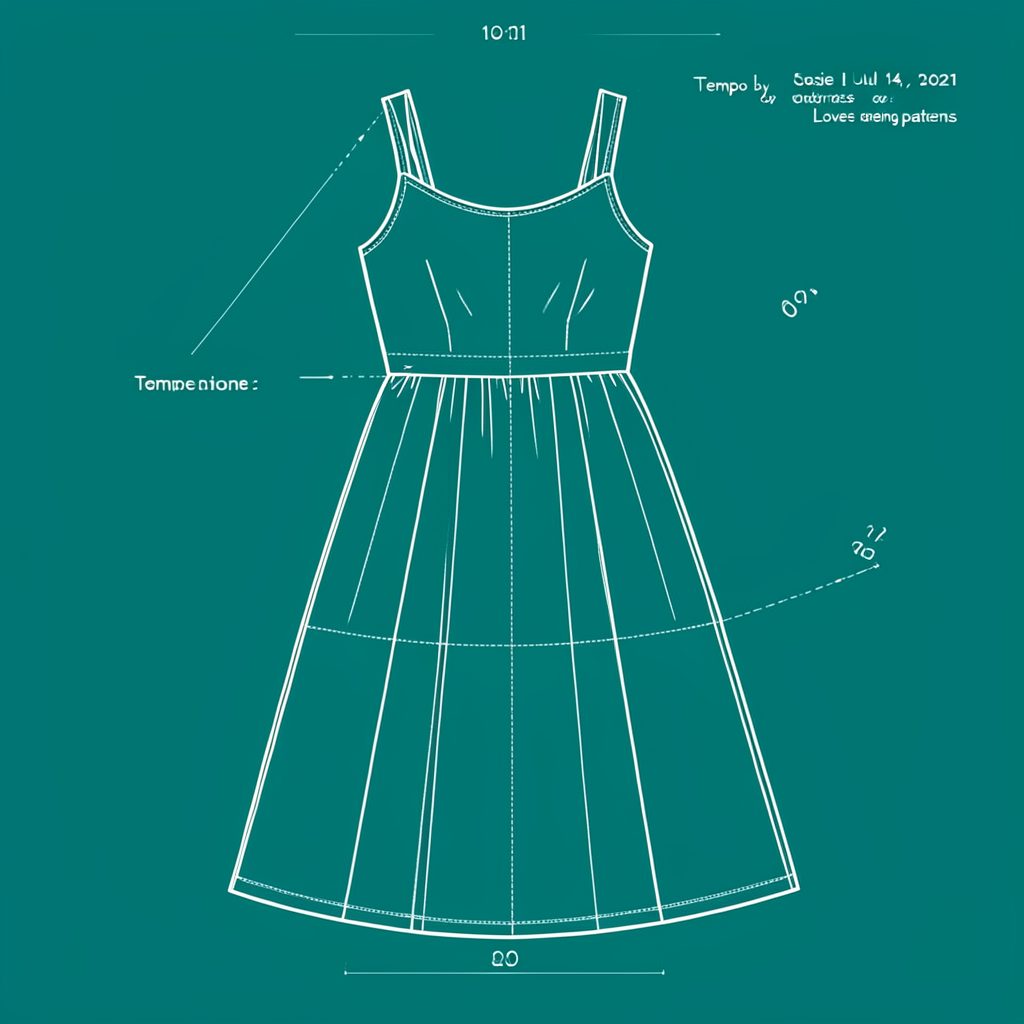
Sewing a faux wrap bodice with a secure neckline
The faux wrap bodice has long been a favourite in handmade wardrobes because it flatters so many figures without the commitment of a true wrap dress. The crossover creates a soft V-neckline, the gathers skim the waist, and the bodice reads as both relaxed and put-together. The trouble comes when the wearer leans forward, picks up a toddler, or simply walks through a brisk wind on the South Bank of Brisbane. The wrap shifts, the neckline gapes, and the whole effect falls apart.
Most home sewers have watched a beautiful morning outfit slowly slide sideways by lunchtime. A proper faux wrap is not actually wrapped at all in the traditional sense. The two front panels are joined at the side seam and overlap at centre front, which lets the bodice stay in place while still giving the visual impression of a wrap. The security comes from careful pattern work, the right fabric, and a small, well-chosen closure at the neckline.
Australian sewists have a particular relationship with this kind of pattern. The climate swings from humid summers in Sydney to dry winters in Adelaide, and the wardrobe needs pieces that move between air-conditioned offices and weekend trips to the Mornington Peninsula. A faux wrap bodice that stays put through a warm arvo in the park is genuinely useful, not just pretty on the mannequin.
This guide walks through fabric choice, pattern adjustments, structural stitching, closure options, and styling. There is a comparison table early on to help narrow down which neckline finish will suit a particular project, and each step is written for sewists who already know their way around a machine but want the wrap bodice to behave itself.
| Closure method | Best for | Difficulty | Hold strength |
|---|---|---|---|
| Hidden press snap | Everyday knits and wovens | Beginner | Medium |
| Hook and bar | Dressier blouses and dresses | Intermediate | High |
| Button and thread loop | Vintage-inspired tops | Beginner | Medium |
| Self-fabric tie | Soft, drapey fabrics | Beginner | Low |
| Magnetic snap | Quick fixes, easy wear | Beginner | Medium |
Picking fabric that works with the wrap
The fabric choice makes or breaks a faux wrap bodice before a single stitch goes in. A fabric with too much body will hold the crossover stiff, almost like a costume, while something with too little weight will collapse into the gap at centre front. For a first attempt, a stable rayon or a lightweight linen blend behaves well and breathes comfortably through a Melbourne summer.
Weight matters more than fibre alone. Something around 260gsm tends to have enough substance to hold the wrap in position without feeling heavy against the skin. Sheers, slippery satins, and very drapey jerseys can work, but they need more careful interfacing and a closer-fitting closure. When sourcing, many Australian sewists head to Spotlight, The Fabric Store in Melbourne and Sydney, or local op shops where old tablecloths often make surprisingly good wrap bodice fabric for a few dollars a metre. Online forums such as Talk About Fabric host long threads about which substrates hold a crossover best.
Direction of stretch also influences how the bodice will sit across the bust. If the fabric has any mechanical stretch, cutting the bodice with the grain running vertically keeps the crossover from sliding down. A quick drape test by holding a 20cm square against the body shows how the fabric will behave before committing to a project.
Adjusting the pattern for a snug crossover
The pattern itself needs a small but important adjustment for the wrap to feel secure. Most commercial bodice patterns are drafted with a standard 2.5cm overlap at centre front, which is fine for a regular V-neck but rarely enough to keep a faux wrap from shifting when worn. Extending the overlap to 4 or 5cm gives the fabric enough material to grip itself and stay closed.
A quick fitting on a toile is the most reliable way to find the right amount of overlap. Pin the crossover at the desired depth, then walk around the room and sit down. If the front edges slide past each other, the overlap is too generous; if the neckline pulls open at the bust apex, the bodice needs a small full bust adjustment instead. Many Australian pattern companies size for a B cup as the starting point, so a fuller-busted sewist often needs to add width through the upper bodice before addressing the crossover.
The neckline itself also benefits from a slightly higher cut than a true wrap would have. A true wrap sits low and dips with movement; a faux wrap should sit closer to the base of the neck so the closure has somewhere solid to anchor. Lifting the neckline by 1.5cm at centre front, then redrawing the curve smoothly to the shoulder, keeps the line elegant while making the closure more effective. This kind of refinement is similar to the fitting tweaks discussed in the Lonsdale dress pattern review for Sinclair Patterns, where the crossover needed extra overlap to behave through a full day of wear.
Building structure with interfacing and stitching
Interfacing is the invisible work that holds the bodice together. The entire front bodice pieces, including the overlap, should be backed with a soft, drape-friendly interfacing such as a lightweight weft insertion. Cut the interfacing from the same grain as the fashion fabric, and trim the seam allowances back by 2mm so the edges do not show through on the right side.
Stay stitching the curved neckline within the seam allowance prevents the crossover from growing as the bodice is handled. A short row of stitching 5mm inside the seam line, done before the front and back are joined at the shoulder, locks the curve in place. Understitching the neckline facing or lining then pulls the facing toward the inside and keeps it from rolling to the outside when the bodice is worn.
The side seams deserve attention too. Sewing them with a straight stitch first, then finishing the allowances together with a zigzag or overlocker, keeps the seams flat against the body. A flat side seam stops the overlap from being pulled open by the curve of the bust. For sewists working with a stable cotton or linen, pressing the side seams toward the back and topstitching them flat adds even more hold. For a slightly different project that exercises similar skills, the fabric keychain lanyard project uses the same stay stitching and understitching techniques on a much smaller scale, and is a good way to practise before cutting into the bodice fabric.
Choosing and attaching the right closure
The closure is what makes the faux wrap bodice feel genuinely secure. A hidden snap works well for casual knits and cotton blouses, particularly when the bodice is cut on the cross grain. A small hook and bar, hand-stitched at the neckline, gives a cleaner finish for a wrap dress and holds more weight than a snap. A button and thread loop is a charming choice for a vintage-inspired top and easy enough for a confident beginner.
Magnetic snaps are a popular option for sewists who want quick dressing without compromising security. They click firmly into place and lie flat under the overlap, which keeps the neckline line smooth. They are worth the extra few dollars at Spotlight, where a pack of 10 usually retails for around $6 AUD. Hand-stitching the snap or hook to the inside of the overlap, rather than machining it in place, gives a softer finish and avoids a hard spot pressing against the chest.
Position the closure at the very base of the V, where the two panels first cross. Placing it higher lets the crossover gape lower down, while placing it lower pulls the neckline too far closed. A test on a scrap of the fashion fabric, with the closure hand-stitched in position, lets the wearer try the bodice on and adjust the placement before the final construction.
Styling the finished bodice for an Australian wardrobe
A secure faux wrap bodice earns its place in a wardrobe when it can be worn for a full day across different settings. In summer, a linen-cotton blend in a soft sage or rust reads well with denim shorts for a weekend at the Mornington Peninsula or a stroll through the Queen Victoria Market. In winter, layering the bodice over a fine merino long-sleeve top keeps the silhouette warm without adding bulk.
Colour choice in Australia often runs toward warm, earthy tones that sit comfortably against gum trees and coastal light. Olive, terracotta, soft mustard, and a deep marine all photograph well and feel at home in both city and regional settings. For a more tailored look, a navy or charcoal ponte works under a blazer for a casual office in Parramatta or North Sydney.
Caring for the finished bodice matters too. A pre-wash of the fashion fabric before cutting, in the same way the garment will be washed later, prevents the crossover from shrinking unevenly after the first wash. A cool iron with steam sets the seams and holds the neckline curve smooth. With the right fabric, the right pattern adjustments, and a well-placed closure, the faux wrap bodice becomes a reliable favourite rather than a risky make.
Popular Pattern Reviews
| Pattern | Designer | Type | Highlight |
|---|---|---|---|
| Compose Robe (Kids) | Love Notions | Robe / Loungewear | Sizes 2T–16, cosy & practical |
| Tempo Sundress | Love Notions | Sundress | No closures, shirred back panel |
| Arlington Sweater | Love Notions | Sweater | Cold-weather staple |
| Sybil Illusion Skirt | Love Notions | Skirt (knit) | 7 variations, optional pockets |
| Camden Pinafore | Nina Lee Patterns | Pinafore dress | Year-round layering piece |
| Ogden Cami (dress hack) | True Bias | Cami / Dress | Versatile wardrobe builder |
| Burda 6829 | Burda | Dress | Multi-sized, special-occasion |
Stay in Touch
Subscribe to the newsletter for sewing inspiration, pattern tips, and project ideas delivered straight to your inbox.