Bamboo rayon for flowy summer tops
Bamboo rayon is a soft, fluid fabric made from regenerated bamboo pulp. Although often marketed as bamboo, the fibre is technically viscose, a form of rayon, rather than a naturally occurring bamboo textile. It drapes beautifully, feels cool against the skin and works well for loose blouses, wrap tops and easy dresses. Its appeal lies in movement: the cloth falls in soft folds and can make a simple pattern look more refined.
For sewists in Australia, it is a particularly useful wardrobe fabric. Summer runs from December through February, so breathable cloth can carry you through humid afternoons, bright mornings and air-conditioned offices. It also packs down well for travel without the stiffness of heavier wovens. The key is to choose a suitable weight, allow enough ease for movement and handle the fabric gently because bamboo rayon can be vulnerable to abrasion and prolonged dampness.
How bamboo rayon behaves
Bamboo rayon gets its easy reputation from a useful combination of qualities. It is highly drapeable, so hems and sleeve openings fall cleanly, yet it is generally lighter than linen and does not crease as sharply. That makes it useful for sewists who like a polished top but dislike the stiffness of a conventional woven.
The cloth is also absorbent and comfortable in humid weather. It does not, however, behave like a technical performance knit: it can lose strength when wet, stretch under a well-fitted seam or pick up shine from repeated rubbing. Fullness helps, especially across a back or under the bust, rather than relying on tight seams to create shape.
Those traits make bamboo rayon somewhere between a fluid woven and a soft jersey. That mix of pattern fitting and fabric behaviour reflects my sewing background, while practical reviews add useful detail about how cloth changes after wear.
Choosing cloth for Australian summer
Shopping choices depend heavily on where you live. In Brisbane and northern Queensland, high humidity and strong sun make a light, loose silhouette especially valuable. A breathable top still needs ordinary sun protection because “bamboo” on a bolt label does not guarantee a tested ultraviolet-protection rating. In Sydney, coastal humidity can make heavier cloth cling, while Melbourne's famously changeable weather rewards a layer that can sit over a camisole.
At the counter, ask for fabric by the metre and have a proper squiz at the selvedge before buying. Australian fabric shops and online boutiques often sell short lengths, remnants and sample cuts, which are handy for a child's top or a cropped blouse but can be tight for a full wrap panel. Choose a generous length from one dye lot and buy enough for matching facings rather than assuming the price per metre reflects the quantity needed.
When shopping online, look for photographs showing the cloth hanging rather than laid flat, because flat shots can hide stiffness or transparency. I also rely on independent fabric reviews to check how a material behaves after washing and wearing.
Matching bamboo rayon to a pattern
Start with the pattern's stated fabric category and then test the actual cloth on a fold. A woven bamboo rayon suits wrap blouses and softly gathered shirts, while a stretch bamboo-rayon knit is better for a close-fitting tee or tank. Bias-cut pieces will have more fluid movement than straight-grain ones, and an open neckline needs a firm facing or stay tape so it does not stretch while the top is worn.
For wrap styles, check the crossover point before cutting. Victoria LucilleAnne's crossover wrap technique shows how the front pieces should overlap and how the tie can be positioned without pulling at the neckline. If your bamboo rayon is very soft, use the pattern's adjustment guide to reduce reliance on a tight waist tie and allow a little extra at the centre front.
Love Notations designs are a useful source of flowing silhouettes, but their recommended fabrics can vary in weight and stretch. Compare drape rather than relying solely on the fibre name. Other independent designers offer wrap, blouse and shirt options too, so the best choice is the one whose seam lines and ease suit the cloth in your hand.
Cutting and sewing flowing tops
Before cutting, wash or steam the fabric using the care label, then leave it flat. Rayon can move or shrink slightly after its first wash, and cutting too soon may leave a finished top sitting differently from its pattern. If the cloth is slippery, work over a clean sheet and use pattern weights instead of pins that can drag it out of position.
Use a fresh, sharp needle suited to the fabric weight and test it on a scrap. A walking foot can guide light wovens, while a ballpoint needle suits knits. Fine pins and clips help manage a shifting neckline. Mark with a chalk pencil or tailor's chalk, take care not to over-stretch curved edges and keep the grain straight unless the design intentionally uses bias.
Build the shape with seams that can move rather than fighting the drape. French seams or an overlocked edge give a clean finish, but avoid crowding the allowance if the fabric is soft. Stay tape supports necklines and armholes, and a well-fitted bodice lining can stop the front of a wrap blouse from gaping. Add ease at the back and test the fit in the intended bra before closing the side seams.
Hemming, pressing and laundry
A clean hem is especially important in a fluid fabric because a heavy fold can spoil the fall of the garment. For a neat finish on a regular machine, Josie's twin-needle hem guide provides a practical method. Match the stitch length and tension to the fabric, and test on an offcut because parallel lines can pucker on very soft cloth.
Press the garment while it is still slightly damp, using a warm setting appropriate to the fibre. Keep the iron moving and avoid pressing a sharp crease into the bodice. Hang the top immediately after pressing so gravity can soften the fabric and allow the hem to settle into its final fall.
Launder bamboo rayon gently in cool water with a mild detergent, avoiding bleach and vigorous agitation. Do not wring it; support the wet fabric in the basin and press the water out with a towel. Dry it flat or hang it in shade, since strong Australian sun can fade the colour and weaken some viscose fibres.
Comparing bamboo rayon with alternatives
Bamboo rayon sits between linen's crisp natural texture and cotton's familiar softness. It is not automatically the most sustainable choice, either; the environmental case depends on how the pulp and viscose are processed. Check the fibre content, finish and construction as well as the plant source.
Use the comparison below as a practical shortlist rather than a strict rule.
| Fabric | Drape and feel | Warm-weather performance | Main consideration |
|---|---|---|---|
| Bamboo rayon | Very fluid, soft and absorbent | Excellent for loose tops and wraps | Can weaken when wet and may crease |
| Tencel or lyocell | Fluid with a smoother, sometimes crisper hand | Breathable and often easy to wash | Usually pricier; check the actual drape |
| Viscose | Highly fluid with a smooth or slightly shiny finish | Cool and comfortable for flowing garments | Often weaker when wet and less resilient |
| Cotton lawn | Light and crisp rather than fluid | Breathable and useful for tees and shirts | May wrinkle and sometimes needs sheer layers |
| Linen blend | Textured with moderate drape | Breathable and adaptable to changeable climates | Creases sharply; qualities vary by blend |
For a wrap blouse that needs fluid folds, bamboo rayon or lyocell is a strong match. A fitted tee calls for a knit with dependable stretch. Cotton lawn and linen blends are useful for everyday shirts, especially in cool, air-conditioned Australian workplaces where they are easier to press and less prone to water spotting.
Popular Pattern Reviews
| Pattern | Designer | Type | Highlight |
|---|---|---|---|
| Compose Robe (Kids) | Love Notions | Robe / Loungewear | Sizes 2T–16, cosy & practical |
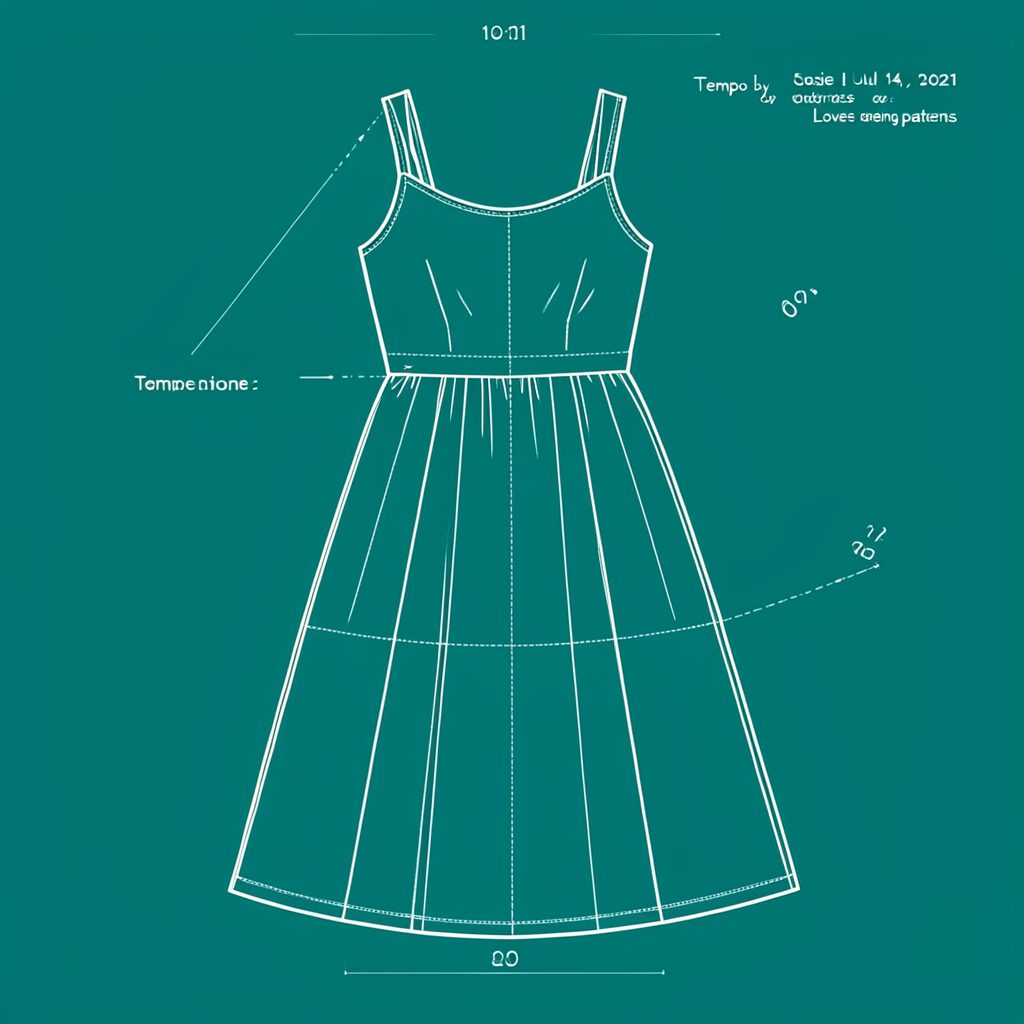
| Tempo Sundress | Love Notions | Sundress | No closures, shirred back panel |
| Arlington Sweater | Love Notions | Sweater | Cold-weather staple |
| Sybil Illusion Skirt | Love Notions | Skirt (knit) | 7 variations, optional pockets |
| Camden Pinafore | Nina Lee Patterns | Pinafore dress | Year-round layering piece |
| Ogden Cami (dress hack) | True Bias | Cami / Dress | Versatile wardrobe builder |
| Burda 6829 | Burda | Dress | Multi-sized, special-occasion |
Stay in Touch
Subscribe to the newsletter for sewing inspiration, pattern tips, and project ideas delivered straight to your inbox.