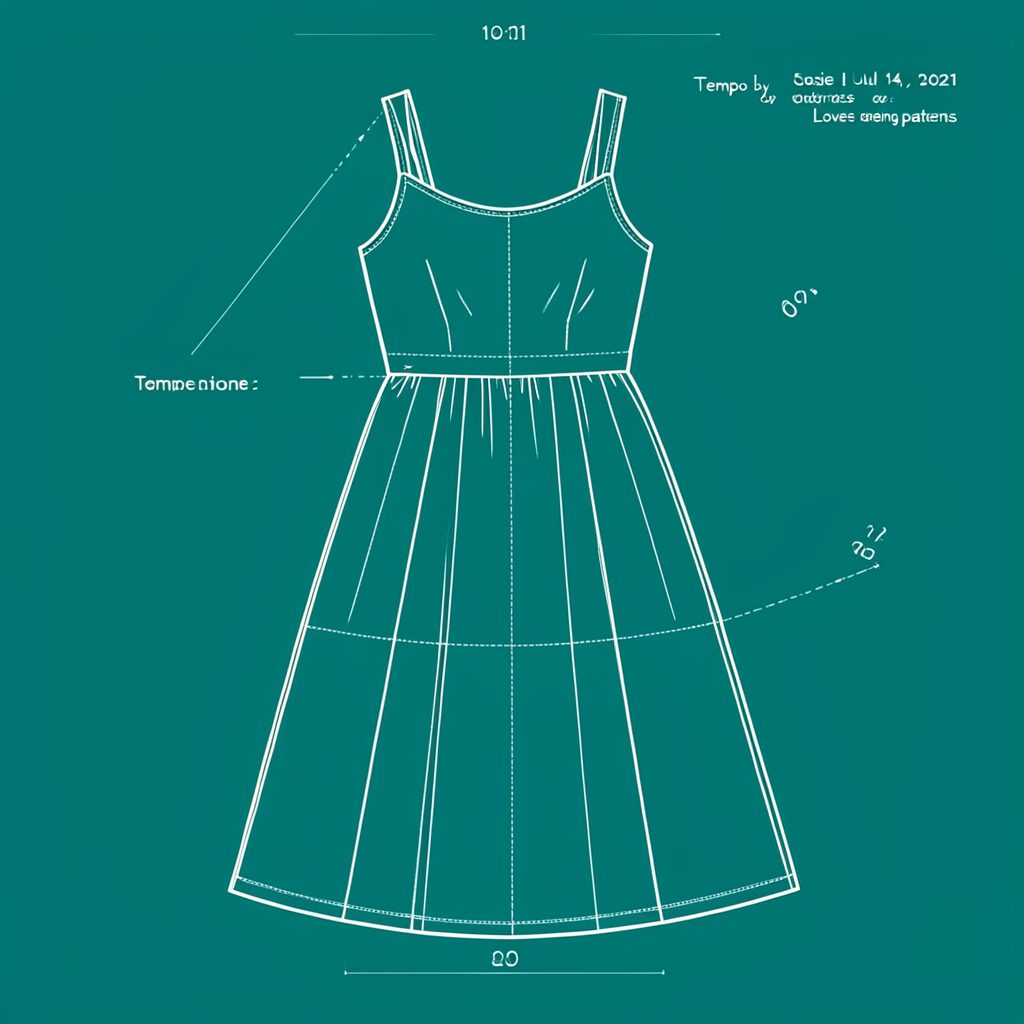
Love Notions Serviceable Tee: Adding a Contrast Sleeve Cuff
The Love Notions Serviceable Tee gives indie sewists a versatile base for a controlled design change. Its easy shape makes the sleeve a natural place for contrast: a neat band can sharpen the silhouette without disturbing the tee’s body. Rib jersey gives definition, while lighter jersey creates a softer finish. The method suits a first alteration, provided you test the proportions before cutting the final fabric.
I would choose the sleeve length, decide how bold the contrast should be, and check the Serviceable Tee instructions before changing the cutting plan. Australian sewists work in centimetres and buy fabric by the metre, so convert measurements once and keep both cuffs symmetrical. A metre of contrast fabric is often ample, but size, sleeve width and fabric type will decide. For a first indie-pattern rework, a scrap-fabric mock-up saves time and fabric.
Choosing a contrasting knit
Start with stretch and recovery rather than colour alone. The contrast fabric should move with the sleeve and return to shape after a day folded into a bag. Rib jersey is the sturdiest choice for a defined cuff; fine jersey drapes more softly; interlock has a smoother, slightly firmer hand. Match the weight of the Serviceable Tee fabric where possible, because a thick cuff on a fine tee can create an unwanted ridge.
Shopping locally makes comparisons easy: Spotlight and Lincraft carry common jersey weights, while independent neighbourhood stores often have more distinctive rib and offcuts. Ask at your favourite local fabric shop for good stretch and recovery, and request a sample before ordering online. Fabric measurements across the Australian market are metric, but every knit still behaves differently, so check the hand rather than relying on the fibre alone.
Weather should guide the choice too. Light cotton or bamboo jersey suits a hot summer in Brisbane or Darwin, while fine rib adds structure for layering in Melbourne or Hobart. The colour can stay subtle: cream on navy, rust on denim or tonal navy on black all look polished when the texture changes cleanly. A tee gets judged by comfort as much as colour, so HealthBanquet’s everyday wellbeing ideas offer a relevant reminder to make practical choices that still feel comfortable.
Planning the cuff on the pattern
Wear the tee or a muslin version and mark where the contrast should begin on the front and back. A finished depth of roughly 6–8 cm is a useful starting point, although follow any cuff measurements supplied with the pattern. Check several poses so the seam sits straight and does not pull towards the underarm. A long-sleeve wrist cuff normally needs more taper than a short-sleeve band.
To make a cut-on contrast cuff, draw and cut across the paper sleeve pattern at your line. Keep the upper section in the main fabric, move the lower section to the contrast fabric, and add seam allowance at the new raw edges. A slight inward curve creates a softer short sleeve; a stronger taper makes a neat wrist. Copy the grainline and notches, especially if the sleeve was originally drawn on the fold.
For a separate rib band, draft it from the desired lower sleeve width rather than cutting a straight strip. Its opening must pass over the sleeve, and the join needs enough ease to sit flat. Make a quick sample from jersey scraps, pin it around the sleeve, and wear the mock-up for an hour. That test reveals whether the band is too firm, too wide or too short.
Comparing fabric choices
The best fabric depends on whether you want the cuff to hold its shape or blend into the tee. Use this comparison to narrow the options before shopping.
| Fabric | Stretch and recovery | Best cuff effect | Main caution |
|---|---|---|---|
| Rib jersey | High stretch, strong recovery | Defined, elastic band | Can twist off-grain |
| Cotton jersey | Moderate stretch, good drape | Soft, casual finish | May grow with wear |
| Interlock | Moderate stretch, stable face | Smooth, tailored band | Less fluid than single jersey |
| Bamboo jersey | Comfortable stretch, soft handle | Lightweight summer cuff | Can sag with poor recovery |
| French terry | Good recovery, more body | Casual sweatshirt-style cuff | Too warm for many hot days |
Match the cuff to the way you will wear the tee. A rib band is useful if you often push the sleeves up, while jersey is comfortable for a hot arvo and long school-run days. Wash and press every fabric sample before comparing it with the main tee; shrinkage and pressing can change the balance. If the tee will sit above a gathered skirt, Josie’s gathered skirt tutorial shows how the volume and angle of a simple shape can be balanced.
Cutting and assembling the contrast sleeve
Print the pattern at 100 per cent, join the pages accurately, and check the test rectangle before cutting. Follow the grainline; for rib, the ribs should run from shoulder to wrist so they stretch around the arm. Use a sharp fabric roller instead of pinning heavy jersey, and keep mirrored pieces aligned before cutting. Transfer any facing or turn-of-cloth instructions as well.
Pin the contrast piece to the sleeve at the new join, matching the centre mark, underarm curve and notches. Sew with a stretch stitch, then press the seam towards the sleeve with a cloth between the iron and the knit. Sew the underarm seam as directed in the Serviceable Tee instructions. If your machine lacks a stretch stitch, a straight stitch with a walking foot is safer than forcing bulky layers under a standard foot.
Finish the lower edge according to the fabric. A purchased rib cuff can be joined to the sleeve; jersey usually benefits from a double-turned hem and two rows of topstitching. Match stitch length to the knit and avoid pulling the thread tight, which creates ripples. For a shirt-like result, add stay tape at the lower edge. Let the piece cool flat before judging the width.
Styling the contrast cuff
A crisp band works well with straight-leg denim, black trousers, shorts or a plain skirt. To repeat the contrast elsewhere, Josie’s guide to adding garment pockets offers several placements that work beyond the original pattern. A patch pocket in the same fabric can balance the sleeve without turning the tee into a patchwork design.
Styling can shift with the Australian climate. For a Darwin winter or mild Melbourne spring, deeper rib in a strong colour looks intentional; for a bright Queensland summer, choose pale or tonal contrast. I like pairing the tee with jeans for coffee and the shops, then switching to tailored trousers for work. One pattern can cover casual weekends and office dressing without changing the construction.
Finishing, care, and reuse
Check the Love Notions instructions for washing, then launder the tee inside out in cool water. Reshape the cuffs gently and dry them flat or use a cool tumble setting; Australian dryers can shrink knit quickly, so check the label. Store the sleeves flat where possible. This keeps the band smooth and helps the seam retain its clean line.
Pattern pieces can also be reused for complementary changes. Save the removed sleeve sections as labels or small accessories, and keep your drafted contrast piece for another tee. Before extending the design, check the designer’s terms for personal and commercial use of the Love Notions pattern.
Judge the cuff while wearing the tee. Pin or mock up the width, move your arms, and check the fabric at the elbow and wrist. Planning at this stage produces a finish that feels part of the original garment, even with two fabrics.
Popular Pattern Reviews
| Pattern | Designer | Type | Highlight |
|---|---|---|---|
| Compose Robe (Kids) | Love Notions | Robe / Loungewear | Sizes 2T–16, cosy & practical |
| Tempo Sundress | Love Notions | Sundress | No closures, shirred back panel |
| Arlington Sweater | Love Notions | Sweater | Cold-weather staple |
| Sybil Illusion Skirt | Love Notions | Skirt (knit) | 7 variations, optional pockets |
| Camden Pinafore | Nina Lee Patterns | Pinafore dress | Year-round layering piece |
| Ogden Cami (dress hack) | True Bias | Cami / Dress | Versatile wardrobe builder |
| Burda 6829 | Burda | Dress | Multi-sized, special-occasion |
Stay in Touch
Subscribe to the newsletter for sewing inspiration, pattern tips, and project ideas delivered straight to your inbox.