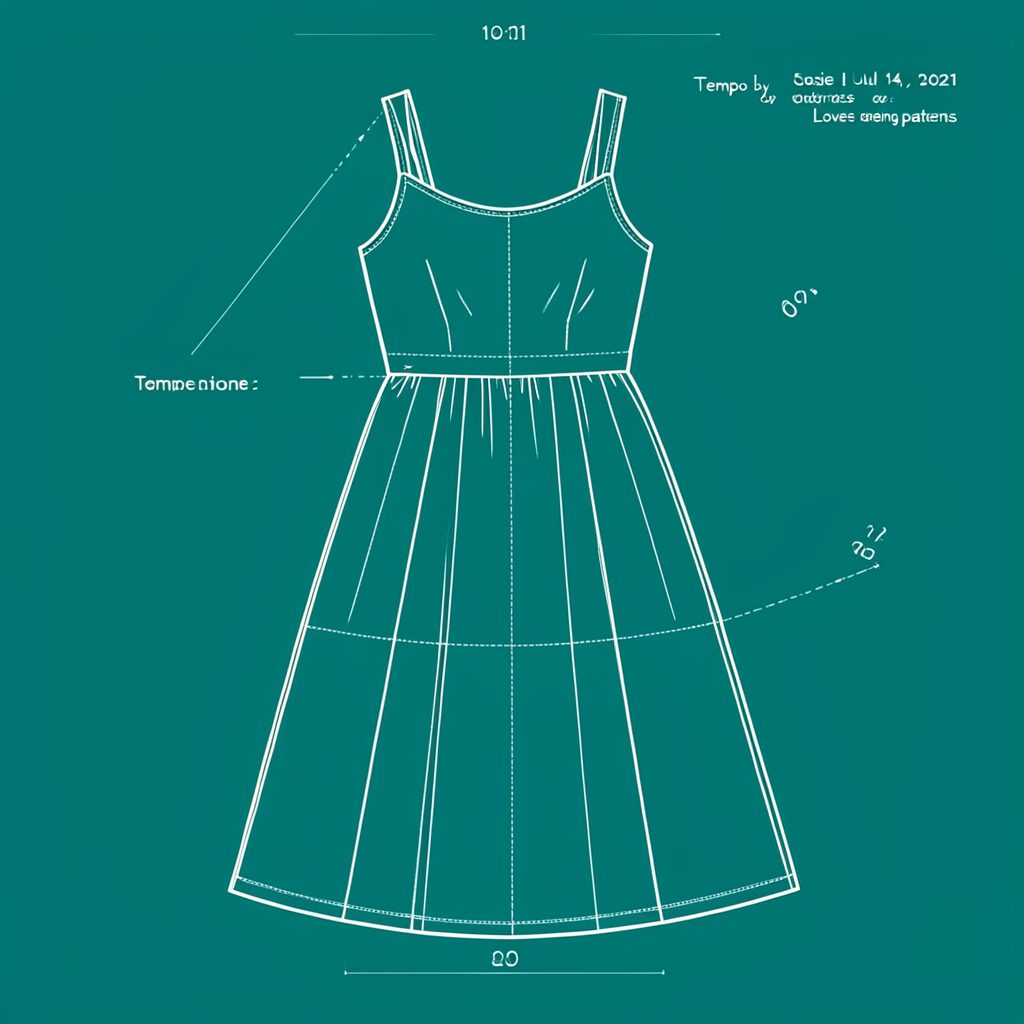
A practical review of the Named Clothing Isla Dungaree Dress
The Named Clothing Isla Dungaree Dress is an appealing choice for sewists who want a relaxed bib-and-strap layer without giving up the movement of a skirt. I tested the indie sewing pattern in cotton drill, checking the downloadable instructions, size selection, strap placement, seams and everyday wear rather than judging it only from the promotional photographs. Learn more about Les Meilleures Heures Pour Pêcher Le Bar En Bord De Mer.
My sample has room through the body and a comfortable skirt that works over a T-shirt in cooler weather or stands alone on a warm day. The basic construction is approachable for a confident beginner, while the fitting and finishing decisions remain engaging for an experienced sewist. It is also the sort of useful, wearable project that fits naturally into the creative rhythm of a personal sewing blog.
Choosing fabric for Australian conditions
Fabric choice changes the character of this dress more than most pattern details. A medium-weight cotton has the structure to hold the bib and straps, while linen softens with wear and denim creates a harder-wearing, more casual version. Always prewash fabric and check the pattern’s recommended measurements before cutting.
| Fabric | Behaviour and drape | Best Australian use | Practical note |
|---|---|---|---|
| Cotton drill | Crisp, stable and easy to press | Year-round casual wear | Prewash to remove shrinkage |
| Linen | Softens quickly and breathes well | Hot summer days | Use light interfacing at stress points |
| Denim | Durable with a firm bib and skirt | Everyday wear and cooler seasons | Keep seam allowances consistent |
| Lightweight Tencel | Fluid drape with gentle sheen | Dressier summer styling | Avoid excessive stretching while cutting |
Cotton drill was the most balanced choice for my sample. It held the shape of the upper section without feeling rigid, and the finished dress remained comfortable during a changeable week in Melbourne. Linen would be my choice in Brisbane heat, provided I reinforced the strap joins and selected a lining if greater opacity were important.
Australian sewing often combines online purchases with treasures found at op shops and weekend craft markets. Independent fabric sellers commonly list prices in Australian dollars, while secondhand linen shirts and denim skirts can provide inexpensive cutting fabric. I record fabric swaps and later amendments on Josie's sewing journal, which is useful when comparing two tests of the same size.
Sizing, fit and pattern impressions
Before cutting, I printed the PDF at actual size, checked a test square and taped the pages together. The schematic and measurement chart made it straightforward to compare the pattern with my bust, waist and hip measurements. I also converted any imperial dimensions into centimetres, avoiding the common mistake of relying on a labelled clothing size alone.
My first toile showed that the intended ease was generous through the body, but not excessively loose. The bib sat comfortably when I shortened the shoulder straps to suit the tops I normally wear. Someone preferring a very close fit should study the finished garment measurements carefully, while a sewist wanting to layer a thick jumper underneath may need to select the next size or add personal adjustment.
The instructions are clearly illustrated and pair well with the straightforward construction. Like the Love Notations patterns I regularly make, the PDF provides useful diagrams without losing the friendly character of an independent design. Blogs such as Happy Things Maker are also valuable for comparing techniques before deciding how to personalise the straps, pockets and finishing details.
Construction details that make a difference
Careful preparation made the rest of the project much easier. I transferred every marking, notch and cutting line before removing the paper pattern pieces, then labelled the mirrored sections immediately. Since the upper section is relatively small, accurate cutting and the grain direction are especially important if the finished shape is to sit neatly.
The main seams are uncomplicated, but pressing them at the right stage kept the upper section flat. I stayed with the indicated seam allowances and used the pattern’s construction lines to position the straps consistently. Clipping curves carefully and turning small pieces through a needle helped the joins remain crisp rather than bulky.
I paid particular attention to the stress points where the straps meet the body. Those areas received firm stitching and careful pressing, with a narrow strip of stable cotton added at the joins on my sample. A neat machine hem kept the lower edge crisp without making the dress feel formal. Before sewing, I also tested my chosen thread and machine stitch on scrap fabric, which prevented unnecessary unpicking around the visible areas.
Washing, styling and Australian use
Care begins before the first wear. Following the fabric instructions allowed me to calculate shrinkage accurately, and washing a sample of the cotton beforehand meant the finished hem would not rise unexpectedly. The dress responded well to a cool domestic wash and line drying, with only light pressing needed before wearing it again.
Its relaxed shape suits the Australian approach to dressing for variable weather. In Sydney, I would wear it with a fitted tee and sandals, then add a light knit when the temperature drops. Brisbane summers call for linen or lightweight cotton, while Melbourne’s changeable forecast makes the extra room through the body particularly useful. Coastal weekends often involve early starts and competing outdoor plans; this coastal sea-bass advice illustrates how seriously people check tides and daylight before heading out.
Home sewing for personal use is different from selling a finished garment. Australian clothing sellers need to consider the Textile Labelling and Care Labelling Mandatory Standard 2012, including correct fibre-content and country-of-origin information and suitable care directions. Anyone selling at a local market should also check the product-safety obligations under Australian Consumer Law and attach a compliant label rather than assuming a handwritten note is sufficient.
Who should make this dress
The Isla is best suited to someone who enjoys a roomy silhouette and wants a garment that can work hard throughout the week. Its appealing details make it more interesting than a basic pinafore, while the uncomplicated assembly keeps the project realistic for a busy maker. The main caution is choosing the intended ease carefully, since changing size can affect both the bib position and strap length.
It is less suitable for anyone seeking a fitted waist, a formal occasion dress or a project requiring extensive specialist notions. Even so, the combination of a forgiving fit, attractive detailing and straightforward construction makes it a strong independent pattern choice. Further details about my sample can be found by using contact Josie. My verdict is firmly positive: careful makers will get a comfortable, adaptable dungaree dress with genuine everyday appeal.
Popular Pattern Reviews
| Pattern | Designer | Type | Highlight |
|---|---|---|---|
| Compose Robe (Kids) | Love Notions | Robe / Loungewear | Sizes 2T–16, cosy & practical |
| Tempo Sundress | Love Notions | Sundress | No closures, shirred back panel |
| Arlington Sweater | Love Notions | Sweater | Cold-weather staple |
| Sybil Illusion Skirt | Love Notions | Skirt (knit) | 7 variations, optional pockets |
| Camden Pinafore | Nina Lee Patterns | Pinafore dress | Year-round layering piece |
| Ogden Cami (dress hack) | True Bias | Cami / Dress | Versatile wardrobe builder |
| Burda 6829 | Burda | Dress | Multi-sized, special-occasion |
Stay in Touch
Subscribe to the newsletter for sewing inspiration, pattern tips, and project ideas delivered straight to your inbox.