Sewing a mock flat felled seam on a tee shirt
Many home sewists reach for a stretch jersey tee because it is forgiving, quick to wear and easy to personalise. A mock flat felled seam gives the garment a crisp, almost sportswear finish by enclosing the seam allowance and adding a controlled topstitch. It is neater than a basic jersey seam, yet simpler and less bulky than a traditional flat-felled construction.
This technique works especially well on cotton jersey, bamboo jersey and stable knit pique, but the fabric weight and stretch matter more than the label. It is worth checking what you already have before buying a new pattern, especially if your local op shops supply thrifted tees with useful jersey panels. The aim is a comfortable seam that stays flat after washing without making a simple tee feel overly engineered.
Understand the construction
A mock flat felled seam starts as a conventional stitched seam. One allowance is then folded over the other so the raw edges are enclosed, and a row of topstitching secures the layers. Unlike a true flat-felled seam, it does not require a twin needle or two parallel rows of stitching. That makes it a practical choice for beginners and for anyone sewing a Love Notions tee pattern with an ordinary domestic machine.
The visual benefit is strongest where structure is already part of the design, such as a raglan sleeve or a neatly joined side seam. At Josie's craft blog, project notes and indie pattern reviews are useful for seeing how similar finishes work in complete garments. The stitching should support the construction without competing with the neckline, cuffs or sleeve details.
Choose fabric and equipment
Choose a knit that holds its shape rather than collapsing under the presser foot. Midweight cotton jersey around 180 to 220 gsm is a useful starting point, while lightweight modal may need a narrower allowance and a gentler press. Australian weather changes the practical choice: a tee layered for changeable days in Melbourne benefits from stable cotton jersey, humid Sydney days favour smooth drape, and Brisbane's heat makes lighter, breathable cloth more comfortable.
Check the Australian market before committing to supplies: Spotlight and independent haberdasheries stock jersey sold by the metre, while indie tee patterns are commonly purchased as PDFs from designers such as Love Notions. A domestic machine with a ballpoint needle, polyester thread and a walking foot is enough; an overlocker can tidy raw edges but is not essential. Lena's Sweet Home offers useful guidance on testing fabric and machine settings before beginning.
Prepare the pattern and cloth
Prepare the pattern before stitching so the seam is stable and repeatable. Use the allowance supplied by the designer where it makes sense; otherwise, 1.5 cm, or about 5/8 inch, is generous enough for a mock finish on medium jersey. Mark the stitching and folded edges lightly with chalk or a fabric marker, then test the stretch in both directions. Curved or narrow pieces need a shorter stitch length so the seam does not pull the knit out of shape.
Use clips rather than pins when possible, because removing several pins can disturb stretch or leave holes in delicate fabric. A tailor's chalk triangle is helpful on a dark knit, and a serged edge should be trimmed neatly before folding. The careful handling approach shared by Lady K Quilts Designs is especially transferable: keep layers aligned, press without dragging, and work in small, manageable sections.
Stitch and compare seam finishes
The mock version provides a polished appearance with less construction than a true flat-felled seam. Choose according to the visible finish, fabric stability and amount of bulk you are prepared to accommodate.
| Seam finish | Construction | Inside result | Best fit |
|---|---|---|---|
| Mock flat felled | Regular seam with an enclosed allowance and one topstitch row | Neat enclosed edge with minimal bulk | Jersey tees and sweatshirt-style tops |
| True flat felled | Two folded layers, usually with twin-needle topstitching | Fully enclosed and strongly reinforced | Jeans, workwear and heavier jersey |
| Standard jersey seam | Straight or overlocked seam with a finished raw edge | Flexible, quick and unobtrusive | Lightweight modal or very stretchy jersey |
Sew the right sides together at the marked line, then press the seam allowances in the direction that will be enclosed. Fold one allowance over the other with both raw edges inside, and topstitch through the folded layers 3 to 5 mm from the edge. The single row is the defining difference from the twin rows of a true flat-felled seam. Before sewing the entire raglan or side seam, make a short sample to confirm how the folded allowance sits and where the visible topstitch falls when the garment is opened.
Press the finished seam from the garment side without pulling it across the knit. If the allowance shifts, unpick only the topstitching and reposition it; if the seam puckers, check the needle size, thread tension and whether the walking foot is carrying the fabric evenly. A walking foot is helpful but not compulsory, and a short straight stitch is often more stable on lightweight jersey than a wide zigzag.
Refine the fit and finish
Assess the fit after the mock flat-felled seam is complete, not while it is still pinned. A neat seam can restrict a raglan armhole if the stretch was allowed to grow during stitching, so compare both sleeves and the neckline against the body. If necessary, ease the curve gently, since forcing an over-stretched seam into place creates ripples that pressing will not remove.
Care and washing are equally important. Preshrink the jersey, wash the finished tee inside out in cold water, and dry it flat to protect the topstitching. If you make tees to sell at Australian makers' markets or through an online shop, the item must meet Australian textile-labelling requirements and the Australian Consumer Law, including accurate fibre-content and care information.
The enclosed seam can also provide a stable edge for garment extensions. Before altering the proportions, pocket design ideas offers practical ways to add storage while keeping the new detail consistent with the original construction.
Finish checks for repeatable results
Turn the tee inside out and inspect every enclosed raw edge. The inside should feel smooth rather than scratchy, and no thread tails should remain near the skin. Leftover jersey is also useful for small accessories; reusable wrapping cloths are a sustainable way to use narrow strips and offcuts, especially if the edges are finished to remain soft through repeated laundering.
Before calling the garment finished, wear it for an hour and move your arms and shoulders as you would normally. This catches tight underarms, bulky intersections and any topstitch that pulls towards the centre front. Because the construction is repeatable, you can apply the same method to a matching tee or a colour-blocked version while keeping every seam line consistent.
- Wash, preshrink and press the jersey before cutting the garment pieces.
- Test a ballpoint needle, stitch length and thread tension on fabric scraps.
- Mark one consistent seam allowance and check the stretch before joining curved sections.
- Finish or neatly trim every raw edge before enclosing it inside the seam.
- Sew a short sample to confirm the fold, topstitch position and final seam bulk.
- Inspect the inside, remove loose threads and include compliant labelling when selling.
Popular Pattern Reviews
| Pattern | Designer | Type | Highlight |
|---|---|---|---|
| Compose Robe (Kids) | Love Notions | Robe / Loungewear | Sizes 2T–16, cosy & practical |
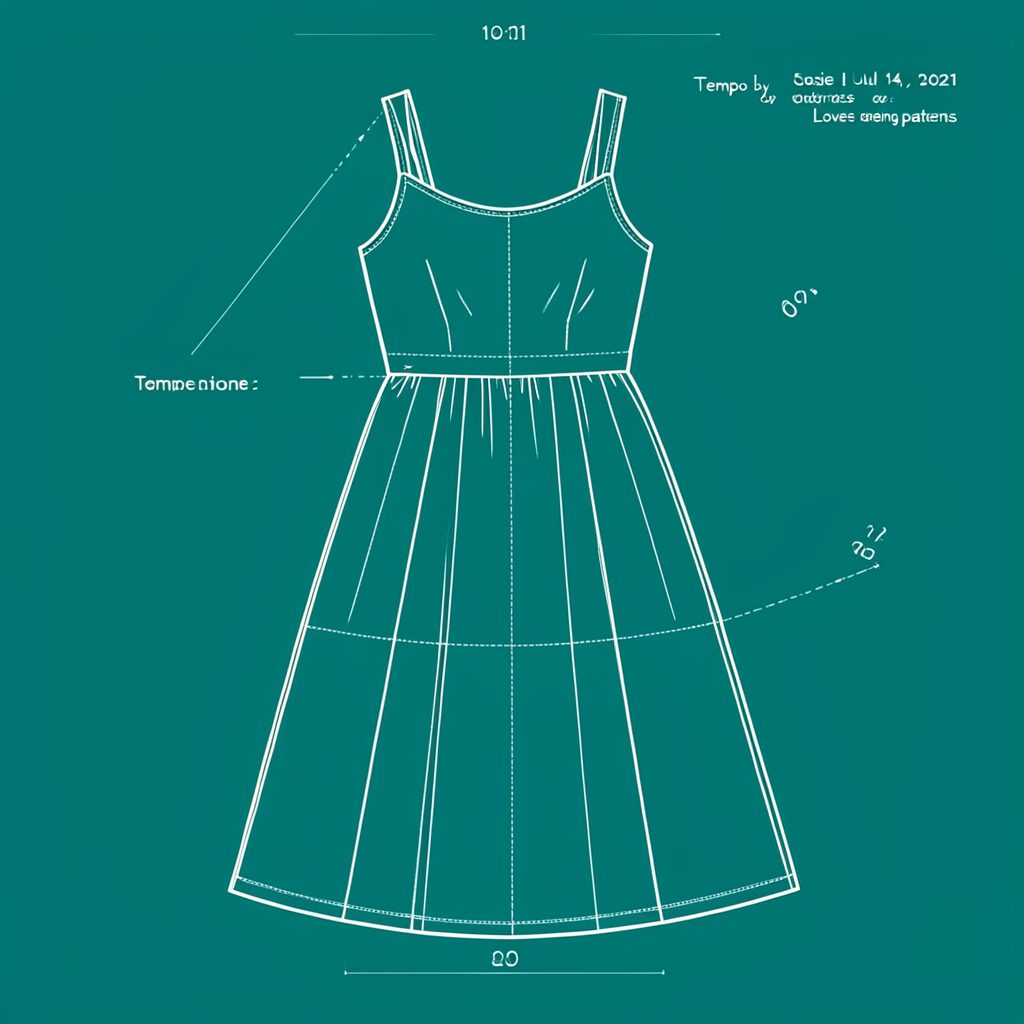
| Tempo Sundress | Love Notions | Sundress | No closures, shirred back panel |
| Arlington Sweater | Love Notions | Sweater | Cold-weather staple |
| Sybil Illusion Skirt | Love Notions | Skirt (knit) | 7 variations, optional pockets |
| Camden Pinafore | Nina Lee Patterns | Pinafore dress | Year-round layering piece |
| Ogden Cami (dress hack) | True Bias | Cami / Dress | Versatile wardrobe builder |
| Burda 6829 | Burda | Dress | Multi-sized, special-occasion |
Stay in Touch
Subscribe to the newsletter for sewing inspiration, pattern tips, and project ideas delivered straight to your inbox.