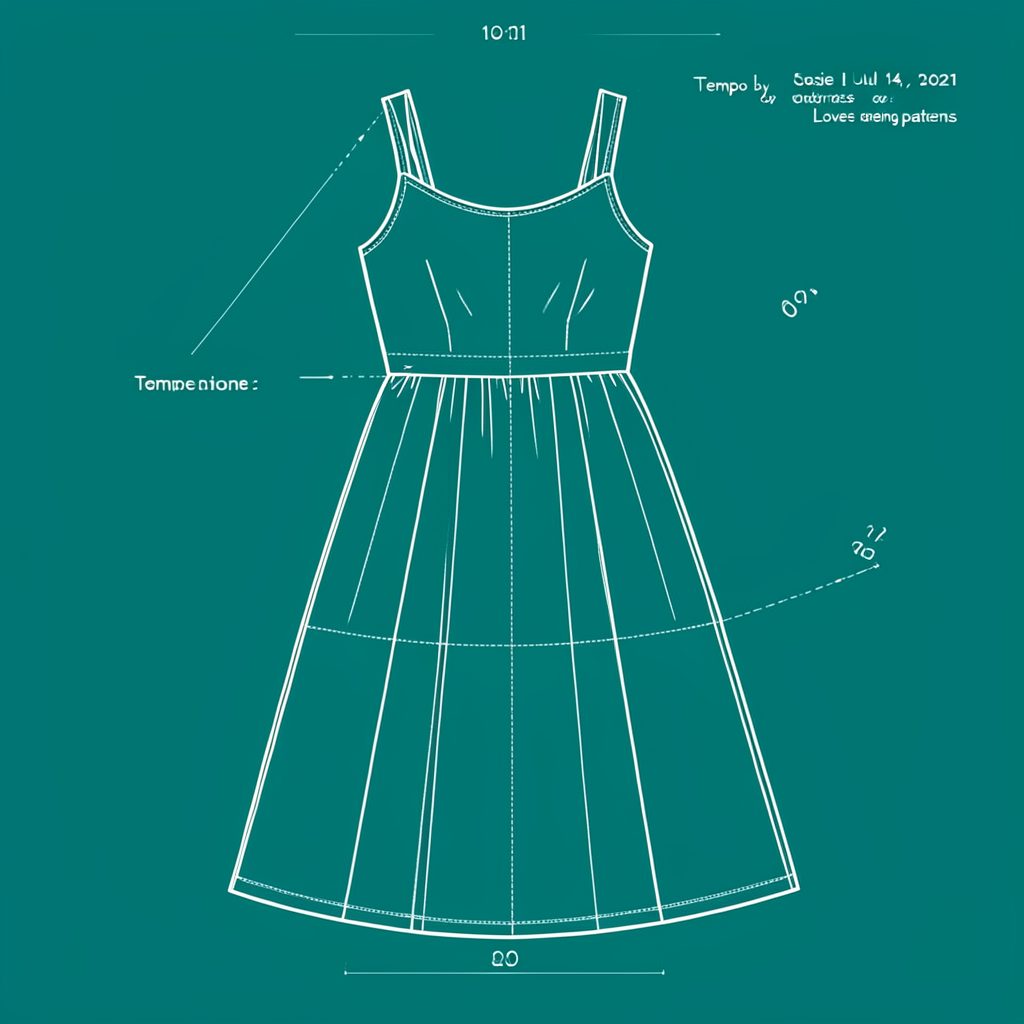
Love Notions Laundry Day Tee Pattern Review And Hacks
The Laundry Day Tee has the sort of practical appeal that makes an indie sewing pattern earn a permanent place in a handmade wardrobe. It is a straightforward knit top with enough options to keep each version interesting, while still being approachable when you want a relatively quick project.
For beginners, it offers useful practice with jersey, stretch seams, neckbands and twin-needle hems without demanding an overly complicated construction process. Experienced sewists can treat the basic tee as a dependable canvas for fit adjustments, colour blocking and wardrobe planning.
It also fits neatly into the wider world of everyday sewing: wearable garments, sensible fabric choices and small alterations that make a pattern feel personal. You can find more project ideas and pattern-focused posts in the sewing projects section of the blog.
What Makes The Pattern Work
The strength of the Love Notions Laundry Day Tee is its versatility. A simple T-shirt can be a wardrobe essential, but several style choices allow the finished garment to move beyond a plain basic. Different sleeve lengths, neckline finishes and hem options can change the look without requiring an entirely new pattern.
That makes it useful for testing fabrics and fit. A short-sleeved version in cotton jersey can become a summer staple, while a longer-sleeved tee in a soft sweater knit works well beneath dungarees, jackets or cardigans. The same block can also support colour blocking, contrast sleeves and small design details.
The pattern is especially appealing if you prefer sewing projects that can be completed in a manageable number of sessions. Most of the work lies in accurate cutting, controlled sewing and finishing rather than intricate shaping. That gives new sewists room to concentrate on technique and gives experienced makers a reliable base for experimentation.
Choosing Fabric And Checking Fit
A knit top depends heavily on fabric behaviour. Look for a material with comfortable crosswise stretch and good recovery, because a jersey that grows during wear can make an otherwise well-fitting tee feel loose and untidy. Cotton elastane jersey is often a dependable choice, while rayon jersey creates a softer, drapier result.
Lightweight French terry, bamboo jersey and some stable sweater knits can also work, provided their weight suits the chosen style. Very fluid fabric may make the neckline more difficult to handle, whereas a firm knit can produce a cleaner, more structured silhouette. If you are buying fabric for your first indie pattern, these fabric recommendations can help narrow the options.
Measure the pattern’s finished garment dimensions rather than choosing solely by your usual shop size. Compare the bust, waist and hip measurements with a similar tee that fits well, then consider how much ease you prefer. A relaxed version may be comfortable for layering, while a closer fit can look neater beneath a pinafore or high-waisted trousers.
Version Choices At A Glance
Before cutting into a favourite length of jersey, it helps to decide what role the garment will play. A wearable toile in an inexpensive but suitable knit can reveal whether the neckline, sleeve and body length work for you. Once the basic fit is reliable, later versions become much easier to customise.
| Pattern choice | Fabric direction | Useful styling effect | Detail to check |
|---|---|---|---|
| Short sleeves | Cotton elastane jersey | Cool, everyday layering | Sleeve hem width |
| Three-quarter sleeves | Medium-weight jersey | Practical transitional wear | Sleeve length at the elbow |
| Long sleeves | Soft jersey or light sweater knit | A useful base layer | Cuff and wrist ease |
| Curved or shaped hem | Drapey jersey | More coverage and movement | Even hem placement |
| Straight hem | Stable knit | Clean, classic T-shirt shape | Side seam alignment |
| Contrast panels | Two compatible knits | A distinctive colour-blocked finish | Stretch and weight matching |
The most important comparison is not simply which option looks attractive on the pattern illustration. Consider your existing wardrobe, the fabrics already in your stash and the garments you reach for most often. A plain long-sleeved tee may receive more wear than an elaborate version if it fills a genuine gap.
Construction Details That Matter
Stabilising the shoulder seams is a small step with a large effect. A narrow strip of clear elastic, stay tape or suitable knit interfacing can help prevent the shoulder from stretching while the garment is assembled and worn. This is particularly worthwhile with lightweight or drapey jersey.
A ballpoint or stretch needle reduces the chance of skipped stitches, although the best choice depends on the specific fabric. Test the stitch on scraps before sewing the garment, and use a narrow zigzag, lightning stitch or stretch overlock setting if your machine does not have a serger. The seam should stretch with the fabric rather than snapping when pulled gently.
Neckbands benefit from careful measuring and even distribution. If the band is too long, it may stand away from the neckline; if it is too short, the fabric can pucker. Pressing the band in half before attaching it, marking quarters and using plenty of clips can make the process more controlled.
Take time with hemming too. A twin needle can create a professional-looking finish on many domestic machines, but a zigzag or coverstitch-style stitch is perfectly serviceable. Let the fabric rest flat, avoid stretching it beneath the presser foot and press the finished hem from the wrong side.
Practical Hacks For A Better Tee
Once the first version is complete, a few modest adjustments can turn the pattern into a personalised block. Keep notes about the size, fabric, seam allowance, neckline behaviour and any alterations. Those details are easy to forget but invaluable when planning the next make.
Useful changes include:
- Add a narrow strip of clear elastic to the shoulder seams for extra stability.
- Raise or lower the neckline slightly, transferring the change smoothly into the shoulder and centre front.
- Blend between sizes at the bust, waist and hip when your measurements span more than one size.
- Shorten or lengthen the body from the pattern’s lengthen-and-shorten line rather than trimming randomly from the hem.
- Add a simple cuff to long sleeves when you want a more finished look or extra wrist coverage.
For colour blocking, mark the new seam lines on a traced copy first and include seam allowances before cutting fabric. Keep stretch direction consistent across every panel, and match fabric weights as closely as possible. A dramatic contrast can be attractive, but a subtle tonal combination often produces a garment that is easier to wear.
You can also experiment with a curved hem, a slightly cropped length or a contrast neckband. Make one change at a time in the early versions so you can tell which alteration has improved the garment and which may need refining.
Styling And Overall Verdict
The Laundry Day Tee earns its place as a practical wardrobe pattern because it works across seasons. Wear a short-sleeved version with jeans or a gathered skirt, layer a long-sleeved tee under a pinafore, or choose a polished modal jersey for a softer alternative to a shop-bought basic. A patterned fabric can make the design feel more statement-led without changing the construction.
It is also a useful companion to other Love Notions projects. If you enjoy a more detailed top but want guidance on keeping the sewing process calm, this Rhapsody top tutorial offers a helpful point of comparison. The Laundry Day Tee is simpler, but the same habits—checking fabric, preparing the machine and pressing as you go—make a noticeable difference.
As a pattern review, the main strengths are its everyday usefulness, approachable construction and scope for customisation. The main caution is that knit sewing rewards patience: fabric recovery, neckline tension and hem handling can affect the result as much as the pattern itself. With a suitable jersey and a careful toile, it becomes a dependable recipe for repeat sewing.
Choose a fabric with enough recovery, measure the finished garment, and begin with the version that best suits your wardrobe. Then make a note of what you would change and let the next Laundry Day Tee build on the first. Browse the related sewing projects, prepare your favourite knit and make a wearable version that reflects how you actually dress.
Popular Pattern Reviews
| Pattern | Designer | Type | Highlight |
|---|---|---|---|
| Compose Robe (Kids) | Love Notions | Robe / Loungewear | Sizes 2T–16, cosy & practical |
| Tempo Sundress | Love Notions | Sundress | No closures, shirred back panel |
| Arlington Sweater | Love Notions | Sweater | Cold-weather staple |
| Sybil Illusion Skirt | Love Notions | Skirt (knit) | 7 variations, optional pockets |
| Camden Pinafore | Nina Lee Patterns | Pinafore dress | Year-round layering piece |
| Ogden Cami (dress hack) | True Bias | Cami / Dress | Versatile wardrobe builder |
| Burda 6829 | Burda | Dress | Multi-sized, special-occasion |
Stay in Touch
Subscribe to the newsletter for sewing inspiration, pattern tips, and project ideas delivered straight to your inbox.