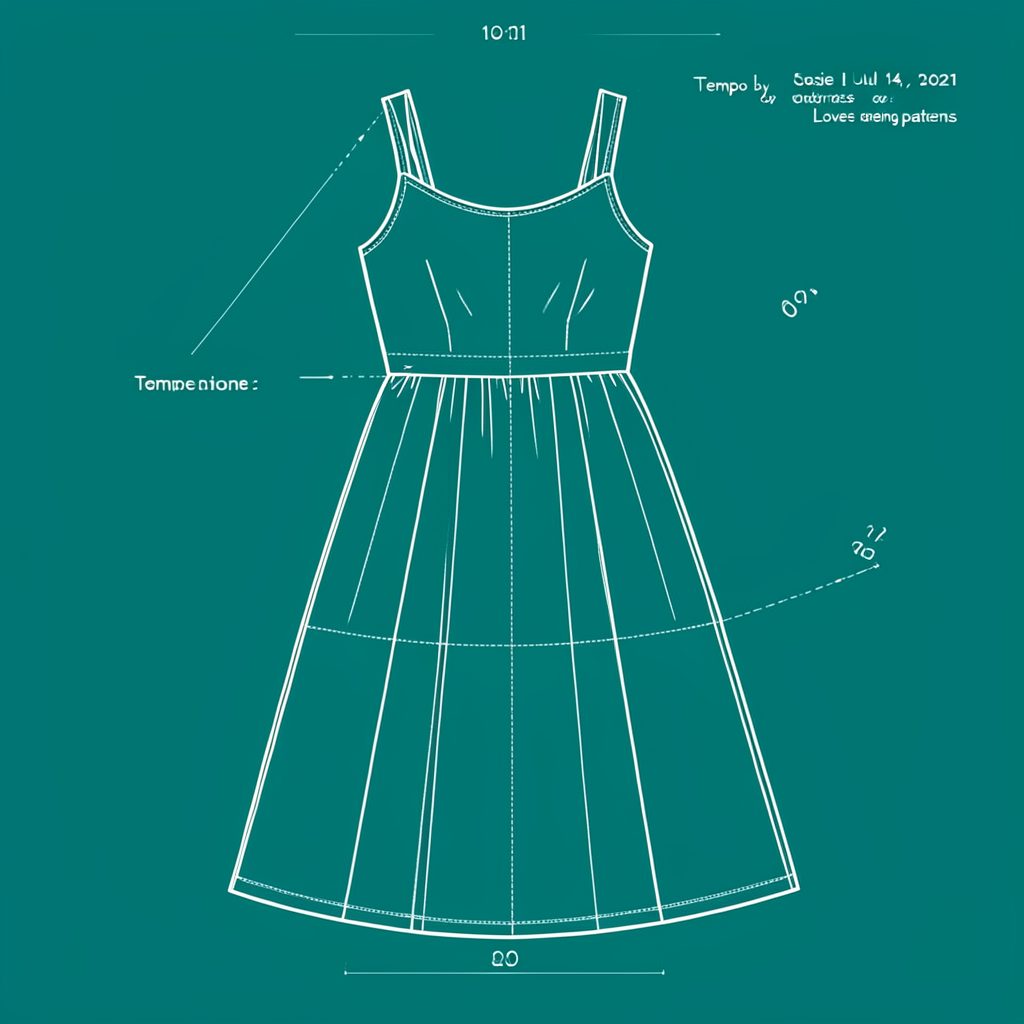
Lengthening The Love Notions Melody Dress For Maxi Style
A maxi version of the Love Notions Melody Dress can turn a practical knit pattern into an elegant, everyday wardrobe staple. The longer silhouette works for summer sandals, winter boots and relaxed weekends, while the original bodice keeps the project familiar for anyone who already enjoys sewing with stretch fabrics.
Lengthening a dress is more involved than adding a few centimetres to the bottom edge. The new hemline needs to hang correctly, the skirt must retain enough movement, and the fabric should suit the extra weight of a full-length garment. A little planning makes the difference between a graceful maxi and a dress that feels heavy or awkward.
The Melody is particularly useful for this experiment because its knit construction makes it comfortable and adaptable. You can create a simple column shape, maintain a gently flared skirt or add length for a swishing ankle-grazing finish. The best choice depends on your proportions, fabric and intended season.
For Australian sewists, the pattern can be adjusted for very different wardrobes. A lightweight maxi is useful in Brisbane humidity, while a heavier ponte version may suit Melbourne’s cooler months. Metric measurements, fabric availability from Australian retailers and the opposite seasonal calendar should all be part of the planning process.
Understanding The Original Shape
Before changing the length, study the skirt pieces and identify the grainline, waist seam and original hemline. The hem is not always a simple horizontal line: some pattern pieces widen towards the bottom, and that shaping affects how the dress moves when extended.
A maxi length should preserve the balance between the bodice and skirt. If you add too much length without checking the proportions, the dress can look elongated through the torso or become difficult to walk in. Try the original pattern at its intended length, if possible, so you can assess the fit before making a major alteration.
Consider where you want the finished hem to sit. An ankle-skimming dress usually feels easier to wear than a floor-length version, especially on stairs, public transport or uneven pavements. For a Sydney city wardrobe, an ankle-length hem can look polished with sneakers while remaining practical for commuting.
Measuring For A Custom Maxi
Wear the shoes you expect to use with the finished dress and measure from the waist seam to your preferred hem position. Do not measure from the shoulder unless you are also checking the bodice fit, as the waist seam provides a more reliable starting point for a skirt alteration.
Measure a similar dress that already feels comfortable. Compare its waist-to-hem length with the Melody pattern, remembering to account for seam allowances and the finished hem treatment. A wide double-turned hem will remove more length than a narrow twin-needle finish.
Make a paper adjustment rather than simply extending the pattern at the bottom. Divide the extra length between the lengthen-and-shorten lines, if they are marked, or create your own adjustment lines across the skirt. This keeps the flare distributed through the garment and prevents an oddly narrow or overly wide lower section.
Adding Length Without Losing Movement
For a softly flared maxi, slash across the skirt piece at two or more points and spread the sections evenly. Tape paper underneath the gaps, then redraw the side seams with smooth lines. Keep the grainline parallel to the original direction and avoid shifting the waist edge.
If you prefer a straighter silhouette, extend the side seams with only a small amount of additional width. A narrow maxi can look sophisticated, but knit fabric must still provide enough ease for walking. A useful test is to pin or baste the side seams and take several normal steps before committing to the final finish.
Adding a walking split is another practical option. A centre-back or side split can make a slim full-length dress considerably more comfortable, particularly when climbing stairs or sitting on the floor. Finish the split neatly and check that it does not expose more leg than intended when the fabric stretches.
Selecting Fabric For A Longer Dress
Fabric weight becomes more important as the skirt grows. Lightweight rayon jersey can create beautiful movement, but it may cling around the hips and show every uneven seam. A stable cotton-spandex jersey is often easier for a first version, while ponte gives structure and warmth for cooler Australian regions.
Check the fabric’s stretch and recovery before cutting. A knit that stretches generously but does not recover may grow during wear, causing the maxi hem to drop lower than planned. Test a length of fabric after washing, then measure it again to identify shrinkage or distortion.
Colour and print scale also affect the result. A dark solid can create a streamlined evening look, while a small floral suits casual daytime wear. Australian online shops and larger retailers such as Spotlight often carry different knit ranges from those available in local independent stores, so order a swatch when the fabric weight is uncertain.
For a shape-focused wardrobe, it can help to compare silhouettes before choosing a final length. This pear-shape dress guide offers useful ideas for balancing a fitted upper section with a longer skirt.
Construction Details That Matter
Staystitch or stabilise the waist seam according to the pattern instructions, especially when working with a long skirt that may pull on the bodice. Clear elastic can help support the seam without making it rigid. Use a stretch stitch or serger setting that allows the garment to flex as you move.
A long hemline can become wavy if it is stretched while sewing. Let the fabric rest naturally as it passes beneath the presser foot, and use a walking foot if your machine tends to push the layers unevenly. Pressing with low heat and a pressing cloth can improve the finish without flattening the knit.
Choose a ballpoint or stretch needle suited to the fabric. The wrong needle can create skipped stitches or tiny holes that become more visible after the dress is worn. These stretch lace needle tips are written for a more delicate material, but the general guidance about matching needle type to fabric remains valuable.
Before hemming, hang the dress for a day if the knit is fluid or heavy. Letting the fabric settle can reveal a dipped front, stretched side seam or uneven hem. Mark the final length while wearing the intended shoes, then trim only after the garment has relaxed.
Checks Before Cutting And Sewing
A toile is worthwhile when you are changing both length and silhouette. It does not need to be a perfect finished garment; an inexpensive knit can show whether the waist sits correctly, whether the skirt pulls across the hips and whether the proposed hem allows a comfortable stride.
Keep notes about the adjustment for future versions. Record the added length at each alteration line, the finished hem measurement and the fabric used. This turns a successful maxi into a repeatable pattern rather than a one-off experiment.
Before Cutting
- Wash and dry the fabric as you intend to launder the dress.
- Mark the new hemline and every altered grainline clearly.
- Check that the skirt width allows a comfortable walking stride.
Before Sewing
- Test the stitch on a fabric scrap and stretch the seam gently.
- Baste the waist and side seams before finishing them permanently.
- Try the dress with the shoes planned for regular wear.
Finishing The Maxi For Everyday Wear
The hem treatment should suit both the fabric and the style. A twin-needle hem gives a familiar ready-to-wear appearance, while a narrow zigzag or coverstitch can work well on very stretchy jerseys. For a drapey fabric, a narrow turned hem may be less bulky than a deep fold.
Think about how the dress will be layered. A maxi worn in Adelaide’s warmer weather may need only sandals and a light cardigan, whereas a version for Hobart could work with a cropped jacket and ankle boots. The same pattern adjustment can therefore produce very different results through fabric and styling choices.
| Maxi Direction | Suitable Fabric | Useful Finish | Everyday Consideration |
|---|---|---|---|
| Soft and flowing | Rayon jersey | Narrow twin-needle hem | Check for cling and fabric growth |
| Stable and casual | Cotton-spandex jersey | Standard twin-needle hem | Good for frequent washing |
| Structured and warm | Ponte knit | Clean turned hem | May need extra waist support |
| Slim with a split | Medium-weight jersey | Stabilised split and hem | Test walking and sitting comfort |
A carefully lengthened Melody Dress can become one of the most versatile pieces in a handmade wardrobe. Keep the waist fit stable, distribute added length through the skirt and allow the fabric to settle before final hemming. If you share project details or photographs online, review the site’s privacy policy before including personal information in your post.
Popular Pattern Reviews
| Pattern | Designer | Type | Highlight |
|---|---|---|---|
| Compose Robe (Kids) | Love Notions | Robe / Loungewear | Sizes 2T–16, cosy & practical |
| Tempo Sundress | Love Notions | Sundress | No closures, shirred back panel |
| Arlington Sweater | Love Notions | Sweater | Cold-weather staple |
| Sybil Illusion Skirt | Love Notions | Skirt (knit) | 7 variations, optional pockets |
| Camden Pinafore | Nina Lee Patterns | Pinafore dress | Year-round layering piece |
| Ogden Cami (dress hack) | True Bias | Cami / Dress | Versatile wardrobe builder |
| Burda 6829 | Burda | Dress | Multi-sized, special-occasion |
Stay in Touch
Subscribe to the newsletter for sewing inspiration, pattern tips, and project ideas delivered straight to your inbox.