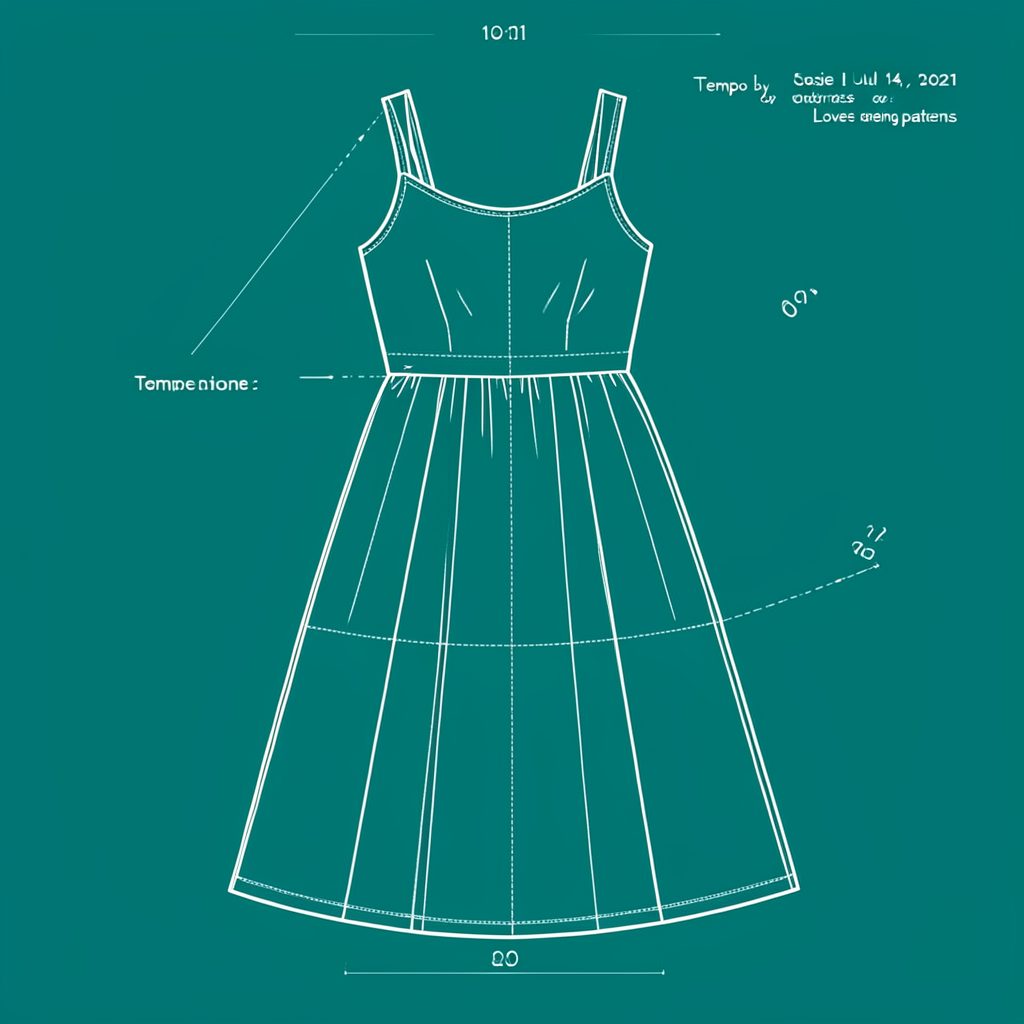
Resizing the Love Notions Soho jacket for a child
The Love Notions Soho Jacket is designed with an adult body in mind, so making one for a child takes more thought than simply choosing a smaller size. A child’s proportions change quickly: shoulders may be narrow, sleeves can be short in relation to the body, and the finished jacket still needs enough ease for a jumper underneath.
The good news is that an indie sewing pattern gives you a useful starting point. With careful measurements, a test version and a few deliberate changes to the pattern pieces, you can create a properly scaled child’s jacket rather than an adult garment that has merely been shrunk. The result can be a practical layer for school runs, weekend outings or cooler evenings at the beach.
Begin with the child’s measurements
Start by measuring the child rather than relying on their usual ready-to-wear size. Record chest, waist, hip, shoulder width, back length, arm length and upper-arm circumference. For a jacket, also measure over the clothes they are likely to wear beneath it. A fitted T-shirt measurement will produce a very different result from a measurement taken over a jumper.
The chest measurement is often the best place to select the starting size, but it should not be used in isolation. Compare the child’s body length with the pattern’s finished length, then check the sleeve. A young child may need the smallest available width with a shortened torso, while an older child may need more room through the upper arm and a longer sleeve.
Use centimetres throughout the process, and write the measurements directly on a copy of the pattern. Australian children’s clothing sizes vary between brands, so a size 6 from one shop may fit like a size 5 or 7 elsewhere. This is particularly important when buying fabric online, where returns can be inconvenient and postage across Australia can add up quickly.
Decide how much to reduce
A pattern made for adults includes proportions that cannot be reduced evenly. If every line is scaled by the same percentage, the neckline, armhole depth and sleeve head may become too small or awkward. A child’s jacket needs a shorter shoulder-to-bust distance, a shallower armhole and a smaller sleeve cap as well as a narrower body.
Trace the smallest suitable Soho Jacket size onto fresh paper. Compare the pattern with the child’s measurements and identify the difference at the chest, waist and hip. Divide each adjustment between the side seams rather than removing the full amount from one edge. This keeps the front and back balanced and makes the seam allowances easier to manage.
For a noticeably smaller child, it is usually safer to resize in stages. Reduce the width first, then shorten the body and sleeve. Avoid cutting into the original printed pattern, especially if you may sew the adult version later. Pattern tracing paper, medical examination paper or lightweight Swedish tracing paper all work well for preserving the original.
Redraw the main jacket pieces
To reduce the body length, draw a horizontal adjustment line across the front and back pattern pieces, ideally through a relatively straight section below the armhole. Cut along the line, overlap the sections by the amount needed, and true the side seam so it remains smooth. Repeat the same adjustment on any facing, lining or hem pieces that correspond with the jacket body.
For the width, use the finished garment measurements and remove only the excess needed. Spread the reduction across the side seams and, if necessary, the centre front or back. Keep the shoulder seam centred over the child’s shoulder. A jacket that is narrow through the chest but still has an adult-sized shoulder will feel bulky and restrict movement.
The neckline and armhole require particular care. After changing the shoulder or side seam, redraw these curves with a smooth line rather than joining the altered sections with sharp corners. Measure the new armhole and compare it with the sleeve cap. The sleeve must still fit the opening, so transfer any changes carefully instead of guessing.
Adjust the sleeves and details
Children’s sleeves often need more alteration than the jacket body. Measure from the shoulder point to the wrist with the child’s arm slightly bent, then compare that measurement with the pattern. Shorten the sleeve at a designated lengthen-or-shorten line if one is provided. If there is no marked line, choose a straight section below the elbow and keep the cuff or hem shape unchanged.
If the upper arm is narrower than the original sleeve, reduce the sleeve width gradually from the bicep to the wrist. Do not simply trim the entire side seam by the same amount, as this can make the cuff too tight or distort the sleeve. Check that the front and back sleeve notches remain in the correct positions after redrawing the cap.
The Soho Jacket’s visual character comes from its construction details, so keep those in proportion. A large patch pocket can look oversized on a small jacket, while a wide hem band may dominate the garment. Reduce pocket width and height modestly, then check that the opening remains practical for small hands. Any zip, button or snap should be chosen after the new front length is established.
Select fabric for the child’s wardrobe
A child’s jacket needs fabric that can handle movement, washing and a fair amount of sitting on the ground. Light to medium-weight denim, cotton twill, needlecord, linen blends and stable woven jacket fabrics are useful options. Very drapey fabric can make the altered shape difficult to assess, while a fabric that is too firm may make the sleeves uncomfortable.
For Australian weather, think about where and when the jacket will be worn. A lightweight cotton layer suits a mild winter in Brisbane or a cool evening in Perth, while a lined twill or needlecord may be more useful in Melbourne, Hobart or inland New South Wales. For warm-weather versions, compare breathable cloth before cutting; this fabric comparison explains why similar-looking summer fabrics can behave very differently during sewing and wear.
Prewash the fabric in the same way the finished jacket will be laundered. This matters for children’s clothing because frequent washing is part of real life, especially after muddy park visits or a day at school. Press the fabric before laying out the altered pieces, and check the grainline carefully if the cloth has a nap, stripe or directional print.
Test the fit before final sewing
Make a toile from an inexpensive woven fabric, old cotton sheet or leftover curtain fabric with a similar weight. Include the body, sleeves and any closure area that affects fit. There is no need to reproduce every pocket for the first test, but the armholes, shoulder seams and sleeve must be present.
Have the child try it on over the intended base layer. Look for pulling across the chest, a shoulder seam that sits too far down the arm, restricted reach and sleeves that ride up when the arms are raised. Ask the child to sit, bend, reach forward and put their hands in the pockets. Comfort and movement are more valuable than a perfectly neat standing pose.
Make notes directly on the toile. Mark where the hem should finish, whether the cuff needs extra room and how much ease is wanted for growth. Once the changes are transferred to the paper pattern, walk the seams together again and check that the lining, facing and outer pieces still match. A small amount of ease is useful, but excessive extra room can make a child’s jacket look shapeless.
| Area to check | Adult pattern issue | Child-sized adjustment |
|---|---|---|
| Chest and waist | Too much width through the body | Remove width gradually at the side seams |
| Shoulder | Shoulder point sits beyond the child’s arm | Narrow the shoulder and smooth the armhole |
| Armhole | Armhole is too deep for a shorter torso | Raise it carefully and remeasure the sleeve |
| Sleeve | Sleeve is long or wide | Shorten at an adjustment line and taper the width |
| Pockets | Pocket looks oversized or sits too low | Scale it down and place it within easy reach |
| Hem and lining | Length does not match the revised body | Alter all corresponding pieces by the same amount |
A practical resizing checklist
Before cutting the final fabric, work through these decisions:
- Measure the child over the clothes they will wear under the jacket.
- Select the starting size by chest and shoulder fit, not age alone.
- Shorten the body and sleeves using clear horizontal adjustment lines.
- Make a toile that includes the armholes, sleeves and closure placement.
- Check the finished jacket for washing, movement and room to grow.
Keep the altered pattern pieces together in a labelled envelope, including the child’s measurements and the date. Children change size quickly, and a note such as “shortened body by 4 cm, narrowed shoulder by 1 cm” will save considerable time when making another version.
A carefully resized jacket can become a hardworking wardrobe favourite. For extra sewing notes, fabric ideas and independent pattern reviews, Josie’s sewing blog offers practical inspiration, and you can use the contact page for project-related enquiries.
Popular Pattern Reviews
| Pattern | Designer | Type | Highlight |
|---|---|---|---|
| Compose Robe (Kids) | Love Notions | Robe / Loungewear | Sizes 2T–16, cosy & practical |
| Tempo Sundress | Love Notions | Sundress | No closures, shirred back panel |
| Arlington Sweater | Love Notions | Sweater | Cold-weather staple |
| Sybil Illusion Skirt | Love Notions | Skirt (knit) | 7 variations, optional pockets |
| Camden Pinafore | Nina Lee Patterns | Pinafore dress | Year-round layering piece |
| Ogden Cami (dress hack) | True Bias | Cami / Dress | Versatile wardrobe builder |
| Burda 6829 | Burda | Dress | Multi-sized, special-occasion |
Stay in Touch
Subscribe to the newsletter for sewing inspiration, pattern tips, and project ideas delivered straight to your inbox.