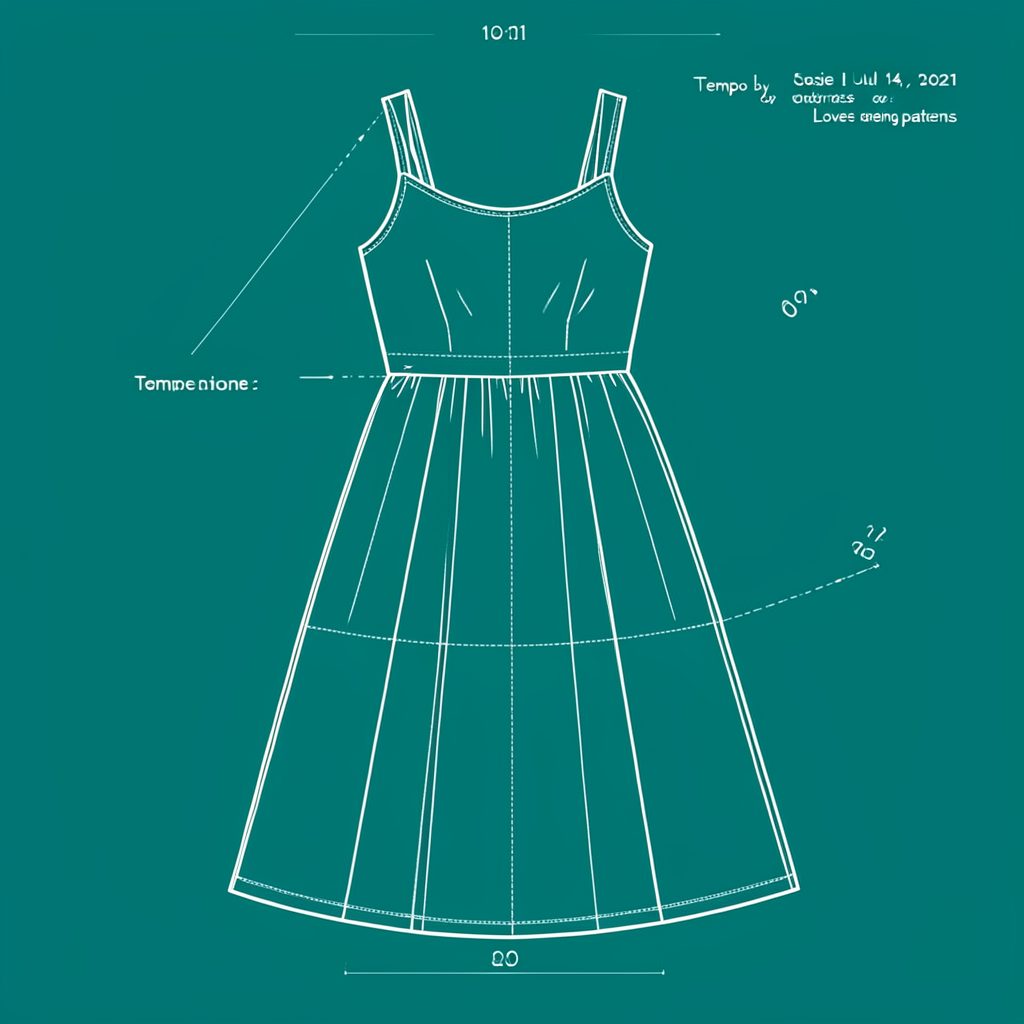
Love Notions Swell Dress: A Mock Wrap Variation
A wrap-style dress has an easy elegance: overlapping front panels, a softly defined waist, and a neckline that feels relaxed without looking unfinished. The trouble with a true wrap is that it can shift during the day, especially in a lighter fabric. A mock wrap keeps the visual interest while giving the garment the stability of a conventional dress.
The Love Notions Swell Dress makes a useful starting point for this alteration because its main design lines can be adapted without changing the entire garment. The aim is to create a fixed overlap at the bodice, secure the front at the waist, and preserve enough ease for comfortable movement.
This is a satisfying project for sewists who enjoy adjusting independent sewing patterns. It also offers a practical way to explore pattern manipulation without drafting a completely new dress from scratch. A toile is strongly recommended before cutting into a special fabric, particularly if the original pattern is being changed around the bust or neckline.
Why A Mock Wrap Works Well
A true wrap bodice usually relies on ties, snaps, or internal fastening to hold the front sections in place. A mock wrap borrows that overlapping appearance but joins the fronts permanently. The result is easier to wear, simpler to finish, and less likely to gape when you sit, bend, or reach.
The alteration is especially useful when you want the Swell Dress silhouette to feel a little more polished. The diagonal seam created by the overlap draws the eye across the body, while a fixed waist seam prevents the front from opening. You can make the overlap subtle for a gentle crossover or deeper for a stronger faux-wrap effect.
Before altering anything, trace the original front bodice and mark the centre front, bust point, waistline, and seam allowances. Keeping an untouched copy means you can return to the original design later or compare the fit of both versions.
Select Fabric With The Right Recovery
Fabric choice will determine whether the finished dress looks fluid or bulky. If the Swell Dress is being made in a knit, choose a fabric with suitable stretch and recovery according to the pattern instructions. A stable jersey, ponte, or medium-weight rayon knit can make the mock wrap easier to control than a very lightweight fabric.
For a woven interpretation, first check whether the pattern and construction method support that change. A woven fabric cannot provide the same ease as stretch fabric, so additional room or a modified size may be necessary. Linen, cotton lawn, viscose, and lightweight chambray can all create attractive results, although each behaves differently at the crossover.
A linen dress project such as this linen summer dress project is a useful reminder that fabric character matters as much as colour. Linen gives crisp definition to a wrap line, while rayon creates a softer drape and a more fluid overlap.
Prewash and dry the fabric in the same way you plan to launder the finished garment. This is especially important for linen, viscose, and cotton, since shrinkage or distortion can affect the length of the bodice and skirt.
Redraw The Front Bodice
Start by deciding where the overlap should finish. A practical position is the opposite side of the waist seam, with the upper layer crossing the lower layer by several centimetres. The exact measurement depends on the size, bust fullness, and how dramatic you want the diagonal line to appear.
Place tracing paper over the front bodice and draw the new crossover edge from the shoulder or neckline area down towards the opposite waist. Avoid creating a sharp point at the bust; a gently curved line will sit more smoothly and reduce the chance of pulling. The finished edge can follow the existing neckline treatment or become a separate binding line.
The underlap front remains close to the original shape, while the overlap front extends across the body. Add the intended overlap to the upper front before adding seam allowance. It is easy to accidentally include the extra width twice, so mark the original centre front and the new finished edge clearly.
If the pattern has a dart, bust cup option, or princess seam, preserve those shaping features during the adjustment. The crossover changes the outer edge, but it should not remove the shaping needed for the bodice to fit correctly.
Secure The Crossover Neatly
Make a toile from inexpensive fabric and test the bodice while wearing the undergarments you expect to wear with the dress. Pin the overlap at the waist and check the neckline, bust coverage, and armhole. A mock wrap should lie flat without pulling diagonally across the bust.
Once the position is right, transfer the markings to the pattern pieces. The upper front can be secured with a line of stitching in the waist seam, a short length of clear elastic, or a small internal tack. For extra security, add a discreet snap or hook near the bust if the fabric tends to shift.
The neckline needs careful stabilisation because the diagonal edge can stretch during handling. Staystitch curved or bias-cut areas as soon as the pieces are cut. A narrow strip of fusible interfacing, clear elastic, or self-fabric binding can help the finished edge retain its shape.
If the skirt joins at the waist, assemble the two front layers in the correct order before attaching the skirt. Baste the overlap first, then try the garment on again. This makes it possible to correct the crossing position before the waist seam is permanently stitched.
Compare The Main Design Choices
There are several ways to interpret the same alteration. A narrow overlap gives a restrained faux-wrap detail and uses less fabric, while a wider overlap creates a more recognisable wrap silhouette. You can also choose between a clean folded edge, a separate band, or a narrow binding finish.
Think about the whole outfit before choosing. A bold print may benefit from a simpler crossover so the pattern remains visible, whereas a plain fabric can support a more sculptural diagonal line. The table below summarises the practical differences.
| Design choice | Visual effect | Best fabric direction | Construction note |
|---|---|---|---|
| Narrow overlap | Subtle, tailored crossover | Stable knit or light woven | Easy to secure at the waist |
| Wide overlap | Strong faux-wrap appearance | Fluid knit, rayon, or viscose | Check bust coverage carefully |
| Bound edge | Defined and decorative | Light to medium-weight fabric | Requires accurate pressing |
| Folded edge | Clean and minimal | Stable fabric with good recovery | Staystitch before turning |
| Waist tack only | Very flexible appearance | Drapey fabrics | Add a hidden snap for security |
The finished length can also change the character of the dress. A shorter skirt feels casual and summery, while a longer version gives the mock wrap more movement. If you lengthen the skirt, make a quick test using a vertical strip of fabric so you can assess weight and walking ease.
Practical Checks Before You Cut
A mock wrap adjustment is straightforward when the key points are marked before sewing. Take time to compare the altered front with the back bodice, confirm the waist seam length, and make sure the new crossover edge will be enclosed or finished as intended.
Use these checks to keep the alteration manageable:
- Trace the original pattern pieces before drawing the new front.
- Mark the bust point, centre front, waistline, and overlap edge.
- Make a toile and pin the crossover while wearing the intended undergarments.
- Stabilise the neckline and diagonal edge before final assembly.
- Add a hidden snap or internal tack if the front shifts during movement.
Press each seam as you sew, particularly around the waist and crossover. A mock wrap can look untidy when the layers are not pressed in their final direction, even if the stitching is accurate. Use a pressing cloth when working with delicate rayon or heat-sensitive fibres.
Take photographs of the toile from the front and side. Pictures often reveal twisting, excess fabric, or an uneven overlap more clearly than a mirror. If the crossover pulls upward, release the waist attachment and reassess the bodice fit before changing the outer edge.
Finish The Dress With Personal Detail
Once the main construction is complete, the finishing choices can make the variation feel intentional rather than improvised. Matching thread creates a quiet result, while contrast topstitching can emphasise the diagonal front. A narrow waist tie may be added as decoration, but it should not be relied upon as the primary support if the aim is a fixed mock wrap.
Consider using the same fabric for a narrow neckband or waist facing so the front detail remains cohesive. If the crossover is made from a print, pay attention to directional motifs and large-scale placement. A small amount of pattern matching at the front can make the garment look especially considered.
This kind of project reflects the practical, experimental spirit behind about Josephine, where sewing is treated as a process of learning as well as making. Pattern alterations do not need to be intimidating; careful marking, testing, and pressing can turn a familiar design into something distinctly personal.
The Love Notions Swell Dress can become a versatile base for future versions too. Try a contrast underlap, a deeper crossover, a gathered skirt, or a different sleeve option once the first toile has confirmed the fit. Each variation builds confidence with pattern adjustment while keeping the original garment recognisable.
Choose a fabric you are excited to wear, trace the front bodice, and give the mock wrap a careful test version before committing to your final dress. With a stable crossover and thoughtful finishing, this alteration can turn the Swell Dress into a comfortable, distinctive handmade favourite.
Popular Pattern Reviews
| Pattern | Designer | Type | Highlight |
|---|---|---|---|
| Compose Robe (Kids) | Love Notions | Robe / Loungewear | Sizes 2T–16, cosy & practical |
| Tempo Sundress | Love Notions | Sundress | No closures, shirred back panel |
| Arlington Sweater | Love Notions | Sweater | Cold-weather staple |
| Sybil Illusion Skirt | Love Notions | Skirt (knit) | 7 variations, optional pockets |
| Camden Pinafore | Nina Lee Patterns | Pinafore dress | Year-round layering piece |
| Ogden Cami (dress hack) | True Bias | Cami / Dress | Versatile wardrobe builder |
| Burda 6829 | Burda | Dress | Multi-sized, special-occasion |
Stay in Touch
Subscribe to the newsletter for sewing inspiration, pattern tips, and project ideas delivered straight to your inbox.