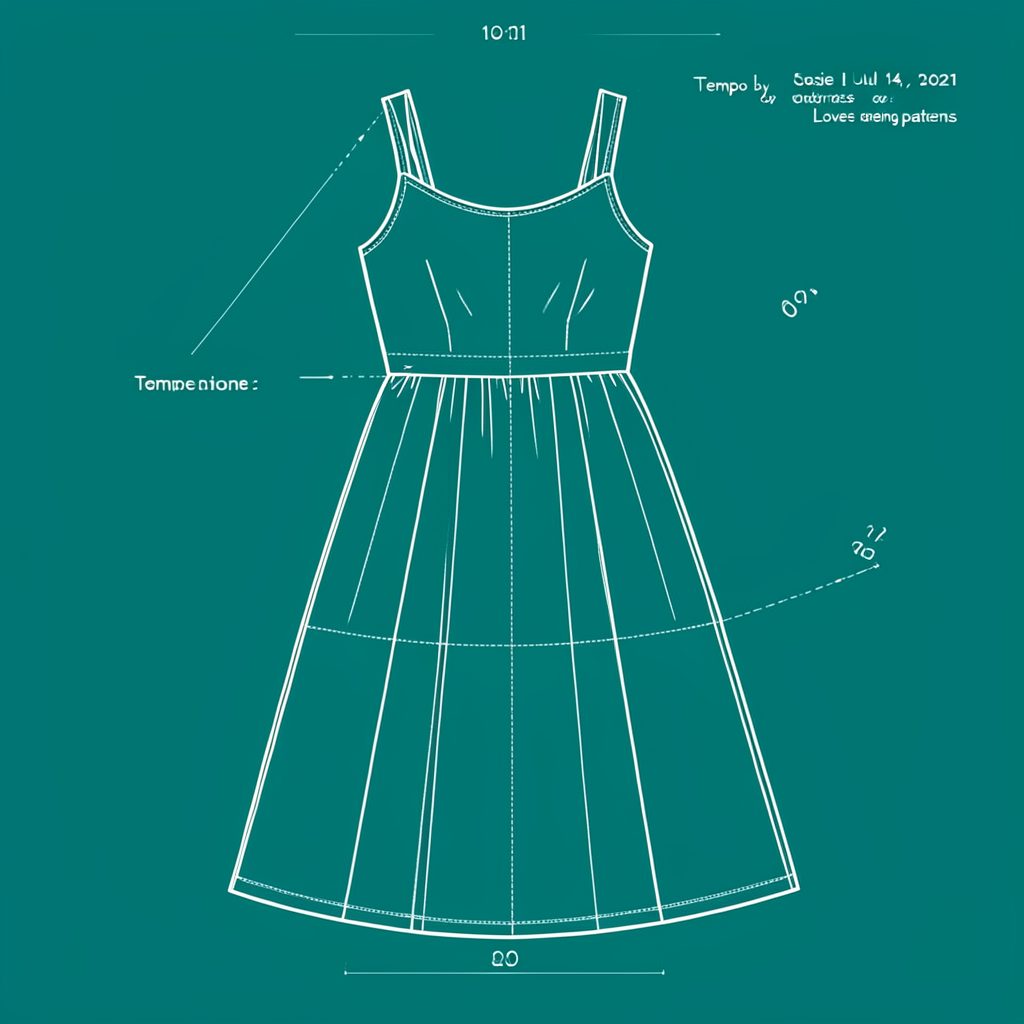
Love Notions Symphony Top: Shortening for a Cropped Look
The Love Notions Symphony Top is a versatile knit pattern with several neckline, sleeve and hem options, making it a useful base for a shorter everyday top. Cropping the length can shift the proportions quite dramatically, though, so the best result comes from measuring the finished garment rather than removing an arbitrary number of centimetres.
A cropped Symphony can work beautifully with high-waisted jeans, linen trousers, skirts and shorts. It is also a practical option for Australian wardrobes, where lightweight tops are often worn through long warm seasons. For more independent pattern reviews and garment-making ideas, browse the Josie sewing blog.
Why Choose A Cropped Symphony Top
The standard length of a pattern is drafted to suit a particular body proportion, but that does not mean it will be the most useful length for every wardrobe. A cropped hem can define the waist, reduce excess fabric around the hips and give a simple knit top a sharper, more contemporary shape. It is especially effective when paired with high-rise bottoms that meet the new hemline.
Before altering the pattern, consider how much midriff you want visible while moving, sitting and lifting your arms. A top that looks cropped while standing may rise considerably when you reach overhead. For everyday wear in Brisbane or Perth, where a shorter top can feel cooler, this may be welcome. In cooler Melbourne weather, you might prefer a hem that finishes just below the waistband so it layers neatly over a camisole.
Fabric choice affects the visual result as much as the length. A drapey rayon knit may fall softly at the new hem, while a stable cotton jersey can create a cleaner, more structured shape. Avoid making the first version from an expensive or difficult-to-replace print until you have checked the fit and finished dimensions.
Measure The Finished Length First
Start with the pattern’s finished garment measurements, not only the body measurements. Measure a favourite top that already has the proportions you like. Lay it flat, measure from the shoulder near the neckline to the hem, and record the result. Take a second measurement from the underarm to the hem, since this helps you identify whether you want to shorten the torso evenly or preserve the shape around the bust.
Try on the Symphony pattern as a tissue or paper mock-up if possible. Hold the front and back pieces against your body while wearing the bra or camisole you expect to wear underneath. Mark the point where you would like the finished hem to sit. Add the intended hem allowance before transferring the adjustment to the paper pattern.
The front may need a slightly different alteration from the back if you have a fuller bust or a rounded upper back. Removing the same amount from both pieces is a sensible starting point, but check the side seams after adjustment. They should remain the same length, or the hem will twist and become difficult to sew evenly.
If you are between sizes, finish the side seams and hem with the same stretch-friendly method you plan to use in the final garment. A narrow zigzag, stretch stitch or twin-needle finish can change how the hem hangs. The aim is to assess the actual garment, rather than judging a raw fabric edge.
Compare Ways To Shorten The Pattern
There are three straightforward approaches: remove length through a designated shorten line, trim from the lower edge, or use a combination of both. A shorten line is generally the safest option because it preserves the drafted hem shape and keeps the side seam relatively balanced. Follow the pattern’s printed instructions if it includes a specific alteration line.
Cutting from the bottom is quick, but it can remove shaping that was intended to help the top sit smoothly over the body. This method can work for a very small adjustment, particularly on a simple straight hem. For a more significant crop, the fold-and-overlap method gives greater control and makes it easier to keep the grainline and side seams aligned.
| Shortening method | Best for | Main benefit | Watch carefully |
|---|---|---|---|
| Use the shorten line | Removing several centimetres | Maintains the drafted proportions | Keep the fold parallel to the hem |
| Trim from the lower edge | A small adjustment | Fast and simple | The original hem shape may change |
| Shorten above and below the bust | Larger proportion changes | Preserves bust and hip balance | Requires careful taping and redrawing |
| Make a test garment | Any uncertain adjustment | Confirms length before cutting final fabric | Use a similar knit with comparable stretch |
After overlapping the pattern, redraw any side seam that develops a sharp step. Blend the line gradually with a ruler or French curve rather than leaving a visible corner. Extend the grainline through the altered area so the fabric continues to hang correctly.
A cropped top is often better when the adjustment is distributed above and below the bust rather than taken entirely from the hem. This is useful for a long torso, because it shortens the overall garment while retaining the intended relationship between the neckline, bust and waist.
A Practical Cropping Checklist
Complete these checks before cutting into your chosen knit:
- Measure a top you already enjoy wearing.
- Mark the desired finished length on both pattern pieces.
- Match the front and back side seams after altering.
- Check that the new hem is parallel to the grainline.
Use a quick toile or wearable test when:
- You are removing more than 5 cm.
- The fabric has a different stretch percentage from your sample.
- You are changing both the bodice and sleeve proportions.
- The top will be worn with a specific high-waisted garment.
Australian sewists may need to allow extra time for ordering specialist knits. Local shops in Sydney, Adelaide and regional towns can have different ranges from large online retailers, while imported fabric may involve higher postage and longer delivery windows. Check the fabric width as well as the price per metre before finalising the pattern layout; a cropped top may fit more economically, but directional prints can still require extra yardage.
If you plan to sell finished Symphony-style tops at a market, remember that Australian consumer and textile rules still matter. Textile products generally need accurate fibre content information under the mandatory care and labelling framework, and the Australian Consumer Law applies to goods sold to customers. Keep fabric composition records and give truthful descriptions rather than relying on a broad term such as “natural knit”.
Sew And Style The New Hem
Once the pattern is altered, sew the garment using a ballpoint or stretch needle and a test seam. The hem should retain enough elasticity to pass over your head and accommodate movement. A twin needle gives a familiar ready-to-wear appearance, while a zigzag or coverstitch can be more forgiving on a very stretchy knit. Stabilising the hem with lightweight clear elastic may help a fluid fabric sit flat.
Press the seam allowances gently and use a low-to-medium temperature suitable for the fibre. A hot iron can flatten the texture of some synthetics or distort a rib knit. Before hemming, let the top rest on a hanger or flat surface for a few hours, especially if the fabric has substantial stretch. This allows the hem to settle before you commit to the final measurement.
The cropped Symphony pairs naturally with high-waisted denim, wide-leg trousers and full skirts. For an Australian summer, try cotton jersey with linen shorts or a lightweight skirt. In Tasmania or during a cooler season, layer it over a longer singlet or under a denim jacket. Neutral solids make the altered shape easy to assess, while a small-scale print can soften the strong horizontal line created by a shorter hem.
Sleeve length also changes the balance of the finished top. A cropped bodice with full-length sleeves can feel deliberately graphic, whereas short sleeves create a lighter warm-weather silhouette. Make one change at a time if you are still learning the pattern, so you can tell whether the proportions or the fabric are responsible for the final effect.
For a closer look at how construction details and fit decisions can shape a different knit garment, the Elle bodysuit review offers another useful independent pattern reference. More background about Josephine’s approach to sewing and crafts is available on the about page, alongside the wider focus of the blog.
Popular Pattern Reviews
| Pattern | Designer | Type | Highlight |
|---|---|---|---|
| Compose Robe (Kids) | Love Notions | Robe / Loungewear | Sizes 2T–16, cosy & practical |
| Tempo Sundress | Love Notions | Sundress | No closures, shirred back panel |
| Arlington Sweater | Love Notions | Sweater | Cold-weather staple |
| Sybil Illusion Skirt | Love Notions | Skirt (knit) | 7 variations, optional pockets |
| Camden Pinafore | Nina Lee Patterns | Pinafore dress | Year-round layering piece |
| Ogden Cami (dress hack) | True Bias | Cami / Dress | Versatile wardrobe builder |
| Burda 6829 | Burda | Dress | Multi-sized, special-occasion |
Stay in Touch
Subscribe to the newsletter for sewing inspiration, pattern tips, and project ideas delivered straight to your inbox.