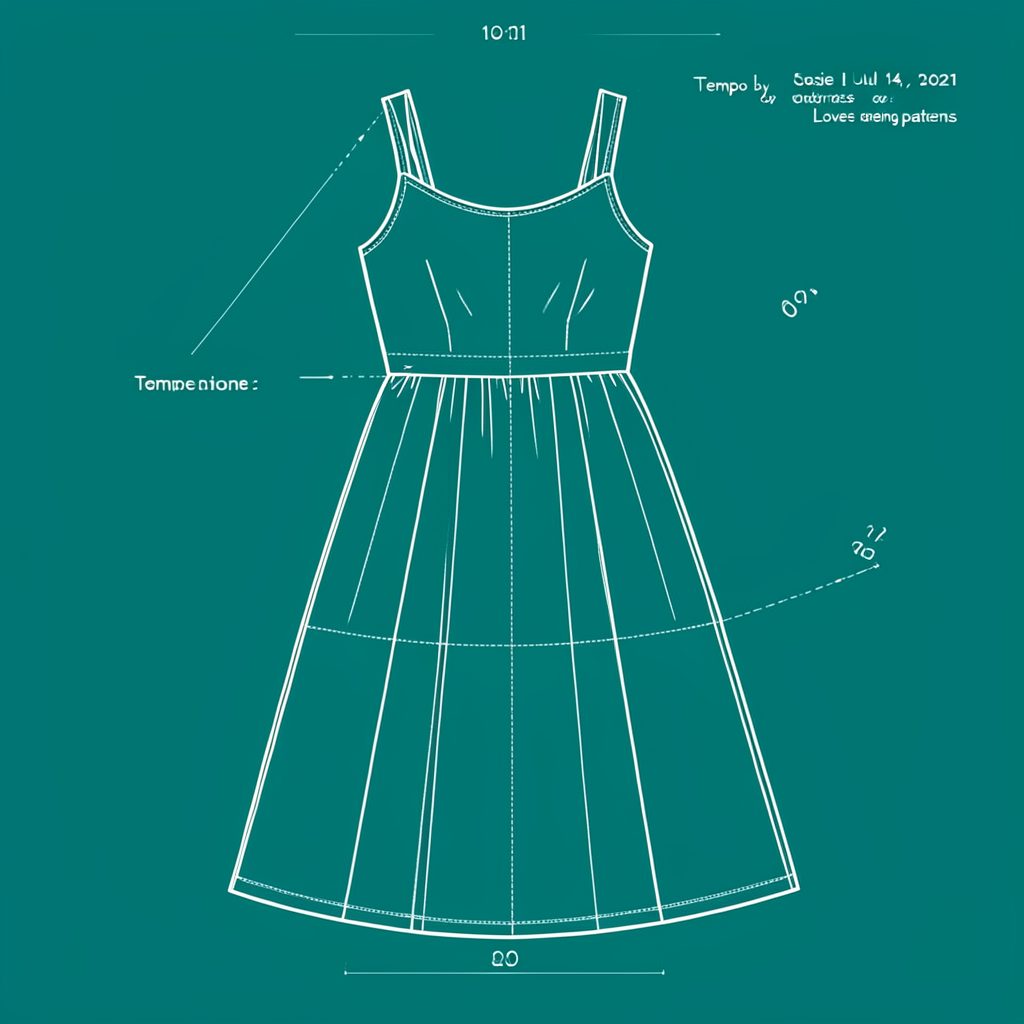
Fibre Mood Odette dress pattern review
The Fibre Mood Odette is a feminine dress pattern with plenty of movement and a polished shape, yet it remains approachable for a home sewist. Its appeal comes from the balance between a more structured bodice and a softer skirt, creating a garment that can feel special without being reserved for formal occasions.
For Australian makers, fabric choice is central to making Odette work throughout the year. A breathable cotton or linen blend can make it comfortable in a Queensland summer, while a drapey viscose or lightweight wool blend gives the same pattern a more autumnal feel in Melbourne or Hobart. The design has enough personality to stand alone, but it also offers useful opportunities for fitting and styling adjustments.
The shape and design details
Odette has the characteristic romantic look associated with many Fibre Mood patterns: a defined upper body, a waistline that gives the silhouette shape, and a fuller skirt that moves as you walk. The proportions make it feel dressy, although the finished garment can be made much more relaxed through fabric selection and styling.
The bodice is the area that deserves the closest attention. Neckline depth, bust shaping and the position of the waist seam all influence whether the dress feels secure and comfortable. Before cutting into a treasured print, I would make a quick toile or at least check the finished measurements against a garment that fits well. This is especially worthwhile if you are between sizes or have a fuller bust.
The skirt is more forgiving than the bodice because its volume does not rely on close fitting. It gives Odette a graceful outline without demanding a precise fit over the hips. Depending on the version and fabric, the gathered or eased fullness can create anything from a soft everyday shape to a more dramatic party dress.
Choosing fabric for an Australian wardrobe
Light to medium-weight woven fabrics are the most versatile choice. Linen, linen-cotton, cotton lawn, poplin and chambray produce a crisp version with clear definition, while rayon, viscose and Tencel create softer folds and more fluid movement. A fabric with too much body may make the skirt stand away from the body, so it is worth considering the drape as well as the colour.
Hot, humid weather changes the practical fabric decision. In Brisbane or Darwin, a breathable natural fibre and a less restrictive lining will be more comfortable than a dense polyester. In Sydney, the dress can work across more of the year in cotton sateen or linen, while an Australian merino blend could make it useful for cooler Adelaide evenings.
Print scale also matters. A bold floral can highlight the skirt and make the dress feel vintage-inspired, but matching a directional print across the bodice takes extra planning. Small checks, scattered florals and solid colours make the construction easier to read. If buying from an overseas shop, remember to allow for exchange rates, postage and possible import costs; local fabric shops and Australian online sellers can be more economical for a toile.
Sizing, construction and likely alterations
The most important preparation is to separate body measurements from the pattern’s finished measurements. Measure your bust, waist and hips, then compare them with the chart rather than selecting a size by habit. Fibre Mood patterns can have a different ease philosophy from brands you already sew, so the finished garment information is particularly helpful.
A full-bust adjustment may be useful when the bust measurement points to a larger size than the waist. Conversely, grading between sizes through the bodice and skirt can preserve a closer waist fit without losing ease over the hips. Check the position of the waist seam on your toile, since a small change in torso length can make the whole dress sit more comfortably.
| Feature | What to check before cutting | Useful adjustment |
|---|---|---|
| Bodice fit | Bust, waist, neckline depth and arm movement | Full- or small-bust adjustment, then recheck the waist |
| Waist seam | Natural waist position and torso length | Lengthen or shorten above the waist |
| Skirt fullness | Finished volume and fabric weight | Reduce gathers or use a softer cloth |
| Sleeves or straps | Coverage, mobility and seasonal comfort | Alter length or refine the opening |
| Fastening | Whether the closure is easy to reach and secure | Add a discreet hook, snap or longer opening |
Construction should be tackled in a calm order, particularly around the bodice and neckline. Stay-stitching, careful pressing and accurately transferred notches will make a visible difference. If the pattern uses gathers, sew two rows of long stitches and distribute them gradually rather than pulling everything into place at once.
What makes the pattern beginner-friendly
Odette is a reasonable project for an advanced beginner who has already sewn a simple woven dress. The skirt provides satisfying progress, and the finished garment looks impressive even when made in a straightforward fabric. It is a good step up from a loose shift dress because it introduces more fitting without requiring tailoring techniques.
The pattern is less suitable as a first-ever garment if the maker is unfamiliar with bodice construction, easing or neckline finishing. A toile is not wasted time here; it can reveal whether the waist sits correctly and whether the neckline needs additional support. Clear marking and pressing at every stage will prevent the project from becoming frustrating.
Instructions should be read from beginning to end before cutting. Fibre Mood patterns often rely on illustrations and concise steps, so a sewist who prefers very detailed written explanations may need to slow down and interpret each diagram carefully. For extra guidance on approaching an independent pattern project, the Elle bodysuit review is a useful comparison in terms of fitting and construction planning.
Styling and everyday wear
The Odette can be styled in several directions. Worn with sandals and a woven bag, it becomes an easy warm-weather dress. A cropped cardigan, denim jacket and flat shoes make it more practical for errands, while a belt and heeled sandals can sharpen the waist for a celebration or dinner.
The pattern also suits a wardrobe built around trans-seasonal layering. In Australia, a sleeveless or short-sleeved version may be ideal for summer, with a fine merino cardigan for cooler evenings. A longer sleeve, darker print or heavier fabric can take the design into autumn. For Melbourne’s changeable weather, a slip, tights and ankle boots can make the dress more useful than its romantic appearance suggests.
Consider the care routine before choosing fabric. Linen will soften and crease, viscose may need gentle washing, and a lined version can require more careful drying. A dress that fits beautifully but needs constant dry-cleaning may receive less wear, particularly when machine-washable cotton would serve the same wardrobe role.
Value, pattern experience and final verdict
The value of Odette depends on how many versions you can imagine making. It is strong as a statement dress, but the silhouette is adaptable enough for a plain linen day dress, a floral summer version or a darker occasion garment. Sewing several variations also spreads the effort of learning the fit across more than one finished piece.
The Fibre Mood format is convenient for sewists who enjoy digital patterns and want quick access to a modern indie design. Print-at-home assembly takes time, and Australian makers should check the paper size and printing options before starting. If ordering a printed pattern internationally, shipping can change the overall cost, while buying digital files avoids postage but requires reliable home printing.
For a fuller look at independent pattern sewing, the Josie's sewing blog offers further project inspiration and practical garment-making ideas. Overall, Odette is a stylish pattern with enough structure to reward careful preparation and enough flexibility to suit different climates, fabrics and wardrobes. It is best approached with a toile and a thoughtful fabric choice, but the finished result has the presence of a special-occasion dress while remaining wearable in everyday life.
Popular Pattern Reviews
| Pattern | Designer | Type | Highlight |
|---|---|---|---|
| Compose Robe (Kids) | Love Notions | Robe / Loungewear | Sizes 2T–16, cosy & practical |
| Tempo Sundress | Love Notions | Sundress | No closures, shirred back panel |
| Arlington Sweater | Love Notions | Sweater | Cold-weather staple |
| Sybil Illusion Skirt | Love Notions | Skirt (knit) | 7 variations, optional pockets |
| Camden Pinafore | Nina Lee Patterns | Pinafore dress | Year-round layering piece |
| Ogden Cami (dress hack) | True Bias | Cami / Dress | Versatile wardrobe builder |
| Burda 6829 | Burda | Dress | Multi-sized, special-occasion |
Stay in Touch
Subscribe to the newsletter for sewing inspiration, pattern tips, and project ideas delivered straight to your inbox.