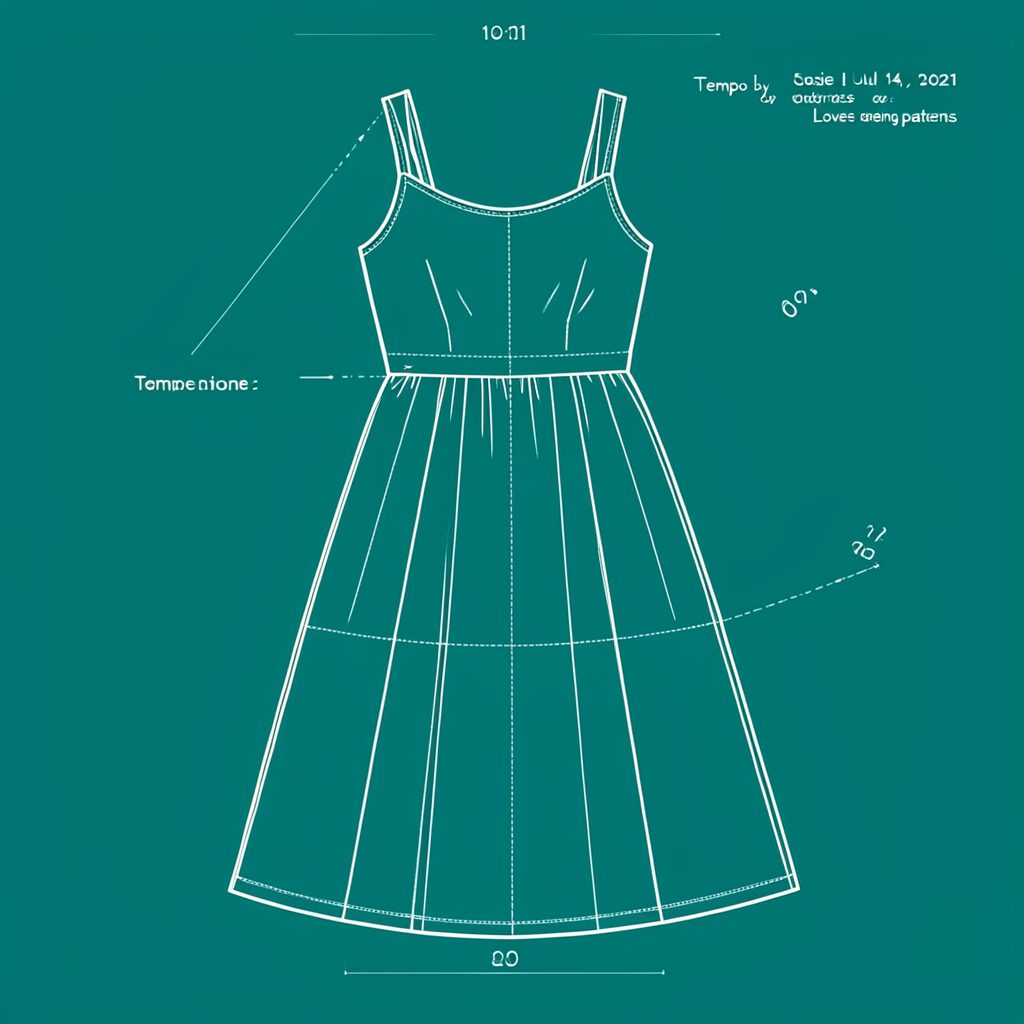
Pattern review: The Deer and Doe Plantain Top
The Deer and Doe Plantain Top was exactly the project I wanted for the gap between dressed-up clothes and loungewear: simple enough to pair with trousers, but shaped enough to wear over a camisole without looking like a borrowed T-shirt. In my Yorkshire workroom, the sample has a relaxed body, a neat neckline and sleeves that sit comfortably rather than ballooning. The proportions feel useful, with room through the middle but no excess length at the back. It is also friendly to a newer sewist, because its appeal comes from accurate cutting, controlled easing and clean finishing rather than complicated decoration.
I chose my size by comparing the finished garment measurements with my own, then checked the diagrams before cutting. Lightweight washed cotton poplin gave the top enough structure to show the shape while remaining comfortable in warm weather. For Australian sewists, the most useful habit is to use the metric size chart instead of assuming that a US, UK or Australian numbered size will fit identically. Australian readers should also compare the pattern price, shipping and any GST before buying, then add the cost of local fabric and notions.
| Aspect | My sample | Alternative to consider |
|---|---|---|
| Fabric | Washed cotton poplin | Cotton lawn for a softer drape |
| Fit | Relaxed through the body | Choose a closer size only if the bust or shoulder feels tight |
| Sleeves | Comfortable and neatly set | Preserve the pattern’s ease instead of stretching them |
| Finishing | Pressed-open seams with clean edges | French seams suit strongly fraying fabric |
| Styling | Worn over a camisole | Add a fine tee in cooler weather |
A relaxed shape with everyday reach
What makes this top appealing is its balance. It has the ease of a casual garment, yet the neckline and sleeve areas look controlled and intentional. The body skims rather than clings, so it moves freely when I am reaching, sitting or carrying a heavy tote. It also works whether I leave the hem loose or tuck it into jeans. For a first project, that combination of comfort and a polished outline is particularly encouraging.
The shape also travels well through an Australian wardrobe. Melbourne’s changeable days call for a layer, Brisbane brings prolonged heat and humidity, and Sydney summers can be intense. This top works over a camisole at home, with a tee under a work shirt or with lightweight trousers for a warm day out. That appreciation for independent creative work extends beyond sewing: before a city break, I bookmarked a Brúclina live music guide, whose practical focus on a neighbourhood venue reminded me that good independent content can be specific and genuinely welcoming.
Choosing fabric for warm-weather sewing
I would keep the first version in a light woven cotton, as I did with the poplin. It presses well, is easy to find and does not cling. A washed finish gives the seams a softer appearance and allows a little movement in the body. Linen-blend also works if I want a more textured result, although I would test pressing around the neckline first because a crisp linen can look unexpectedly formal.
Australian sewists have plenty of ways to source suitable cloth without buying a full-length bolt. Spotlight stores, online retailers such as FabricHQ and local op shops can be useful for remnants and inexpensive offcuts. The important precaution is to wash and measure every piece, since remnant widths vary and some lightweight cottons may shrink. I would avoid a very slippery voile for a first attempt because it is harder to control while easing the sleeves and matching the neckline.
The choice of interfacing also affects the result. A light fusible behind the neckline keeps it crisp without making the whole top feel rigid. I would skip heavier interfacing on cotton lawn, using a narrow stay-stitch line instead, and I would always press the facing before attaching it. These small decisions give more control than adding complicated trims or decorative features.
Construction details that reward a steady approach
I printed and taped the pattern at full size, then transferred the markings before cutting. Sharp rotary cuts helped the straight edges stay clean, while a small pair of snips was useful around the curves. I labelled every piece and matched the grainlines before sewing, which prevented the relaxed shape from becoming uneven. Following the marked seam lines also made the construction much calmer than estimating by eye.
The sleeves were the part I approached most carefully. Instead of forcing the pattern pieces together, I eased them gradually and checked the fit before securing the seam. Any little puckers were removed with pins rather than heavy pressing, protecting the delicate cotton. I also kept the seam allowances at their stated width because trimming them too narrowly can reduce the ease and make the top feel less forgiving.
For anyone wishing to experiment with a sturdier internal finish, I keep my flat-felled seam guide nearby for practice. I used conventional seams for this sample because they sat neatly under the arm without adding bulk, but the technique is useful for understanding how enclosed seams behave on lightweight wovens.
Finding the right fit and styling it locally
Sizing is most reliable when the bust, shoulder and desired amount of ease are considered together. A smaller numbered size does not automatically mean a closer garment, and measurements in centimetres remove much of the uncertainty when comparing an indie chart with Australian shop patterns. I would not choose a smaller size merely to obtain a fitted silhouette, because that would remove the comfortable movement that makes this design work so well.
I wore my sample untucked with straight-leg jeans and trainers, then tucked it into a soft skirt with a wider belt. The neckline also sat neatly beneath a fine camisole, without gaping or pulling. In an air-conditioned Melbourne office, it was comfortable under a light cardigan, while in Brisbane’s humidity the same breathable cotton felt practical for everyday errands. The top does not look like a pyjama top, so it suits daytime plans as well as relaxed weekends.
The length was already balanced on my 168 cm frame, so I left the hem as drafted. Someone taller might prefer more length, but I would check the finished measurements rather than alter the pattern immediately. A simple straight hem preserved the clean outline and took very little time.
Value in an independent pattern wardrobe
The Plantain Top offers good value because its simplicity makes repeat versions realistic. Different fabrics can create a shirt, a holiday layer or a slightly smarter work top without requiring a new set of skills. Independent patterns sometimes cost more than mass-market options, but clear instructions, downloadable files and permission to make your own versions add practical value. For Australian sewists, converting the total cost into Australian dollars and comparing it with the number of wears gives a fair measure of worth.
For another perspective on independent sewing, my Wilder Gown review shows how a distinctive design can still remain approachable. The two garments are different, yet both benefit from fabric chosen deliberately and construction treated as a series of manageable stages rather than a test of technical perfection.
What stays with me is the Plantain Top’s balance of comfort and neatness. It has enough shape to look deliberately designed, yet remains comfortable enough for the sort of long, busy day that makes an ordinary top become a wardrobe favourite. My cotton version has become the dependable layer I reach for when I want simplicity without looking underdressed.
Popular Pattern Reviews
| Pattern | Designer | Type | Highlight |
|---|---|---|---|
| Compose Robe (Kids) | Love Notions | Robe / Loungewear | Sizes 2T–16, cosy & practical |
| Tempo Sundress | Love Notions | Sundress | No closures, shirred back panel |
| Arlington Sweater | Love Notions | Sweater | Cold-weather staple |
| Sybil Illusion Skirt | Love Notions | Skirt (knit) | 7 variations, optional pockets |
| Camden Pinafore | Nina Lee Patterns | Pinafore dress | Year-round layering piece |
| Ogden Cami (dress hack) | True Bias | Cami / Dress | Versatile wardrobe builder |
| Burda 6829 | Burda | Dress | Multi-sized, special-occasion |
Stay in Touch
Subscribe to the newsletter for sewing inspiration, pattern tips, and project ideas delivered straight to your inbox.